REVIEW · VANCOUVER
Vancouver: Open-air Whale Watching Tour, Granville Island
Book on GetYourGuide →Operated by Wild whales eco tours · Bookable on GetYourGuide
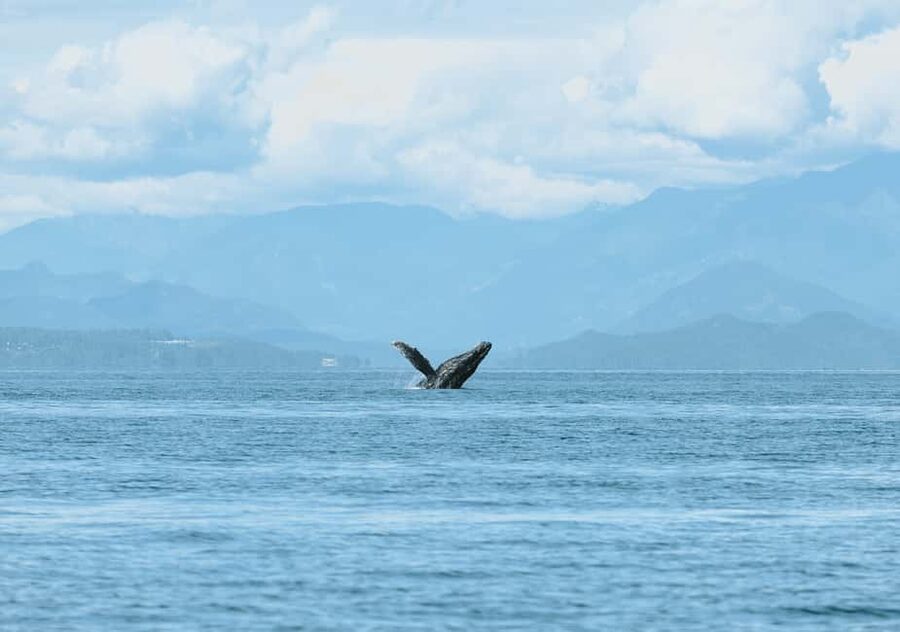
Vancouver whale watching feels like a front-row seat to the Pacific Northwest. This open-air Eagle Eyes catamaran leaves from Granville Island and heads into the Salish Sea, where you scan for orcas, humpbacks, dolphins, and more while a naturalist helps you understand what you’re seeing.
I especially love the 360° view from the deck, with no cabin walls between you and the water. And I love the on-board marine naturalist coaching, including real identification tips from guides such as naturalist Julia, who can help you track humpback behavior as you search.
My one main hesitation is simple: it’s open-air, so you have to dress for wind and cool spray or you’ll feel it during the hours on the water.
What makes this tour work so well
- Open-air Eagle Eyes deck gives you an unrestricted view of the water all around
- Naturalist-led spotting helps you identify whales and understand behavior, not just chase sightings
- Mid-size vessel feel helps you escape some of the crowd energy that comes with larger boats
- Twin-hull stability makes the ride smoother than smaller, choppier craft you might try elsewhere
- Whale sightings guarantee adds confidence when you’re booking in a season with variable luck
- Washrooms onboard keep you comfortable during the full session out on the water
In This Review
- From Granville Island to the Salish Sea: what your 5 hours feels like
- Eagle Eyes open-air catamaran: the 360° whale-spotting advantage
- Marine naturalist coaching: how you learn to identify whales fast
- What you might spot on the Salish Sea (and why sightings vary)
- Comfort and prep: what to bring for an open deck day
- Price and value: is $165 per person worth it?
- Where this tour shines, and who it fits best
- Quick practical notes for your day on the water
- Should you book this Vancouver whale watching from Granville Island?
- FAQ
- How long is the Vancouver whale watching tour?
- What animals can I expect to see?
- Do I get time on the deck to move around and take photos?
- What should I bring for the trip?
- Is food included in the ticket price?
- Are there any key rules about what is not allowed?
- Is there a cancellation option?
From Granville Island to the Salish Sea: what your 5 hours feels like
This tour is built for people who want real whale watching, not just a quick look. You meet at Wild Whales Vancouver on Granville Island, then you get a safety briefing before you head out. That pre-departure window matters because you’re going to spend a lot of time on an open deck—moving to get angles, watching the waterline, and taking photos when something surfaces.
Once you’re underway, the day shifts into search-and-scan mode. You’re on the Salish Sea—a productive stretch of water where food chains are tight and animals move with the currents and prey. That’s why sightings can happen more than once in a trip: even when one whale moves away, another may surface in a new area, or a different species may show up while you’re already watching.
The timing is flexible. You’re looking at about 5 hours total, with 3–5 hours on the water depending on weather and where the wildlife is. Translation: you’re not stuck with a rigid route that ignores what the ocean is doing that day.
Eagle Eyes open-air catamaran: the 360° whale-spotting advantage
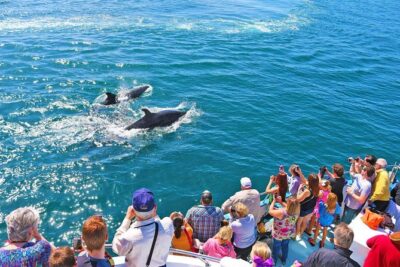
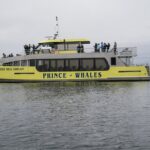
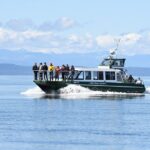
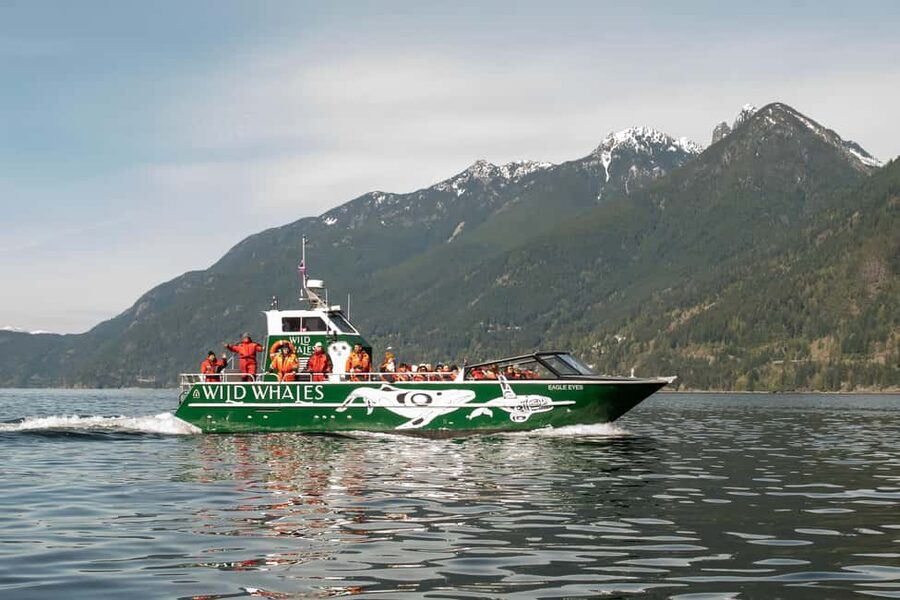
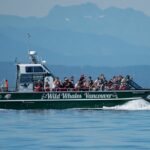
Most whale tours have at least one weak point: you spend time looking through railings, windshields, or enclosed windows. Eagle Eyes is different because it’s a custom-built open-air catamaran designed for visibility and movement.
Here’s what that means for you in practical terms:
- You can walk around the deck rather than being stuck at your seat.
- You get a more natural way to track animals because your body and camera can follow wherever the action is.
- When a whale surfaces near the boat, you don’t feel like you’re watching it through barriers.
The design also uses a twin-hull setup for a smoother ride. You still feel the sea, of course, but it’s the kind of stability that tends to work better for people who don’t love the jarring motion that comes with smaller boats.
A nice extra: individual seating and washrooms are onboard. You can stand for peak viewing, then take short breaks without losing the whole experience.
You can also read our reviews of more tours and experiences in Vancouver.
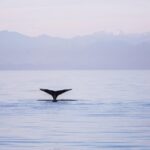
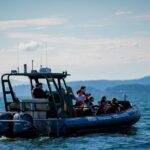
Marine naturalist coaching: how you learn to identify whales fast
A good whale tour gives you two things: sightings and meaning. This one does both by pairing a captain with a professional marine naturalist. The naturalist is doing more than narrating. They’re giving you the tools to notice differences in behavior and form.
If you’re hoping to understand what you’re seeing, this is where the trip earns its reputation. For example, naturalist Julia is the kind of guide who can make humpbacks feel identifiable rather than random shapes. On a trip where three humpbacks were found, she helped connect what the whales were doing to what they are—so you could track them rather than just react when they surfaced.
You’ll also hear about the broader marine food web—how whales, dolphins, seals, sea lions, and seabirds fit into the ecosystem. That matters because whales don’t show up like a schedule. They show up because prey is there, conditions line up, and animals are moving through their normal patterns.
You can expect focus on key species in the region, including:
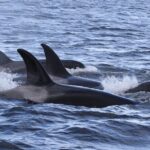
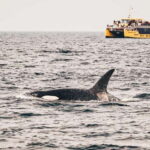
- Orcas
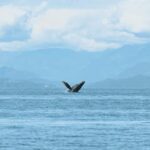
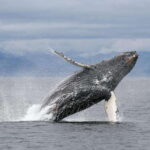
- Humpback whales
- Grey whales
- Pacific white-sided dolphins
- Steller sea lions
- Harbor seals
- Seabirds in the surrounding area
And even when you don’t see every species, the education still lands. On one trip, the naturalist shared info on sea otters even though they weren’t spotted that day. That kind of background helps you look at the whole scene, not just wait for the next headline.
What you might spot on the Salish Sea (and why sightings vary)
This tour is designed for serious scanning, so it’s fair to say you might see several species in one outing. But whale watching is still whale watching. Animals move, and conditions change.
That said, you have a strong set of targets. Expect an active search for:
- Orcas (often the headline species when conditions are right)
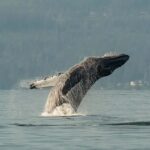
- Humpbacks (which can show up with noticeable surfacing and feeding behavior)
- Grey whales in the broader mix of the Salish Sea ecosystem
- Dolphins that can pop up quickly, sometimes in small groups
- Harbor seals and Steller sea lions which can be easier to spot when you’re watching shorelines, rock edges, or floating areas
You’ll also likely see seabirds circling and reacting to food. Bird activity can be a useful clue for where the action is heading next.
The big thing to remember: your route and timing can shift based on where the whales are. The tour is built around that reality. If the day is calm and wildlife stays in the area, you often get longer, richer sightings. If weather or animal movement pushes things, the captain and naturalist still do their best to put you where the odds are highest.
That’s also why a whale sightings guarantee is included. It doesn’t remove variability, but it signals that the operator is invested in making the experience count.
Comfort and prep: what to bring for an open deck day
The Eagle Eyes experience is all about being outside and watching from every angle. That’s great for photos and visibility, but it also means you need to plan for the basics: wind, spray, and cooler air that can make you feel colder than you expect.
Bring:
- Warm clothing (think layers you can add or peel off)
- A hat
- A camera
- Food and drinks, since snacks and meals are not included
- A reusable water bottle
- Anything like a windbreaker you prefer for comfort
The tour offers something extra in the form of an optional wind breaker or suit for warmth, but don’t count on that being enough for your comfort. If you tend to get cold, dress like you’re going to be outside the whole time—which you are.
For photography, the open deck is the advantage. You’ll want to:
- Keep your camera accessible so you can react when you hear or spot surfacing
- Take a few test shots before you commit to long bursts, so your settings are ready when it matters
Also, since standing and moving is encouraged, it helps to wear grippy shoes and clothes that you can move in without fuss.
Price and value: is $165 per person worth it?
At $165 per person for a whale watching outing that typically runs around 5 hours, you’re paying for three things at once:
- A custom open-air catamaran that makes wildlife viewing easier (and more comfortable than you might expect for an outdoor setup).
- A naturalist-led learning experience that goes beyond generic narration.
- A sightings-first approach, including a whale sightings guarantee.
You could find cheaper tours elsewhere, but many of the less expensive options trade away the view and the interpretation. If you care about understanding what you’re seeing, the naturalist portion is a big part of the value equation. If you care about photos and angles, the unrestricted deck view is the part you feel immediately once you’re aboard.
You’re also not paying for meals on top of the ticket. That’s a fair “budget reality,” but it means you should plan your snacks and water so the trip stays comfortable.
In short: for a guided, open-deck, naturalist-supported whale watching trip from Granville Island, $165 can be a strong deal—especially if you’re the type who wants the experience to teach you as well as entertain you.
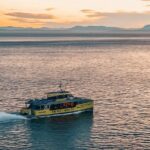
Where this tour shines, and who it fits best
This is a great match if you’re:
- Visiting Vancouver and want an authentic nature-focused outing that’s close to downtown
- Excited by learning wildlife ID and behavior, not just ticking off species
- A photographer or anyone who wants angles without glass or rail clutter
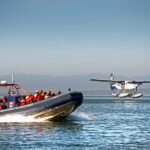
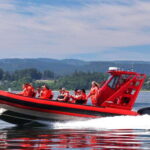
- Someone who prefers a steadier ride than smaller zodiac-style boats
It’s also a smart pick if you dislike the feeling of being packed onto larger vessels. The mid-size nature helps with that, and the ability to walk the deck keeps you from feeling trapped at one spot.
It may not fit you if:
- You’re pregnant (the tour notes it is not recommended)
- Your child is under 3 years (not recommended on this vessel)
- You rely on a wheelchair (wheelchair users are noted as not suitable)
- You want a fully sheltered, enclosed experience (it’s open-air by design)
Quick practical notes for your day on the water
Plan to arrive early. You’ll want time to get settled and ready because check-in effectively ramps up before departure. The tour recommends arriving about 45 minutes prior to departure time.
Getting to Granville Island is usually straightforward. Wild Whales Vancouver is on Granville Island, just south of Downtown Vancouver, and you can reach it by car, public transport, or a local ferry. If you drive, there’s paid public parking across the island. In summer, Granville Island can get busy, so give yourself extra time to find a spot.
Onboard rules are mostly what you’d expect on responsible wildlife tours:
- No pets
- No drones
- No alcohol or drugs
- Don’t touch marine life or animals
Those rules keep the wildlife safe and keep the experience respectful.
Should you book this Vancouver whale watching from Granville Island?
If you want the best chance at a meaningful whale watching trip—good visibility, open-deck freedom, and real naturalist guidance—this is a strong choice.
Book it when:
- You’re excited to learn species behavior as you watch
- You like standing up, moving around for angles, and getting close to the action
- You’re comfortable dressing for wind and cool air
Skip it when:
- You need a warm, enclosed boat experience
- You’re traveling with someone who falls into the trip’s not-recommended categories (pregnancy, very young children, wheelchair users)
If your main goal is whale watching with a view that actually helps you spot wildlife, Eagle Eyes from Granville Island is exactly the kind of outing that turns a Vancouver day into a real Pacific Northwest memory.
FAQ
How long is the Vancouver whale watching tour?
The experience runs about 5 hours total. Time on the water is typically 3–5 hours depending on factors like weather and where the whales are.
What animals can I expect to see?
The tour focuses on spotting orcas, humpback whales, grey whales, Pacific white-sided dolphins, Steller sea lions, harbor seals, and seabirds.
Do I get time on the deck to move around and take photos?
Yes. Eagle Eyes is open-air, and you’re encouraged to stand and move freely on the deck to get the best views.
What should I bring for the trip?
Bring warm clothing, a hat, a camera, food and drinks, and a reusable water bottle.
Is food included in the ticket price?
No. Food and snacks are not included, so plan to bring your own.
Are there any key rules about what is not allowed?
Pets, drones, non-folding strollers, alcohol, and drugs are not allowed. You also must not touch marine life or animals.
Is there a cancellation option?
Yes. Free cancellation is available up to 24 hours in advance for a full refund.