REVIEW · LA PAZ
Whale Shark Swimming Adventure: Small Group with Marine Biologist
Book on Viator →Operated by Eco Migrations · Bookable on Viator
Whale sharks feel unreal when they’re that close. This La Paz trip pairs a marine biologist briefing with a guided hunt in the Whale Shark Protected Area, so you’re not just jumping in and hoping for the best. You meet at 11:00 am, then spend the next few hours on the water looking for the right animal at the right time.
I really like the small-group setup and how the crew works to get multiple in-water encounters when conditions cooperate. The other big win is the structured safety guidance before you’re in the water, not after.
The one drawback to plan for: you’ll need moderate physical fitness and a steady swimming pace, and the whale sharks don’t follow schedules.
In This Review
- Key highlights worth planning around
- La Paz whale sharks: the thrill, with real rules
- 11:00 am meet-up at Mutualismo 342 and getting fitted
- The boat ride to the Whale Shark Protected Area
- Finding a cooperative whale shark (and why your swim time is limited)
- Your in-water routine: swim pace, entry skills, and spacing
- Wetsuit comfort and what to bring (since towels and sunscreen aren’t included)
- Price and value: what you’re paying for at $208.78
- Logistics that can make or break your day
- Who this whale shark swim fits best (and who should rethink)
- Should you book this La Paz whale shark swim?
- FAQ
- What time does the whale shark swimming tour start?
- How long is the experience?
- What’s the group size limit?
- What snorkeling equipment and gear are included?
- What should I bring since it’s not included?
- Do I get a ticket on my phone?
- Is the tour offered in English?
- Is the tour dependent on weather?
- What’s the cancellation policy?
- What happens if I’m late?
Key highlights worth planning around
- Small-group size (up to 8): more attention in the water, less crowding.
- Marine biologist natural-history talk: you learn what you’re seeing and how to behave around it.
- Protected-area turn-taking: you may wait for your boat’s slot before entering the zone.
- Short, focused swims: you’re in the water for a limited window when the shark is cooperative.
- 2–3 mm full wetsuit included: helps with comfort during the swim.
- Safety-first in-water instructions: clear steps for entry, positioning, and exiting.
La Paz whale sharks: the thrill, with real rules
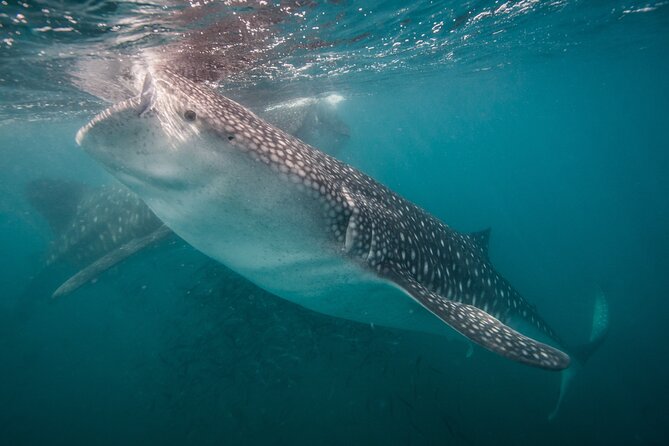
La Paz is famous for whale sharks, but the magic is how the experience is managed. You’re not meant to chase them, crowd them, or treat the encounter like a ride. The goal is simple: get you close enough to see their size and calm power, while following strict behavior and space guidelines in the protected zone.
This is also a very “hands-on” kind of wildlife trip. You start with an intro to the sharks’ natural history, then move right into practical instructions for what you’ll do during your swim. That matters because whale sharks are gentle, but swimming with them still takes skill, timing, and discipline.
You can also read our reviews of more tours and experiences in La Paz.
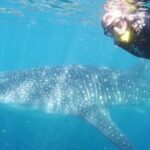
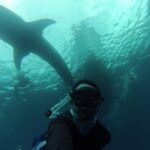
11:00 am meet-up at Mutualismo 342 and getting fitted
Your day starts at the shop at Mutualismo 342 in La Paz, right around 11:00 am. The flow is straightforward: meet the team, get your snorkeling gear, and get fit into a 2–3 mm full wetsuit before you head to the docks.
It’s worth building in a little buffer time. The tour notes that they’ll wait 15 minutes before cancelling for a tardy party, with no refund in case of no-show. That’s not a “maybe” detail. If you’re even slightly late, you risk losing the whole outing.
One practical tip that can save stress: try to use Google Maps instead of Apple Maps for the office location. A few people reported ending up at an older spot nearby, which is the last thing you want when your start time is tight.
The boat ride to the Whale Shark Protected Area
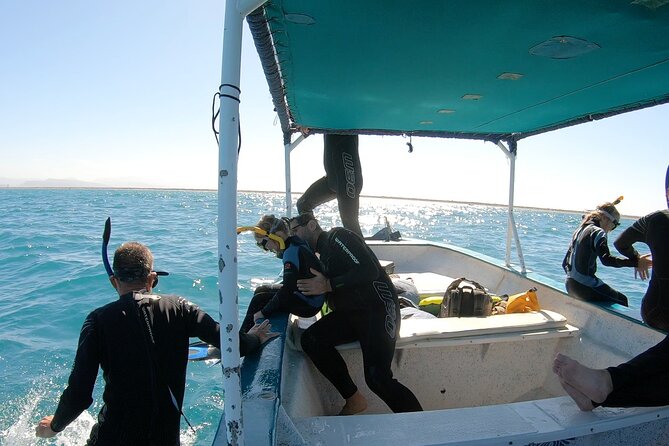
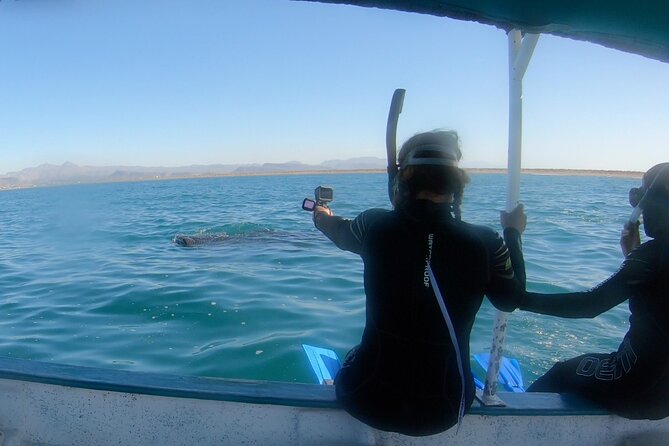
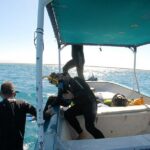
Once everyone’s geared up, you take a short boat ride out to the Whale Shark Protected Area. The hunt starts right away: you look for tell-tale signs of whale sharks moving through the water, then follow the crew’s cues on where to focus.
A key reality here is that access is controlled. Even when the crew finds signals, your boat may still need to wait for entry into the preserve. That turn-taking can add time, but it’s also part of what keeps this encounter respectful and safe for the animals.
Onboard, you get rules and instructions for the experience at hand. This isn’t just “be careful” talk. It’s the difference between a calm, organized swim and a scramble where you’re fighting for position in choppy water.
Finding a cooperative whale shark (and why your swim time is limited)
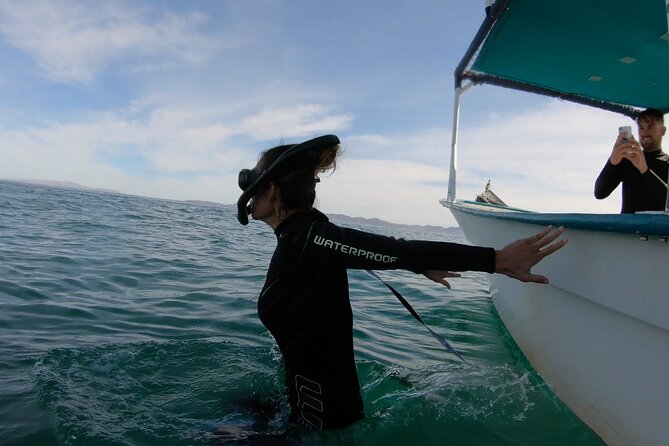
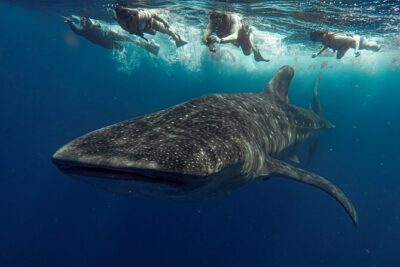
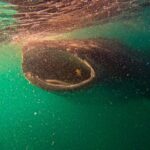
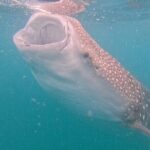
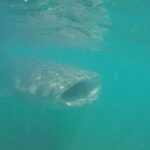
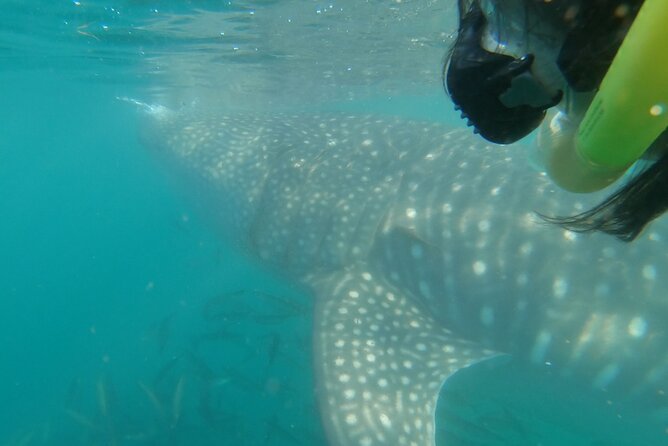
Here’s how whale shark days tend to work in practice: the crew searches, one is sighted, and then you’re given a chance to swim alongside it—but only for a limited window. The reason is simple: the shark is wild, and the protected-area rules control how many swimmers can be in the water at once.
When it all clicks, you can get several separate in-water sessions across different whale sharks. The experience is designed around short, high-quality encounters rather than one long swim where everyone loses control of pace and spacing.
Expect to be told when to enter, where to stay, and how to keep your movement smooth. In at least some swims, the group in the water is small at a time, with the guide and boat crew managing positioning. That’s one big reason the experience often feels organized once you’re actually in the water.
Also plan for the visibility factor. If wind kicks up and the water gets a little murky, the shark can still be near, but you may have less clarity. You’ll likely need to get a bit closer to make out details.
Your in-water routine: swim pace, entry skills, and spacing
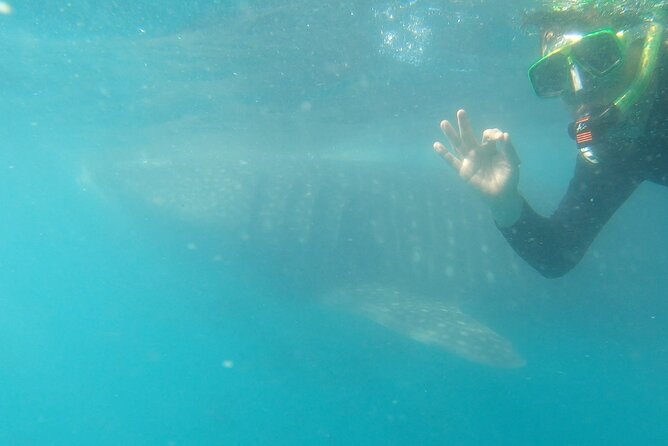
Swimming with whale sharks is not the time to test your limits. A common theme from real feedback is that you need to keep up with the guide’s pace, and you’ll need good snorkel control to stay relaxed while the shark moves.
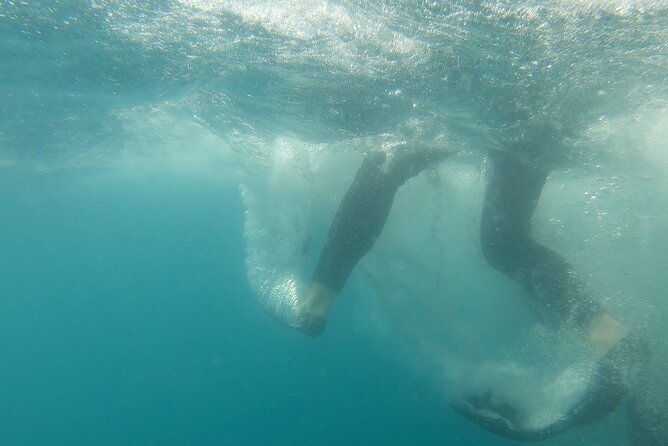
You’ll likely start with step-by-step guidance on how to jump in and how to adjust in-water basics. People noted helpful coaching if they struggled with the snorkel setup or got water in their mouthpiece. That kind of hands-on correction is a big quality marker on these trips, because tiny issues can quickly become big ones once you’re afloat.
During the swim, focus on calm body position and steady kicking. The crew generally tries to place you so you can observe the shark’s size and motion without blasting through the water like you’re in a swim meet.
Most importantly: you don’t linger wherever you want. The crew rotation and the shark’s behavior set the timing. When your window ends, you’ll get pulled out and the next group takes over. It can feel fast, but it’s part of the protected-area approach.
Wetsuit comfort and what to bring (since towels and sunscreen aren’t included)
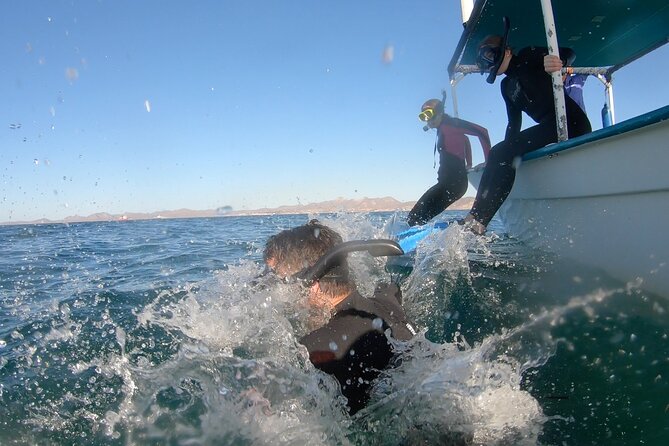
You get snorkeling equipment and a 2–3 mm full wetsuit, which is a major help. The wetsuit reduces the “cold shock” factor and lets you concentrate on breathing and staying balanced.
What’s not included is also important: no towel and no biodegradable sunblock. Bring a towel, and plan your sunscreen so you’re not scrambling in the final minutes. Even in a wetsuit, you can get sun exposure before and after the water time.
I also recommend bringing a water bottle. It’s a long morning, and even with short swims, you’re doing physical effort in gear. If you already have fins you trust, you can consider bringing them. Some people prefer higher-performance fins for staying with the group.
Price and value: what you’re paying for at $208.78
US$208.78 for about 4 hours isn’t just paying for a ticket to the ocean. You’re paying for several things that cost money and time:
- A small-group operation (not a giant crowd)
- A marine biology-style briefing and on-water guidance
- Boat time to reach the protected area
- The equipment (snorkeling gear plus wetsuit)
- The staff effort required to search, coordinate entry, and manage multiple short in-water windows
The value hinges on the day’s conditions and whether the sharks cooperate. This is wildlife. Some days are perfect, some are harder, and the crew can only do so much when visibility and movement shift.
That said, when the whale sharks show well, this style of tour usually feels like a “high return” experience because you’re not just getting one look—you’re getting managed opportunities to swim alongside them safely.
Logistics that can make or break your day
Punctuality matters here. The tour starts at 11:00 am, and they’ll wait only 15 minutes before cancelling for tardiness with no refund for no-show. If you’re coordinating from a cruise or using a rideshare, give yourself extra time for check-in.
Weather is another hard factor. The outing requires good conditions, and if it’s cancelled due to poor weather, you’ll be offered a different date or a full refund. That’s the right kind of policy for ocean wildlife trips.
The company also states a moderate physical fitness level is needed. Practically, that means you should be ready for effort in open water and not assume snorkeling is automatically easy just because whale sharks are calm.
Service animals are allowed, and the meeting area is near public transportation. The tour is offered in English, and you’ll receive confirmation at booking time plus a mobile ticket.
Who this whale shark swim fits best (and who should rethink)
This is a great fit if you:
- Want a guided, safety-managed encounter rather than a free-for-all
- Can swim steadily and keep a pace when the guide moves
- Care about animal behavior and rules in the protected zone
- Appreciate learning while you watch, not just “photo, then leave”
It may be a tougher fit if you:
- Struggle to swim for sustained periods or can’t comfortably maintain pace
- Know you get motion sick in boats
- Want a slow, easy water session without any exertion
One more reality: on some days, entry into the preserve can be limited by boat access. If your date doesn’t line up with the crew’s boat entry slot, you might be routed to another boat option that day. That doesn’t necessarily ruin the experience, but it’s worth knowing so you’re not surprised if there’s a swap.
Should you book this La Paz whale shark swim?
Book it if you’re the kind of traveler who enjoys structured wildlife encounters: clear instructions, a small group, and a serious focus on safety and animal respect. If you can handle moderate exertion and you’re okay with short in-water windows, you’ll likely love the payoff.
Skip or think twice if you want guaranteed long swim time no matter what, or if weather and exertion issues are likely to stress you out. This experience works best when you treat it like a real ocean activity, not just a “snorkel tour.”
If you want whale sharks and you’re willing to be flexible on timing and conditions, this is one of the stronger ways to do it in La Paz.
FAQ
What time does the whale shark swimming tour start?
The tour meets at the shop at 11:00 am.
How long is the experience?
It runs about 4 hours (approximately).
What’s the group size limit?
The booking maximum is 6 travelers, and the activity lists a maximum of 8 travelers.
What snorkeling equipment and gear are included?
Snorkeling equipment is included, and you also get a 2–3 mm full wetsuit.
What should I bring since it’s not included?
You’ll want to bring a towel and biodegradable sunblock. The tour data does not list these as included.
Do I get a ticket on my phone?
Yes. The experience includes a mobile ticket.
Is the tour offered in English?
Yes, it’s offered in English.
Is the tour dependent on weather?
Yes. It requires good weather, and if it’s cancelled due to poor weather, you’ll be offered a different date or a full refund.
What’s the cancellation policy?
You can cancel up to 24 hours in advance for a full refund. If you cancel less than 24 hours before the start time, the amount paid is not refunded.
What happens if I’m late?
The tour notes they will wait 15 minutes before being forced to cancel for the tardy party, and there will be no refund in case of no-show.