REVIEW · LA PAZ
Experiences with whale sharks in La Paz
Book on Viator →Operated by Salty Life in Baja · Bookable on Viator
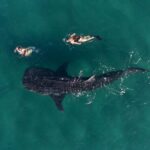
Watching whale sharks up close is the kind of wildlife moment that sticks. This 3-hour whale shark swim in La Paz Bay takes you out with snorkeling equipment, snacks, and bilingual guidance, aiming for that rare, gentle giant encounter in open water.
I especially like the small-group setup (up to 16 people) and the practical comfort built into the trip—snorkeling gear plus water, fruit, soda, and snacks to keep you fueled before you go face-to-fin with a whale shark.
One consideration: the sea can get choppy, and even when you get out, visibility and timing can vary. Some riders need to plan for motion sickness and rough water, and getting everyone positioned in the water can take a bit of coordination.
In This Review
- Key points before you go
- Whale shark swim in La Paz: what the 3-hour outing is really like
- Getting to the marina and why timing matters
- The boat ride: comfort, but expect waves
- In the water with whale sharks: the moment that makes the trip worth it
- Gear, snacks, and what’s included (and what you must bring)
- Who this is best for (and who should think twice)
- Price and value: what you’re paying for at $149.34
- Weather and visibility: how to mentally prepare
- Safety and smooth operations: what to watch for
- Should you book this La Paz whale shark swim?
- FAQ
- What’s the duration of the whale shark experience in La Paz?
- What’s included in the price?
- What should I bring since towels aren’t included?
- What time does the tour run?
- What language is the tour offered in?
- Is it guaranteed that you’ll see whale sharks?
Key points before you go
- Small max group size (16) helps keep the experience controlled when the water gets real
- Snorkeling equipment included so you’re not hunting gear at the last minute
- English-guided, bilingual team on board for clear instructions in the water
- Comfort-focused trip plan with snacks and drinks before and during the outing
- Low-visibility and rough-water days happen—you’ll still have a strong chance if conditions cooperate
Whale shark swim in La Paz: what the 3-hour outing is really like
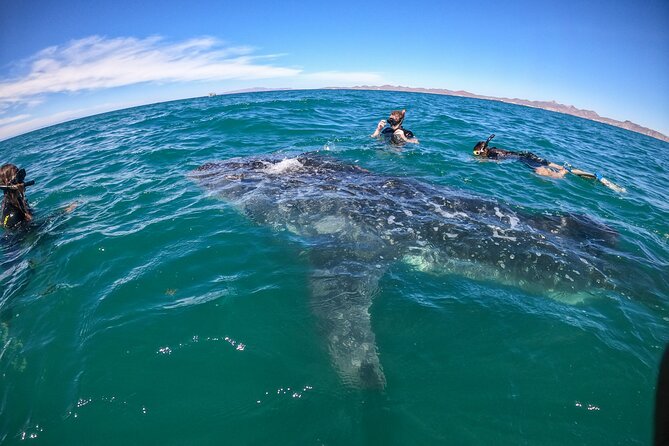
La Paz Bay is the main stage for this experience, and the whole trip revolves around one thing: getting you in the water at the right time, with the right setup, so you can observe and swim alongside whale sharks. The schedule runs roughly 11:30 AM to 2:30 PM during the active season windows listed for 2025–2026 and 2026–2027, and the total time you’re out is about 3 hours.
This is not a shore walk where you can control the pace. You’re on boats in open water, which means the sea state matters as much as the animal. If you’re the type who likes calm, predictable experiences, be ready that the ocean can be bumpy and the water clarity can change from day to day.
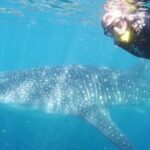
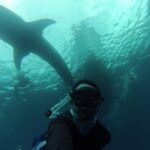
What I like about this setup is that it gives you the core ingredients for whale shark time without making you do extra planning: snorkeling gear is provided, and the trip includes fruit, water, soda, and snacks. You show up, get briefed, get ready, and focus on the animals.
You can also read our reviews of more tours and experiences in La Paz.
Getting to the marina and why timing matters
Your meeting point is the Marina de La Paz, Calle Topete 3040 y Legaspy, Barrio Manglito, 23060 La Paz, B.C.S., Mexico. The activity ends back at the meeting point, so you’re not juggling separate transportation after you’re soaked.
One thing to keep in mind: your success depends on conditions and boat availability. On some days, logistics may shift. The good news is that the operation can work to keep your group moving, and team coordination has included staff like Fernando, who has helped manage situations and keep people from missing the experience. Still, build in patience—this isn’t the kind of tour where you can relax if you’re racing a strict cruise departure window.
If you’re coming from a cruise, plan buffer time. You’ll want enough slack to handle small delays, because once you’re on the water, you can’t control how long it takes to find whale sharks.
The boat ride: comfort, but expect waves
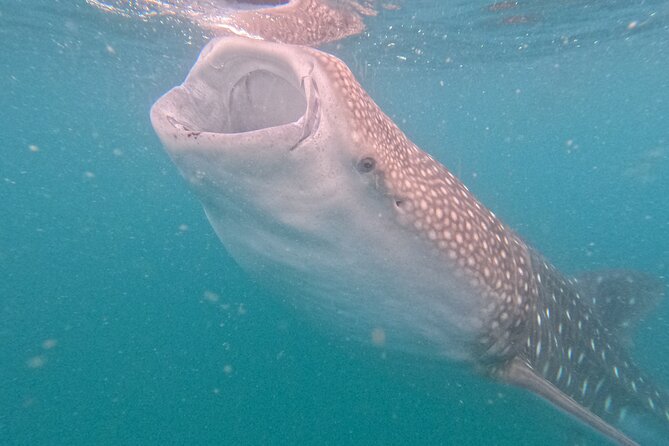
The trip is described as traveling in comfort, with drinks and snacks onboard and snorkeling equipment prepared. That helps. But comfort doesn’t mean calm. This is open water in the bay, and you should assume there can be long, bumpy stretches.
Some people deal with motion sickness. If you’re prone to it, I’d treat this like a “take precautions” day: sit where you feel the least movement possible, and consider bringing what helps you personally. The boat conditions can also make the first transition into the water feel more chaotic than you’d expect—especially if the sea is rough.
Also, keep your expectations realistic about where you’ll see the whale sharks. When the water is not crystal clear, you may not spot the animal until it’s very close. That’s not a failure of the crew; it’s just how visibility can work in open water.
In the water with whale sharks: the moment that makes the trip worth it
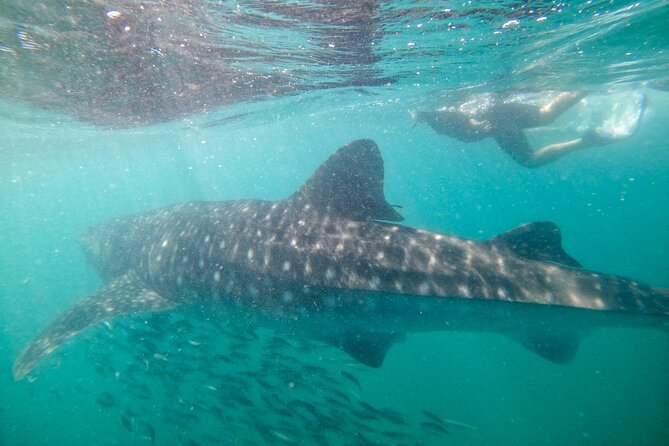
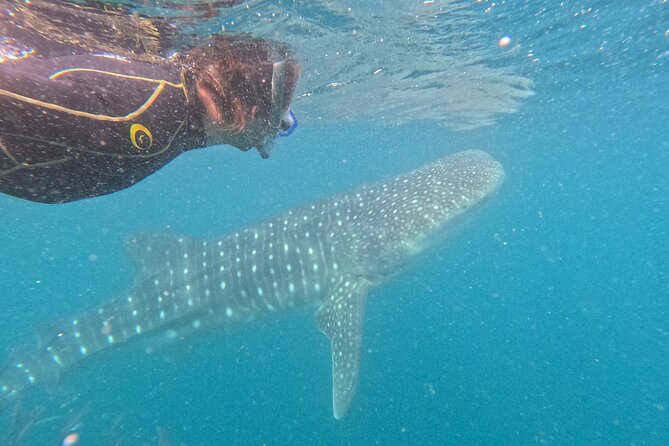
The core event is watching and swimming with whale sharks in La Paz Bay. This sounds simple on paper. In practice, the instruction and pacing matter a lot.
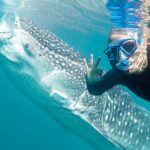
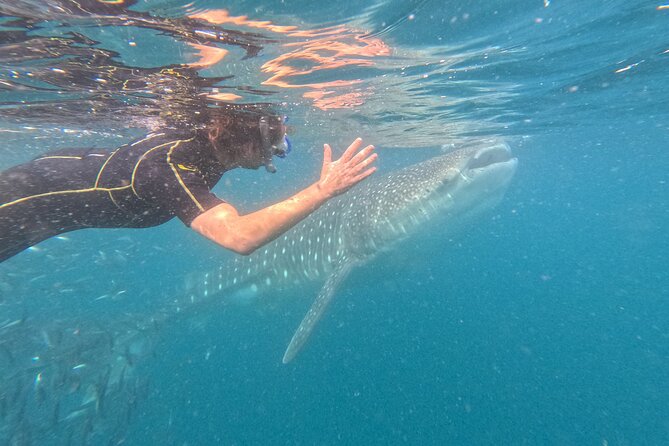
You’ll be wearing snorkeling gear you get from the tour, and you’ll be guided by certified bilingual guides plus an expert captain. In rougher water, clear instructions are everything—how to move, when to put your face in, and how to hold position.
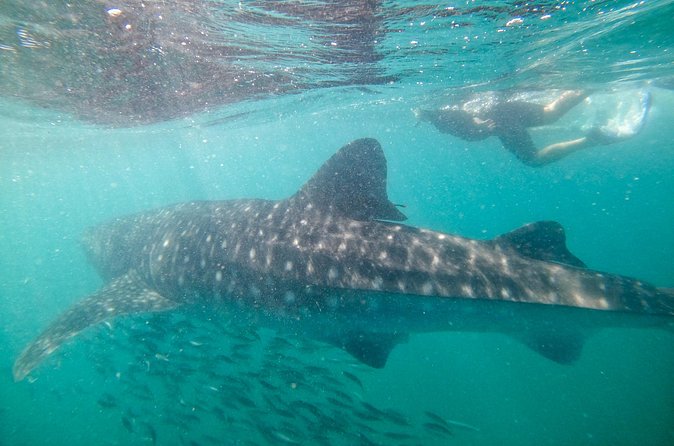
Here’s the key reality: to get the best view, you generally need to swim in a way that keeps pace and doesn’t drift too far behind. That’s why strong swimming ability matters. If you’re a confident swimmer, you’ll likely find the experience smoother once you understand the guide’s expectations. If you’re not, the water conditions plus group movement can feel stressful.
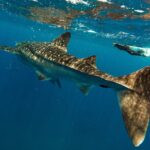
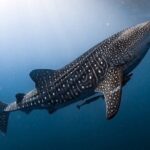
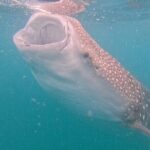
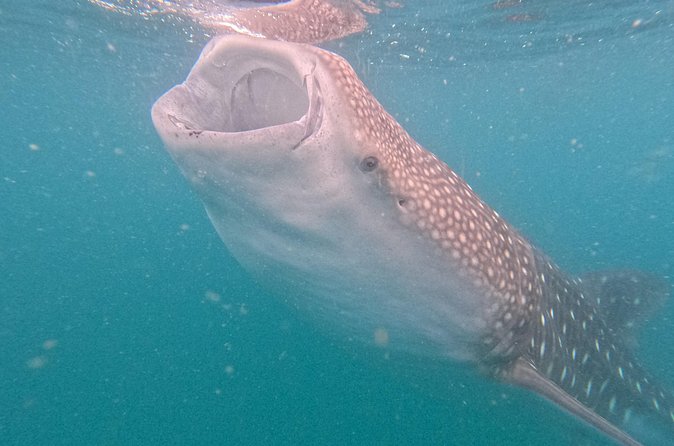
Once you’re close to the whale sharks, the experience shifts from “tour” to “wildlife encounter.” These animals are slow-moving compared to most things in the ocean, but your body still has to do the work of staying with them. The payoff is seeing the scale, the texture, and the calm presence up close—no viewing glass, no distance barrier.
Gear, snacks, and what’s included (and what you must bring)
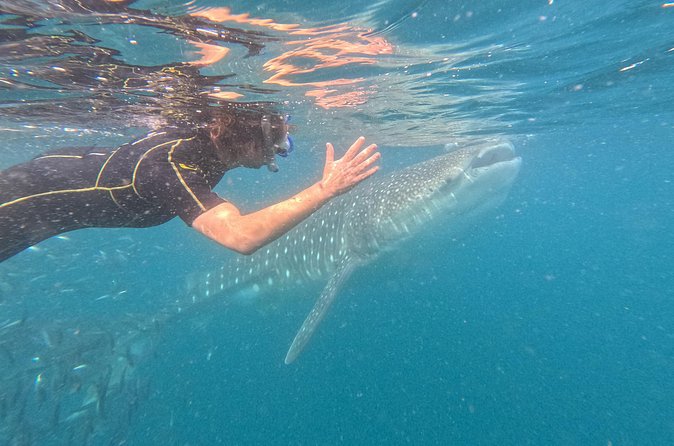
This tour includes:
- Snorkeling equipment
- Fruit, water, sodas, and snacks
Snorkeling gear inclusion is a big value point. It saves you from renting, washing, or figuring out fit right before going into the water. It also means the operation can manage readiness as a group, which matters when conditions change.
What’s not included:
- Towels
- Tips
I’d plan to bring a towel of your own, plus a small dry bag if you have one. You’ll want something for after the swim when you’re back on land. Even if you feel like you’ll be dry by then, ocean spray has a way of finding everything.

Who this is best for (and who should think twice)
This experience asks for moderate physical fitness. That usually means you should be able to handle a few active steps: getting in and out of the boat, managing your gear, and swimming with guidance when conditions aren’t perfect.
It’s also a better fit if you’re comfortable in open water. Rough water can make entry and positioning more challenging. If you’re traveling with older adults or anyone who struggles with choppy conditions, you’ll want to think carefully. In those cases, the chaotic-feeling moments can outweigh the fun, even if the whale shark sighting is spectacular.
Kids can enjoy it too, especially if they’re confident swimmers and can follow instructions quickly. The instruction flow matters—when everyone gets on the same page, the whole experience feels more organized.
If you’re someone who gets very anxious in waves, or you’re not comfortable swimming while keeping pace, this can become stressful fast. You’ll want to match your expectations to the reality of open-water snorkeling.
Price and value: what you’re paying for at $149.34
At $149.34 per person, you’re paying for more than just “access” to whale sharks. You’re paying for the whole system:
- a boat outing timed to wildlife sightings,
- snorkeling gear provided,
- snacks and drinks,
- certified bilingual guidance,
- and a captain who can maneuver in changing conditions.
Is it cheap? No. But whale shark experiences depend on conditions you can’t control, which usually pushes pricing upward. When this runs well—when visibility and sea state cooperate—you’re getting a rare encounter that few activities can match.
What keeps the value reasonable is that the trip handles key basics (gear and food) so you don’t add extra costs or time. Also, the max group size of 16 helps keep the experience from turning into a crowded scramble.
Still, you should consider whether you want to pay this kind of price for an experience that has a small chance of not encountering whale sharks. The chances are described as extremely low, but the setting is natural and wildlife presence varies.
Weather and visibility: how to mentally prepare
This is an outdoor wildlife activity in open water, so two things can shift the whole day:
1) Sea conditions (waves and boat ride feel)
2) Water clarity (how early you can spot the whale sharks)
On days when the water is rough and clarity isn’t great, you may have to rely on being positioned correctly in the water, rather than spotting the animal far off. That’s why following guide directions matters more than scanning endlessly.
If you’re hoping for a “see it from a distance, then leisurely swim” scenario, you might end up waiting and then suddenly spotting the whale shark close by. That can still be amazing, but it’s good to expect a little randomness.
Also, this kind of day can feel longer emotionally than it is on the clock. You’re waiting for an animal in an open environment, then swimming while staying with it. Bring patience.
Safety and smooth operations: what to watch for
The operation is staffed with certified bilingual guides and an expert captain. That’s the baseline for safety and coordination.
But open-water group dynamics are tricky. Rougher conditions can create “sorting” moments—where guide instructions need to land fast and everyone needs to follow the same pace. On some days, people can feel the process is chaotic until they figure out what the guide expects.
If safety and clarity are priorities for you, do this:
- listen carefully to the pre-water briefing,
- ask a quick question if you don’t understand how you’re supposed to swim or stay positioned,
- and don’t try to do your own freestyle plan if the guide is telling the group how to move.
That’s often the difference between a frustrating swim and a memorable one.
Should you book this La Paz whale shark swim?
Book it if you want a real whale shark encounter and you’re comfortable in open water. You’ll likely appreciate the practical inclusions—snorkeling equipment plus snacks and drinks—and the value of a smaller group size that can handle changes at sea.
Skip or reconsider if you (or your group) struggles with:
- choppy water,
- getting in and out of a boat comfortably,
- swimming while keeping pace,
- or tight timing, like needing to be back at a ship with little buffer.
If you do book, come with the right mindset: expect waves, expect variable visibility, and be ready to listen and move with the guide. When conditions line up, that up-close whale shark moment is exactly the kind of experience you’ll be glad you chased.
FAQ
What’s the duration of the whale shark experience in La Paz?
The activity is listed as about 3 hours.
What’s included in the price?
Snacks (fruit, water, sodas, and snacks) and snorkeling equipment are included.
What should I bring since towels aren’t included?
Plan to bring your own towel. Tips are also not included.
What time does the tour run?
During the listed season windows, it operates Monday through Sunday from 11:30 AM to 2:30 PM.
What language is the tour offered in?
The tour is offered in English.
Is it guaranteed that you’ll see whale sharks?
There is a small risk of not encountering whale sharks. Since this happens in an open natural area, wildlife presence can vary.