REVIEW · KAIKOURA
Kaikōura Whale Watching and Scenic Landing – 1hr Premier Tour
Book on Viator →Operated by South Pacific Helicopters NZ · Bookable on Viator
Whales from the sky, with a mountaintop landing. I love the small-group feel (max 6) and how the route mixes big coastal views with real wildlife time. You also get a landing in the mountain peaks, which turns this from a quick flyover into something more memorable and photo-friendly.
My favorite part is the Kaikōura Canyon setting—warm and cold currents that help support lots of marine life. The main drawback to plan around is that this experience needs good weather, so flights may be rescheduled or refunded if conditions aren’t right.
In This Review
- Key highlights worth your attention
- Why this Kaikōura helicopter flight feels different
- From shuttle to cockpit: how the 1-hour plan works
- Wildlife spotting from above: what you can actually expect
- The Seaward Kaikōura Ranges landing: your built-in photo stop
- What makes Kaikōura Canyon such a wildlife magnet
- Price and value: is $822.26 per person sensible?
- Group size, safety feel, and what the crew experience signals
- Practical tips before you go (so the day runs clean)
- Should you book the Kaikōura Whale Watching and Scenic Landing?
- FAQ
- How long is the Kaikōura whale watching and scenic landing tour?
- What is the meeting point address?
- Is pickup included?
- What time does the tour start?
- How many people are in the group?
- What wildlife might you see?
- Is there a landing during the experience?
- Are there weight or weather limits?
Key highlights worth your attention
- Mountain-peak landing in the Seaward Kaikōura Ranges for photos and a true change of scenery
- Small group size (max 6) for a calmer, less crowded ride
- Helicopter view over Kaikōura Canyon, where currents support lots of species
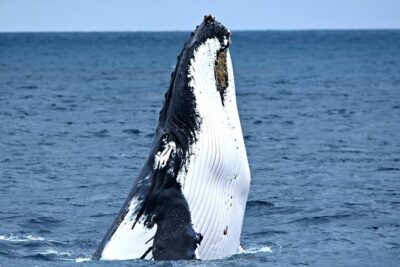
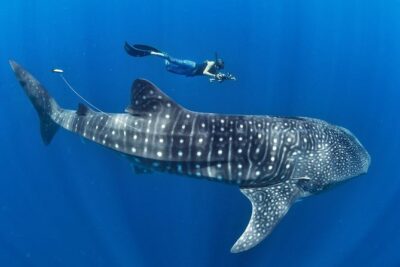
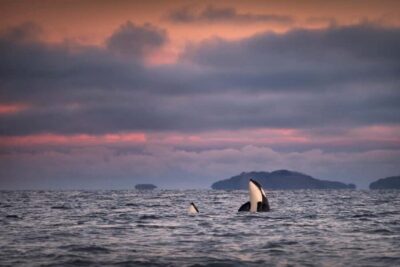
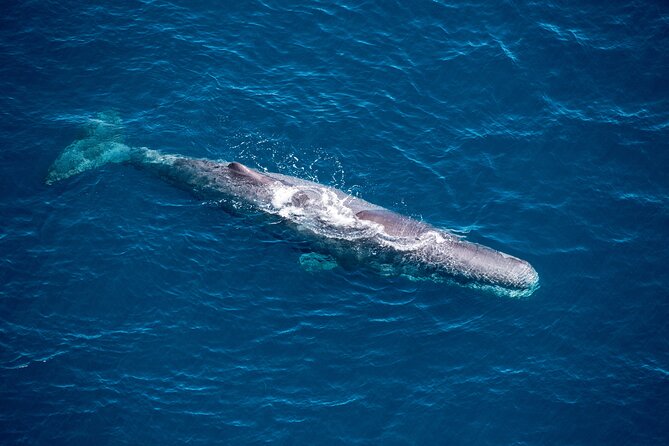
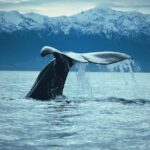
- Whale + dolphin + seal chances, including humpback, southern right, blue, sperm whales, dusky dolphins, and New Zealand fur seals
- Complimentary shuttle from your accommodation or the Kaikōoura rail/bus station
Why this Kaikōura helicopter flight feels different
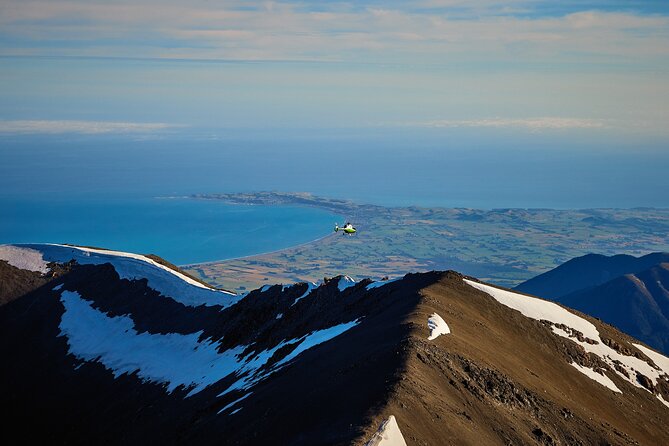
Kaikōura is famous for whales, but most visits only give you a single angle—usually from shore. This is different because you’re looking down on the seaward ranges and across the canyon from above, where the coastline, cliffs, and water all line up in a way you just can’t recreate from ground level. That high viewpoint matters when you’re trying to spot whales in open water rather than in a small harbor pool.
I also like that the experience isn’t only about scanning the ocean. The tour includes a landing in the mountain peaks, which is rare for whale watching outings. It gives you a breather from the helicopter and a chance to reset your attention on scenery—plus it’s explicitly built for photos.
The other detail that earns points: the marine-life story here is tied to the water itself. The canyon has a mix of warm and cold currents, which helps explain why Kaikōura is so productive for whales, dolphins, and seals. In plain terms, you’re not just going somewhere famous—you’re going somewhere that naturally brings wildlife together.
You can also read our reviews of more tours and experiences in Kaikoura.

From shuttle to cockpit: how the 1-hour plan works
The whole experience is about 1 hour total, with flight time listed as 1 hour as well. The start time is 11:00 am, and the activity ends back at the meeting point.
If you’re staying in Kaikōura, this tour makes it easy to show up without hassle. You can get a complimentary shuttle from your accommodation, or from the Kaikōoura train or bus station. If you prefer to self-navigate, the meeting point is at 617 State Highway 1, Peketā 7374, New Zealand.
A small-group ceiling of 6 travelers is a big deal on a helicopter day. It usually means less waiting, less crowding at the start, and more personal space while you’re booking your attention between the view outside and the instructions inside.
One more practical note: you’ll want to show up ready to go. Confirmation happens at booking time, and the tour uses mobile tickets, so you’ll want your phone charged and easy to access.
Wildlife spotting from above: what you can actually expect
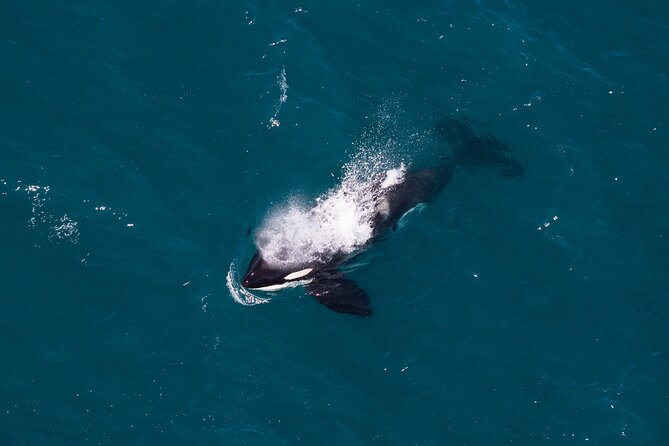
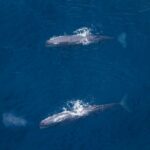
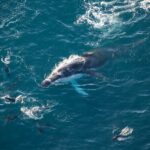
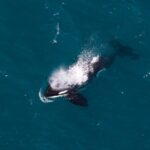
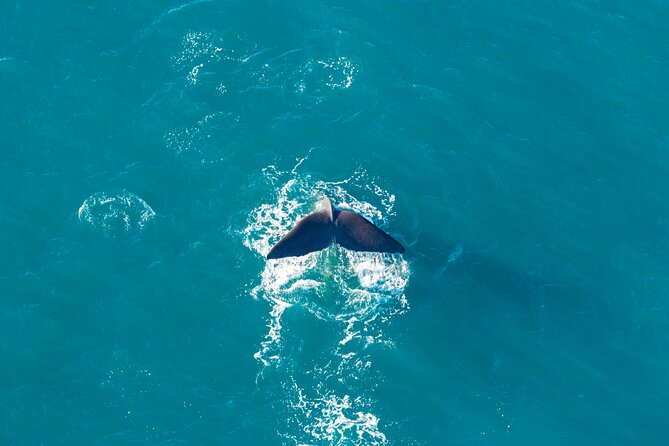
This isn’t a guarantee-of-whales kind of experience on paper (and no one should promise that). What it does promise is a route and vantage point designed for spotting. From above, you’re not just looking for movement—you’re looking for patterns: a spout that flashes in sunlight, a surfacing arc, a group of smaller bodies moving together, or seals hanging close to shore breaks.
The species list is clear and impressively varied:
- Humpback whales
- Southern right whales
- Blue whales
- Sperm whales
- Dusky dolphins
- New Zealand fur seals
You’ll also have the chance to see other marine life such as dolphins and seals. The canyon’s mix of warm and cold currents is the big reason this area can support so many types of wildlife at once. In whale watching terms, more food opportunities and more suitable water conditions can raise the odds that you’ll see something during the flight window.
What I’d tell you to do: watch the water in wider sweeps first, then narrow your eyes once someone spots something. From the air, it’s easy to get tunnel vision. A smart rhythm helps—scan, lock in, then enjoy the moment without constantly re-panicking your attention.
The Seaward Kaikōura Ranges landing: your built-in photo stop
Most helicopter tours are just, well, helicopter tours. This one adds a landing in the Seaward Kaikōura Ranges. That matters because it gives you a second experience mode: flight views, then a short period on land at a mountain-peak location.
The tour is explicit that the landing is a great place to snap scenic photos. That’s not just marketing fluff. A landing changes the angle of light and gives you a stable viewpoint for photos, not just window-by-window shots from the air.
Also, it breaks the monotony of continuous looking for wildlife. Even if you see whales early (or don’t), the landing gives you a memorable payoff: dramatic mountain scenery and a sense of scale over the coast and ocean.
If you’re the kind of traveler who cares about photos but also cares about not spending the day chasing the perfect picture, this landing helps. You get scenic time planned into the experience, instead of hoping the best moment happens exactly when you can hold your camera still.
What makes Kaikōura Canyon such a wildlife magnet
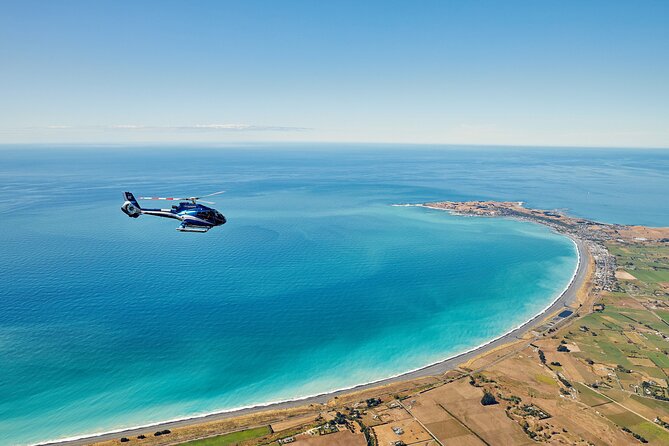
Kaikōura Canyon is the core setting behind this whole tour. The area has a mix of warm and cold currents, which supports a wide range of marine life. That’s the key idea to remember when you’re deciding whether this helicopter version is worth it for you.
Currents can bring nutrients and food closer to the surface, and they can also influence where whales and dolphins choose to feed or travel. When water conditions are favorable, you can get more sightings within the same general region—exactly what you want on a short, time-limited flight.
This is also why the aerial vantage works well here. On the ground, you might be seeing a narrow slice of coastline. From the air, you’re covering more water area and can track where the animals show up rather than guessing where to look next.
Price and value: is $822.26 per person sensible?

At $822.26 per person, this is not a budget activity. So the value question is simple: what are you buying for that money?
Here’s what the price is paying for, based on the structure of the experience:
- A helicopter flight with significant aerial access (above the canyon and coastline)
- A landing in the mountain peaks, not just a pass-by view
- A small group (max 6), which usually improves the overall experience quality
- A route designed for marine spotting across multiple species categories
- Complimentary shuttle options to reduce your pre-tour stress
If you’ve already done a shore-based whale watching tour, the helicopter version tends to feel like a step-change because you see the geography from a completely different layer. If you’re short on time in Kaikōura or you strongly want the combination of scenic views plus wildlife, the extra cost can be easier to justify.
Booking timing matters too. The tour is often booked about 14 days in advance on average, so if you’re traveling in peak whale season or on a tight schedule, waiting can narrow your options.
Group size, safety feel, and what the crew experience signals
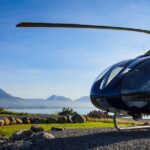
The tour is operated by South Pacific Helicopters NZ, with a maximum of 6 travelers. That small number is a real quality lever because you’re not packed into a big group format while the helicopter is doing its thing.
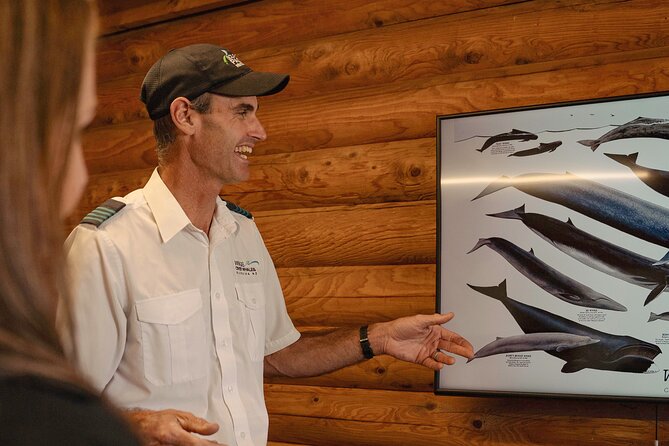
One of the best signals from the experience feedback is how smooth the human side can be. In particular, there’s an emphasis on welcoming communication and passengers feeling safe during the ride. The note about Daniel, along with the rest of the crew and his wife, points to a friendly, organized operation—not a rushed, high-volume conveyor belt.
You should still go in with the right mindset: this is aviation. That means you’ll want to listen carefully to any safety or positioning instructions, keep your movements controlled, and be ready to focus on the view rather than fiddling with gear for long stretches.
Practical tips before you go (so the day runs clean)
A few details from the tour info will help you prepare without overthinking it:
Weight limit matters. Total weight per passenger is listed as 276 lbs. If you’re close to that number, it’s worth double-checking when you book so you’re not dealing with surprises.
Plan around weather. This experience requires good weather. Helicopter flying is at the mercy of visibility and conditions, so if it’s windy, cloudy, or rough, you may need to roll with a new date or a refund if they can’t operate.
What to bring. The landing is built for scenic photos, so bring a camera you can operate easily. Also, dress for being up in the air—temps can feel different than at sea level, and you’ll want layers you can adjust quickly.
Mobile ticket ready. You’ll use a mobile ticket, so have your phone charged and accessible.
Service animals allowed. If that applies to you, this tour allows service animals.
Should you book the Kaikōura Whale Watching and Scenic Landing?
You’ll probably be happy booking if you want:
- A helicopter viewpoint (not just from shore)
- A real scenic payoff via a mountain-peak landing
- A chance at multiple species, from humpback and blue whales to dolphins and fur seals
- A small group experience instead of a crowded lineup
I’d think twice if:
- You’re allergic to weather-day uncertainty, since this runs only with good conditions
- You’re looking for a lower-cost whale option (this is premium pricing)
- You prefer long, slow viewing over a tight 1-hour format
If you’re deciding between this and a simpler wildlife boat or shore tour, ask yourself what you value most: time and atmosphere on the water, or altitude and dramatic geography with a built-in landing stop. For my money, this helicopter combo makes the most sense when you want a high-impact Kaikōura day that feels like a once-in-the-region experience.
FAQ
How long is the Kaikōura whale watching and scenic landing tour?
The tour duration is about 1 hour, with flight time listed as 1 hour.
What is the meeting point address?
The meeting point is 617 State Highway 1, Peketā 7374, New Zealand.
Is pickup included?
Yes. A complimentary shuttle is offered from your accommodation, or from the Kaikōoura train or bus station.
What time does the tour start?
The start time listed is 11:00 am.
How many people are in the group?
This tour has a maximum of 6 travelers.
What wildlife might you see?
The tour notes chances to spot humpback, southern right, blue, and sperm whales, plus dusky dolphins and New Zealand fur seals.
Is there a landing during the experience?
Yes. The trip includes a landing in the mountain peaks in the Seaward Kaikōura Ranges, which is ideal for scenic photos.
Are there weight or weather limits?
Total weight per passenger is listed as 276 lbs. The experience requires good weather. If it can’t run due to weather, you’ll be offered another date or a full refund.