REVIEW · TROMSO
Silent Whale Watching by Hybrid-Electric Boat from Tromsø
Book on Viator →Operated by Brim Explorer · Bookable on Viator
Silent engines make the whole hunt feel different. On Brim Explorer you get a quiet, hybrid-electric approach and a warm, comfortable cabin while guides talk you through what you’re actually looking for. The catch: it’s a long 7 to 9 hour outing, and even at the right season you can end up with only brief sightings.
I like that the day is structured around real whale behavior—herring feeding areas, then a focused search window—rather than a quick loop and a prayer. You also get big, winter-at-sea views: Lyngstuva lighthouse high on the Lyngen Alps as you head out, and the Arctic Cathedral set by the Tromsø bridge as you return. Still, sea state can turn rough, so plan for cold decks, wind, and motion.
This tour makes the most sense in the polar night whale window, late October through the end of January, when whales are actually in the Tromsø area. If you’re after humpbacks as well as orcas, this is one of the few ways to stack that chance with an explicitly whale-gentle sailing style.
In This Review
- Key things to know before you go
- Silent whale watching: what the hybrid-electric boat changes
- Getting started at Brim Explorer in Tromsø
- Lyngstuva lighthouse to Skjervøy: the big scenic stretch
- Skjervøy and the first search: humpbacks and orcas in the herring zone
- Kvaenangen Municipality: your main whale-watching window (1–2 hours)
- Onboard comfort: warm cabin, restrooms, and what food costs
- Wi-Fi reality on the water (and why that matters)
- Sea conditions, photo expectations, and why timing matters in winter
- Arctic Cathedral and return: another chance for aurora vibes
- How much you’re paying: value vs. what you’re actually buying
- Who this tour fits best (and who should think twice)
- Should you book Silent Whale Watching with Brim Explorer?
- FAQ
- How long is the Silent Whale Watching tour from Tromsø?
- Is whale spotting guaranteed?
- Where do you go during the tour?
- How much time do you spend with whales at Kvaenangen?
- What species can you look for?
- When are whales around Tromsø?
- Does the tour include Wi-Fi and does it work?
- Is food included in the ticket price?
- How many people are on the boat?
- What happens if the weather is poor?
- Can you cancel for a refund?
Key things to know before you go
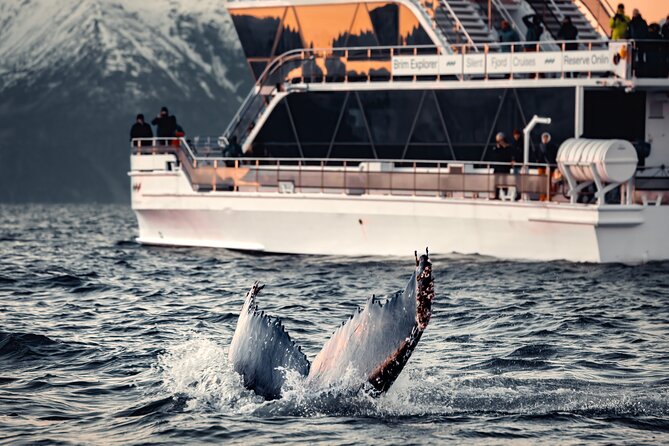
- Silent engine approach: the idea is to avoid disturbing whales during sightings
- Long travel, short viewing window: you spend a lot of time on the water before you get the best shot
- Skjervøy runs on herring: the feeding grounds drive where humpbacks and orcas show up
- A focused Kvaenangen stop (1–2 hours): time with whales depends on what the sea delivers that day
- Max 140 passengers: still crowded at prime viewing spots, especially on a bumpy route
- Wi-Fi may not mean internet: the onboard connection can be limited depending on conditions
Silent whale watching: what the hybrid-electric boat changes
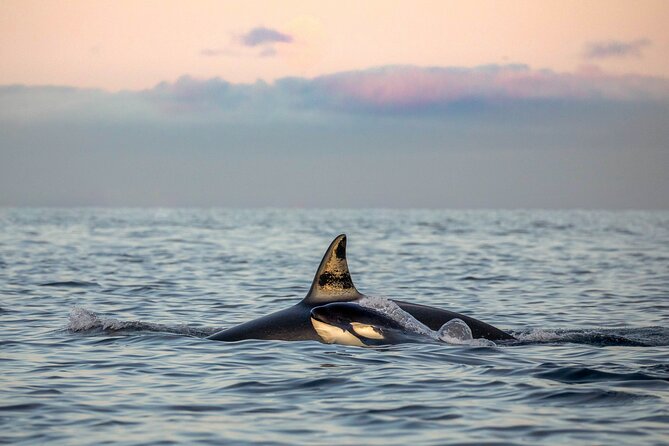
Most whale trips make noise. This one is built around the opposite idea: a silent, hybrid-electric setup that helps you watch without blasting the water and sending whales packing.
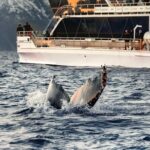
What that means for you in practice is a more relaxed feel once you find animals. Several riders specifically point out that the crew approach is designed to minimize disturbance, including sailing quietly and stopping the engine when whales are nearby. When you’re trying to spot behavior—breaches, tail-slaps, or a fin that shows and disappears fast—that calmer approach matters. You get more “watch time” and less “chase” energy.
The flip side is expectations. Silent tech can’t control whales. Reviews that land low mostly complain about long travel, limited viewing time, and being far offshore. So yes, the method is whale-friendly—but the ocean still sets the rules.
You can also read our reviews of more tours and experiences in Tromso.
Getting started at Brim Explorer in Tromsø
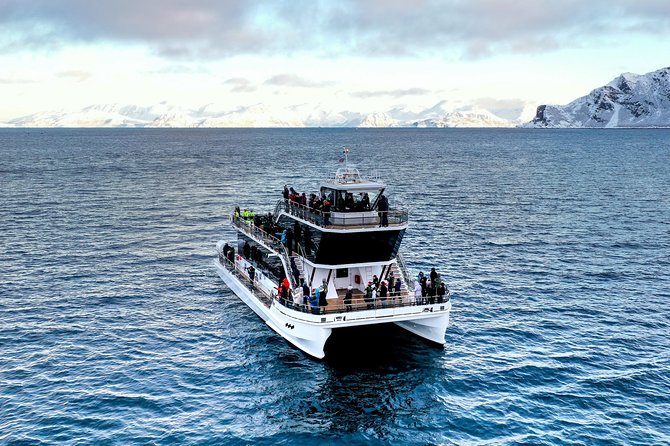
The day begins at Brim Explorer Tromsø at Kaigata 6, and it ends back at the same meeting point. This sounds simple, but it matters because you’re planning for a day that can feel like “whole-day weather management.” Being close to public transportation helps if you’re not staying in Tromsø center.
Also, this is an English-offered tour and you’ll get crew-led talks during the sailing. That’s not just entertainment. When you’re searching in winter light (or low light), it’s easier to spot movement when you understand what you’re looking for—how fins sit on the surface, how whales surface briefly, and why they can be more visible against darker water.
One very practical note from rider feedback: the boat can be warm inside, while outside can be icy and windy. If you want photos or quick sightings, you’ll likely rotate between decks and the cabin.
Lyngstuva lighthouse to Skjervøy: the big scenic stretch
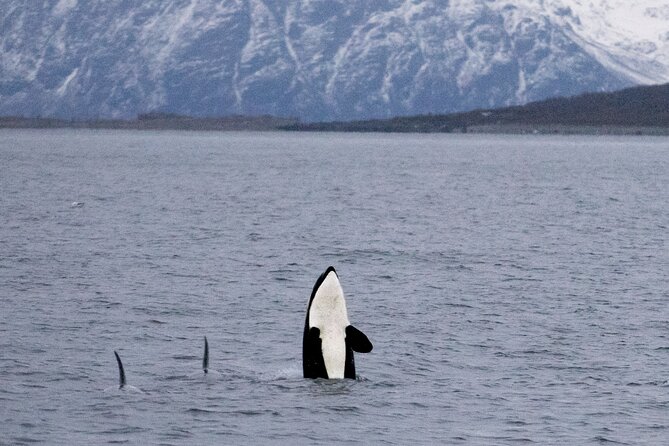
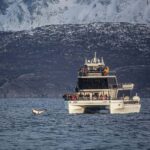
Before you reach the whale areas, you’ll sail past Lyngstuva lighthouse, perched up in the Lyngen Alps region. This is one of those “yes, you’re going to stare out the window for a while” parts of the day. In winter, that scenery becomes your consolation prize if whales are slow that morning.
Then you reach Skjervøy, where the ecosystem is built around herring. That’s key: whales aren’t random tourists. They move where food is. So Skjervøy isn’t just geography—it’s your first hint of why humpbacks and orcas can show up in the first place.
There’s also a psychological benefit to this segment. You’re not sitting idle. You’re traveling through fjord country with real context, plus the crew keeps you updated on timings and what they think is likely happening.
Skjervøy and the first search: humpbacks and orcas in the herring zone
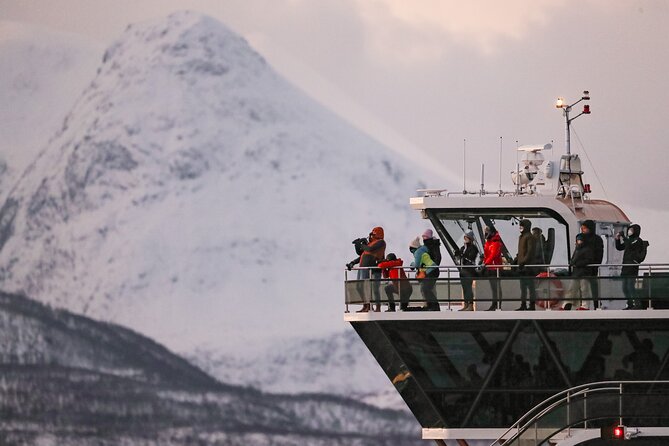
Once you’re in the Skjervøy area, the crew goes to work finding whales feeding on herring. This is where the day becomes less predictable, because visibility, wind, and whale movement can all shift quickly.
From the tour structure, you’ll spend time searching in the wider Skjervøy region and look for humpbacks and/or orcas. The time you get at this stage can vary, and it’s not a guaranteed close encounter. Some days you’ll see fins. Other days you’ll see behavior from farther out.
If you’re sensitive to motion, this is also the stretch to plan around. One review notes heavy bouncy conditions on the ride out, and other feedback repeatedly flags rougher water as a real possibility in the fjords. If you’re the type who gets queasy on boats, you’ll want seasickness tablets ready before boarding.
Kvaenangen Municipality: your main whale-watching window (1–2 hours)
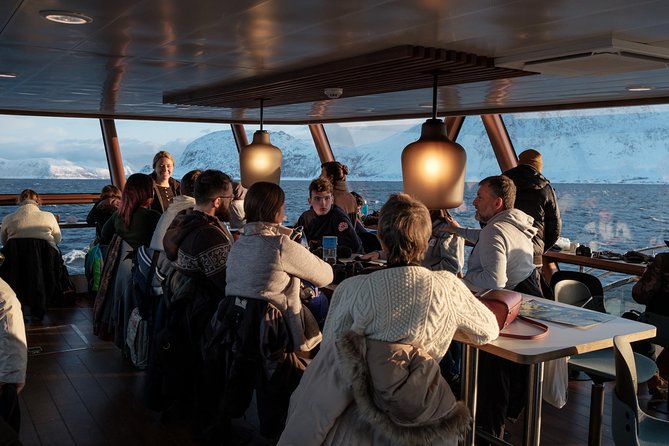
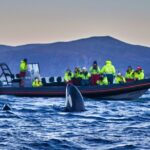
The biggest promise of the itinerary is the stop in Kvaenangen Municipality, where you spend about 1–2 hours with the whales, depending on how fast they’re found and how long they stay around.
This is the part that matters most for your money: the “real whale time.” The tour doesn’t hide the fact that whale sightings aren’t guaranteed, and it’s worth taking that seriously. But when the whales are active and the sea isn’t too rough, this is when you can get memorable moments.
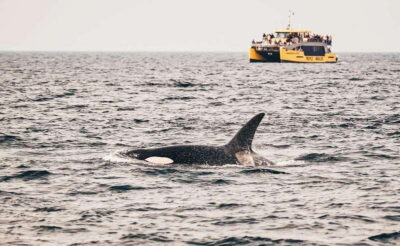
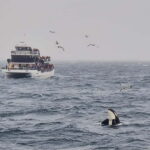
A few reviews highlight how the captain and crew actively chase the best chances. One rider describes the boat passing other vessels and then finding a pod of orcas about ten minutes later, with constant sightings for roughly an hour. That’s the upside of being willing to travel and search: if you luck into it, you can get sustained viewing rather than a single brief fin.
The downside is that several riders mention limited actual whale time and that whales can be far away. In icy weather, trying to hold a camera steady on a deck can be hard when waves are moving the boat and the surface is slick.



Onboard comfort: warm cabin, restrooms, and what food costs
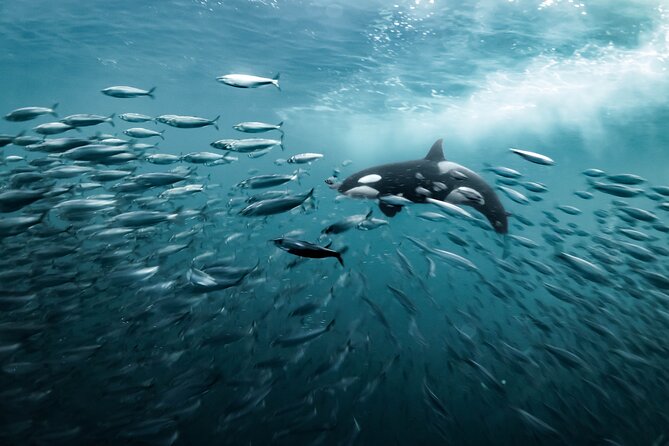
Brim Explorer is set up for comfort in cold conditions. Riders repeatedly mention a warm interior, comfortable seating, and a boat that feels clean and modern. There are also toilets onboard, and there’s typically a place to grab snacks and drinks.
Here’s the practical part: food is not included in the price. People talk about buying coffee and small items onboard, and there’s mention of options like hot chocolate and cinnamon buns. Several reviews also note that lunch details vary by day and menu, with some riders feeling the onboard food prices and selection were not worth it.
So plan smart:
- Bring your own snacks if you want flexibility.
- If you love hot drinks, count on buying them rather than assuming they’re included.
- If you’re hungry at weird times, don’t rely on a full meal service.
Wi-Fi reality on the water (and why that matters)
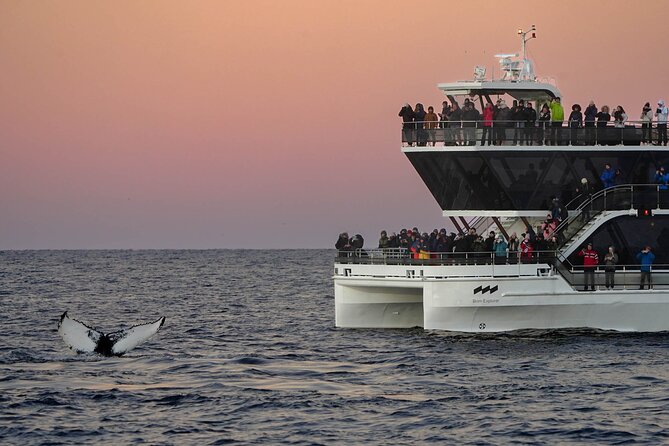
The experience description includes onboard Wi-Fi. But one rider points out a mismatch: they could connect, yet there was no internet, making the listing feel misleading.
So I’d treat Wi-Fi like a bonus, not a plan. On a boat in winter, your real “connection” is the view and the crew talks. If you’re traveling with someone who needs internet for school or work, bring offline stuff too.
Sea conditions, photo expectations, and why timing matters in winter
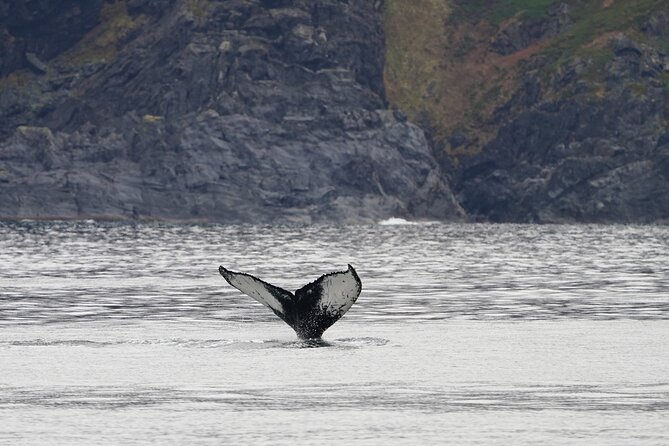
This is northern Norway in winter. That means cold, wind, and waves can change fast. A few reviews mention rougher rides to the whale zone, while others describe trips that were mostly smooth with only a short bumpy window.
If you care about photos, adjust your expectations before you go:
- Whales may be too far out for close shots.
- Decks can be icy, so staying steady outside is harder.
- Waves can make it difficult to keep a camera trained long enough for sharp results.
When you do get good sightings, you’ll still want to be ready fast—because whale surfaces are brief, and once they move, they can be gone. The best photos usually come from being quick, keeping warm, and watching rather than sprinting for shots every time you see mist.
Timing also affects what you can see. In the polar season, daylight is limited and can end earlier than you expect. One review complains about arriving to the whale area later than they wanted, leading to low visibility for humpbacks and orcas. That’s not something you can control, but you can control how patient you’ll be if your best chance happens with low light.
Arctic Cathedral and return: another chance for aurora vibes
On your way back to Tromsø, you’ll sail past the Arctic Cathedral, located at the end of the Tromsø bridge. That’s a nice visual bookend for the day: you started with lighthouse drama, and you end with a landmark that makes Tromsø feel real and modern instead of just remote winter scenery.
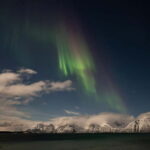
There’s also a chance for the Northern Lights on the return. One rider specifically notes a brief aurora visit while heading back. Aurora views aren’t guaranteed, but the timing and sky conditions in Tromsø make it a reasonable hope if clouds don’t swallow the night.
How much you’re paying: value vs. what you’re actually buying
The price is about $214.85 per person for a 7 to 9 hour experience. That can feel steep until you break down what you’re buying:
- You’re paying for a boat capable of silent, hybrid-electric whale-friendly operation.
- You’re paying for a crew actively searching, giving safety briefings, and explaining what you’re seeing.
- You’re paying for long-distance travel through fjords to reach feeding grounds where whales might be.
Where value can wobble is when whales are scarce or sightings are distant. Low reviews often center on long hours with very short viewing time. Even when the crew is excellent, if the sea doesn’t cooperate, you’re still doing the full transit time.
That’s why I’d treat this as a wildlife odds purchase, not a promise of close-up whales. If you’re okay with that uncertainty, the boat comfort and the respectful approach can make the day feel like more than a lottery ticket.
Who this tour fits best (and who should think twice)
This is a great match if:
- You’re serious about ethical whale watching and want minimal disturbance.
- You want to try for both humpbacks and orcas rather than just one species.
- You enjoy winter fjord scenery and don’t mind a full day on the water.
- You value a warm cabin and crew-led interpretation during the long sail.
You might reconsider if:
- You hate long boat days with limited viewing time.
- You’re highly prone to seasickness and don’t want to manage it.
- You expect close, guaranteed whale encounters. This is not that kind of tour.
Should you book Silent Whale Watching with Brim Explorer?
Yes, with the right mindset.
Book it if you want a quiet, whale-gentle experience from Tromsø during the season when whales are actually in the area (late October through end of January). The best part is that the crew approach is designed around respectful viewing, and when the whales show, you can get sustained sightings rather than a token look.
Skip it—or at least plan an alternate activity—if you’re the type who will be upset by rough seas, cold decks, crowds at viewing points, or the real possibility of limited sightings. The tour’s biggest weakness is not the boat. It’s the nature of winter whale watching: you’re buying your chances, not control.
FAQ
How long is the Silent Whale Watching tour from Tromsø?
The tour runs about 7 to 9 hours.
Is whale spotting guaranteed?
No. There’s no guarantee of seeing whales, and the crew will do their best to find them.
Where do you go during the tour?
You’ll sail from Tromsø to the Skjervøy area, then spend time with whales at Kvaenangen Municipality, and you return to Tromsø. Along the way you pass landmarks like Lyngstuva lighthouse and the Arctic Cathedral.
How much time do you spend with whales at Kvaenangen?
Expect about 1 to 2 hours, depending on how quickly whales are found and how long they remain nearby.
What species can you look for?
The search focuses on humpback whales and orcas.
When are whales around Tromsø?
Whales are around Tromsø from late October until the end of January, as they migrate.
Does the tour include Wi-Fi and does it work?
There is Wi-Fi onboard. Based on rider feedback, you may be able to connect but internet access may be limited.
Is food included in the ticket price?
Food and drinks are available to buy onboard, but they are not included in the ticket price.
How many people are on the boat?
The tour has a maximum of 140 travelers.
What happens if the weather is poor?
The experience requires good weather. If it’s canceled due to poor weather, you’ll be offered a different date or a full refund.
Can you cancel for a refund?
Yes. Free cancellation is available up to 24 hours in advance for a full refund.