REVIEW · JUNEAU
Ultimate Juneau Whale Watch and Mendenhall Glacier View
Book on Viator →Operated by Juneau Tours · Bookable on Viator
Whales, eagles, and a glacier photo stop. This 3-hour Juneau outing is built for maximum time on the water, with a heated cabin and wide viewing windows on the boat. You also get the practical bonus of round-trip transport tied to the Mt. Roberts Tram area, so you are not wandering around trying to find your dock at cruise pace.
I especially like the mix of a humpback-focused search with real interpretive help from a naturalist guide, not just canned facts. You are not only looking for humpbacks; you are also scanning for orcas, bald eagles, seals, and sea lions, and the captain will slow down when whales are spotted so you can photograph from the decks. One thing to plan around: the Mendenhall Glacier stop is only about five minutes and is weather dependent, so it can be underwhelming on cloudy days.
In This Review
- Key highlights at a glance
- From Mt. Roberts Tram to Auke Bay Harbor: the quick coach-to-boat setup
- On the water with humpbacks: decks, spotting help, and wildlife possibilities
- Mendenhall Glacier photo stop: a fast 5-minute reality check
- The boat experience that keeps it comfortable: heated cabin, big windows, and deck access
- Wildlife spotting tips you can actually use in 2 hours
- Price and value: what you pay for and what you get for $156
- Who this tour fits best (and who might want a different option)
- When to go: seasonality and weather that never follows your calendar
- Tips to get better photos and fewer regrets
- Should you book this whale watch with Mendenhall Glacier?
- FAQ
- How long is the tour, and how much time is actually on the water?
- What boats do you use, and how many people are on board?
- Is the Mendenhall Glacier photo stop guaranteed?
- What animals might you see besides humpback whales?
- Where do you meet, and how do you get there from the cruise area?
- What should I wear for a whale watch in Juneau?
Key highlights at a glance
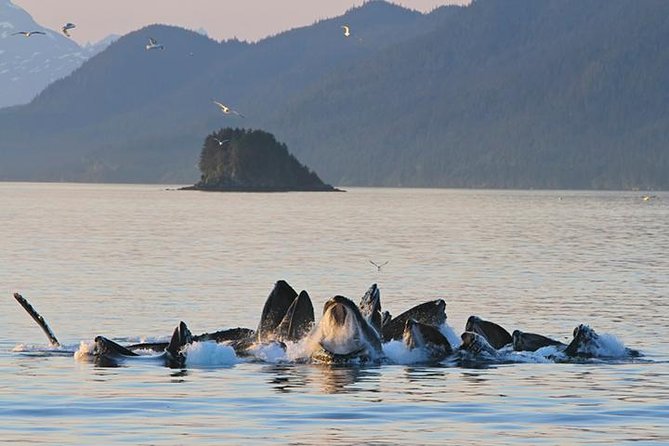
- Two hours on the water out of Auke Bay Harbor, usually the part that makes this worth it.
- Heated cabin plus open decks, so you can swap comfort for photos without leaving the boat.
- Naturalist-guided whale viewing, with commentary that helps you spot whales and other wildlife faster.
- Wildlife bonuses beyond humpbacks, including orcas, bald eagles, seals, and sea lions.
- A short Mendenhall Glacier photo stop from the water, when visibility allows.
- Small-to-midsize group setup (24-passenger jet boat or up to 49 on a catamaran), with decks designed for viewing.
From Mt. Roberts Tram to Auke Bay Harbor: the quick coach-to-boat setup
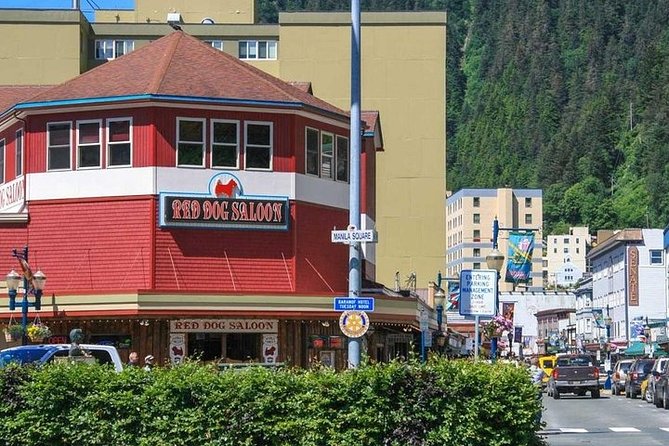
Your day starts downtown at 490 S Franklin St, Juneau, under the cables in front of the Mt. Roberts Tramway. This matters because the tour is organized around that tram area. The timing is also straightforward: your tour time is a check-in time, and departure happens within about 10 to 15 minutes.
From there, you board a coach bus for a scenic Southeast Alaska drive to Auke Bay Harbor. The ride is about 25 minutes. It is long enough to settle in, but short enough that you still feel like the boat time is the main event. This is why the tour is a good match for cruisers who want a whale watch without committing half a day.
Once you arrive at Auke Bay, you go straight into the water portion: “All aboard,” and then it is scanning time. If you are arriving by cruise ship, you will be asked for your ship name at booking, and your dock situation may affect how you get to the tram meeting area. One dock is within a 10-minute walk, while the A Dock provides a downtown shuttle to the tram.
You can also read our reviews of more tours and experiences in Juneau.
On the water with humpbacks: decks, spotting help, and wildlife possibilities
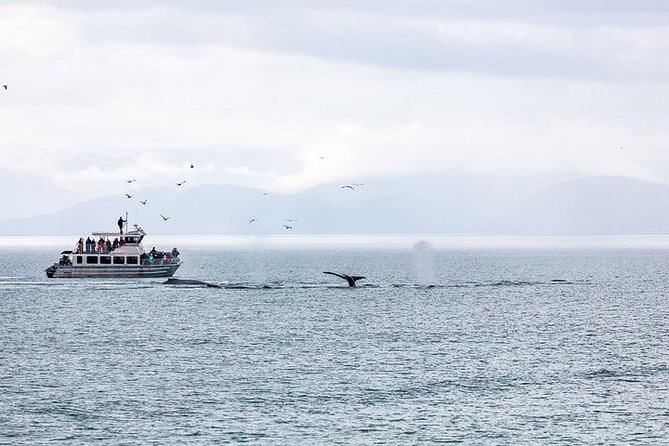
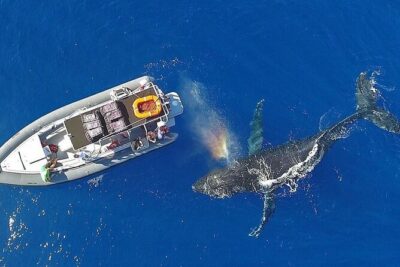
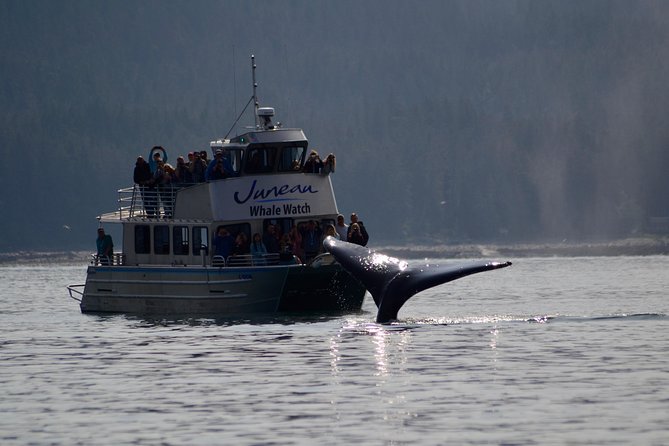
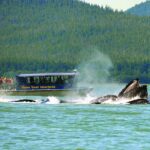
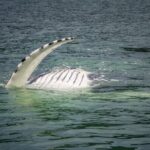
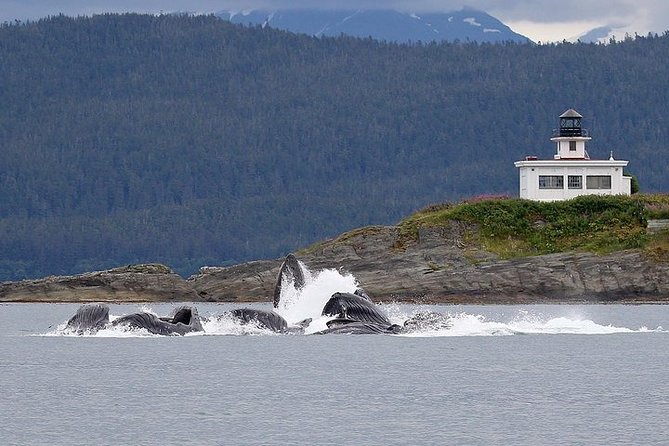
This is a humpback whale–first itinerary. Expect roughly 2 hours on the water during the full ~3-hour tour window. The boat type can vary. You may ride a custom 24-passenger jet boat or a 49-passenger catamaran, but the goal stays the same: you get viewing decks, the ability to move where you can see best, and onboard commentary to help you understand what you are seeing.
Here is how I’d think about the whale hunt:
- You are out hunting for humpbacks, but you are also watching constantly for other species.
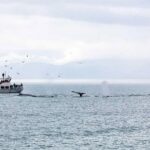
- When whales show up, the captain slows down so you can see them more clearly and take photos.
- Even when whales are quiet, the scenery and wildlife can keep the trip lively.
Your naturalist guide and captain commentary help you read whale behavior and notice wildlife signals. In the crew stories people share, the guide team often gets praise for making spotting easier, not just describing what to look at. Names that have shown up in recent crew mentions include Noah, Sarah, Chris, Ford, Nate, and Ben on the boat, plus Randy as the bus driver. Those details are not about celebrity travel; they are a signal that the operator runs with consistent, hands-on staff who work the experience, not just the schedule.
Besides humpbacks, the tour can include sightings like:
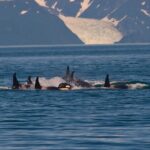
- Orcas, sometimes described as distant depending on conditions
- Bald eagles, often spotted around the area
- Seals and sea lions
- Black bear and other Alaska wildlife (wildlife is always weather and timing dependent)
One practical note: whale watching has real rules about how close boats can get. A guest cited a 100-yard-style guideline they had heard about, and that can affect how crisp photos look if whales stay farther out. The good news is that the boat is designed for viewing from both inside and out, and the crew works with other boats to spread out to increase search odds when whales are elusive.
Mendenhall Glacier photo stop: a fast 5-minute reality check
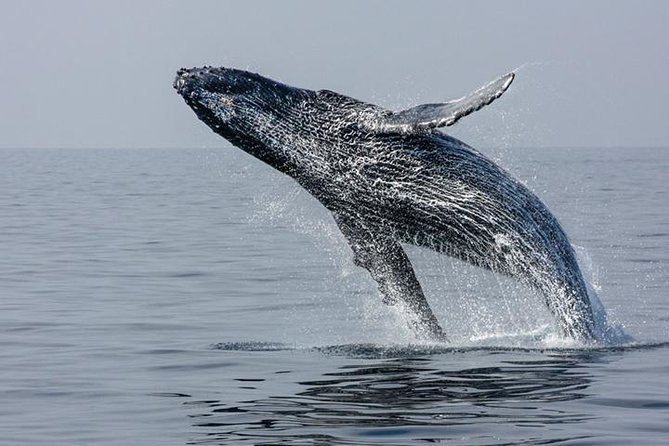
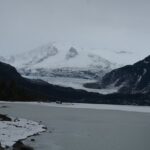
The tour name includes Mendenhall Glacier, but it is important to know how the glacier stop actually works. Toward the end of the cruise, you get a five-minute photo stop on the water. It is explicitly weather dependent.
That short window is part of the tradeoff you make for an express 3-hour itinerary. On a clear day, you can snap photos and feel like you got that iconic Juneau glacier connection. On a cloudy or low-visibility day, you may struggle to see much from the water, because you are not driving up to the glacier viewpoint park.
A couple of disappointed moments show up in recent feedback, including confusion about the glacier stop. The operator response to that type of issue is basically: the glacier stop depends on conditions, and to get a guaranteed park-style viewing you typically need a longer combo option that includes more time on land. Translation for your planning: treat the glacier stop as a bonus when visibility cooperates, not as a guaranteed close-up.
The boat experience that keeps it comfortable: heated cabin, big windows, and deck access
This part is a big deal in Juneau. Even in good weather, the water can be chilly, and in rainy weather it is downright damp. This tour helps with the basics:
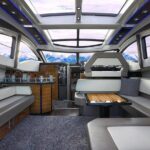
- A heated cabin (enclosed and warm)
- Wide viewing windows, with viewing from inside
- Spacious outside decks for photography
- Bathrooms on board
- Snacks and refreshments during the cruise
You also get small onboard items like filtered water and trail mix bars. These are the kinds of details that make the middle of the tour feel easier, especially if you are doing this on the same day as a cruise stop and you did not plan a long breakfast.
And size matters. A smaller jet boat (about 24 passengers) can feel more maneuverable for viewing, while a larger catamaran (up to 49) still works when the deck layout is built for spotting. In multiple high-rating reports, people highlight viewing angles and deck design, plus that the boat stays clean and the crew runs a safe, controlled operation.
Your best move is simple: dress for cold and rain, then decide where you want to be. If you get cold fast, you can stay inside with wide windows and still catch whales. If you want photos, you will eventually move out to the decks when whales are nearby.
Wildlife spotting tips you can actually use in 2 hours
Two hours sounds short until you are on the water and watching. The value of a naturalist-led tour is that you do not just point at birds and hope for the best. You get better at noticing what matters.
From the way crew and guides are described, the guiding style tends to be practical: you learn what to watch for and how to scan efficiently. That includes:
- spotting behavior that suggests whales are close to the surface
- watching for other wildlife indicators, like eagles or sea mammals in the area
- using the boat’s movement and slower positioning when whales are spotted
If you want your photos to come out better, plan like this:
- Use indoor windows when visibility is poor or it is raining hard.
- Move to the outside deck when the captain slows and you know whales are in front of you.
- Expect that some wildlife, especially orcas, may appear farther out depending on what the captain’s search finds.
One theme that keeps popping up in the high-star stories is how motivated the crew is once whales are spotted. Names like Carrie and Gracie have been mentioned in relation to memorable whale encounters, along with captains and mates who keep the group comfortable on cold days. That means you are not just passively riding; the crew is actively managing the hunt.
Price and value: what you pay for and what you get for $156
At $156 per person for roughly 3 hours total, this is not a budget activity. But it can still feel like strong value if you compare it to cruise-sponsored excursions, which often cost more for a shorter or less flexible experience.
One clear value signal from feedback: people who booked independently noted big savings versus cruise-line options, including a figure of about $200 saved on a higher priced cruise excursion. That kind of saving matters in Juneau, where food and tours can get pricey fast.
What you are paying for here is:
- transportation tied to the tram meeting area
- a guided whale hunt with naturalist commentary
- two hours on the water on a heated, viewing-focused boat
- snacks and water onboard
- a short glacier photo stop when weather allows
The price is harder to justify if you hit bad timing for whales. Whale sightings are guaranteed between May 15 and September 15. Outside that window, sightings are not promised, and you may end up with a trip that feels more like wildlife watching than a whale spectacle. That is not a failure; it is how Juneau whale season works.
Who this tour fits best (and who might want a different option)
This is a smart fit if you:
- are short on time in Juneau and want an express whale watch
- want both indoor comfort and outdoor deck access
- care about interpretation (naturalist guide, onboard commentary)
- want a practical combination of whales plus a quick Mendenhall Glacier moment
It can also work well for couples and families because group size stays reasonable and the boat setup is designed for viewing. For solo travelers, the guided hunt plus the structured boat layout can make it easier to feel included even when you are traveling alone.
You might consider an alternative if:
- you want a guaranteed glacier viewpoint on land (because this is a brief photo stop from the water)
- you are traveling outside the May 15 to September 15 window and are very sensitive to the risk of fewer whales
When to go: seasonality and weather that never follows your calendar
Two things shape your odds in Juneau: season and weather.
Season: Whale sightings are guaranteed between May 15 and September 15. That is the strongest planning anchor for most first-timers. If you are traveling in late season, it is still possible to see whales, but you should expect more variability.
Weather: The tour operates in all weather conditions, and the day is rain-ready. That sounds like a vague promise until you are the one bringing the wrong jacket. Pack layers. Plan for rain. Expect cold. This is not a location where a light sweatshirt is enough.
The operator’s guidance is clear: wear warm layered clothing, bring a waterproof jacket, and wear comfortable slip-proof shoes. On deck, you are dealing with wind and wet surfaces. Indoors is heated, but the transfer and the short outside moments for photos still require proper footwear.
Tips to get better photos and fewer regrets
You cannot control whales, but you can control your comfort and your readiness.
Bring:
- layers you can peel on the inside heated cabin and add back outside
- a waterproof jacket (rain happens)
- warm hat or scarf if you run cold
- slip-proof shoes for wet deck surfaces
Photo strategy:
- when the captain slows for a whale, move to the side or deck that gives you the cleanest view
- don’t wait for perfect light; act when the whale is there
- if it is cloudy, accept that your photos may be softer from distance and use the inside windows for steadier framing
Also, be early to check in. Departure is within 10 to 15 minutes, and that is part of how this express tour stays on track.
Should you book this whale watch with Mendenhall Glacier?
If your priority is whales plus a short glacier add-on, this is a strong choice—especially during May 15 to September 15 when whale sightings are guaranteed. You get the comfort of a heated cabin, real viewing access from inside and outside, and naturalist-led spotting that helps your 2 hours on the water count.
I would book it when:
- you are on a tight schedule and want an express format
- you want guided whale watching rather than a bare-bones boat ride
- you can accept that the glacier stop is brief and weather dependent
I would rethink it if:
- glacier viewing is the main goal and you need a land-based park experience
- you are traveling well outside the May 15 to September 15 window and you are not comfortable with the risk of fewer whales
FAQ
How long is the tour, and how much time is actually on the water?
The tour runs about 3 hours total, with about 2 hours out on the water in Auke Bay Harbor.
What boats do you use, and how many people are on board?
The experience is run on a custom 24-passenger jet boat or a 49-passenger catamaran. The tour has a maximum group size of 49.
Is the Mendenhall Glacier photo stop guaranteed?
No. The tour includes a short 5-minute photo stop on the water, and it is weather dependent.
What animals might you see besides humpback whales?
You may also see orca, bald eagles, seals, sea lions, black bear, and other Alaska wildlife.
Where do you meet, and how do you get there from the cruise area?
You meet at 490 S Franklin St, Juneau, under the cables in front of the Mt. Roberts Tramway. All ports or docks are within 10 minutes walking distances except A Dock, which provides a downtown shuttle to the tram.
What should I wear for a whale watch in Juneau?
Dress in warm layers and bring a waterproof jacket. Wear comfortable slip-proof shoes. The tour operates in all weather conditions.