REVIEW · SAN DIEGO
San Diego Whale Watching & Dolphin Cruise
Book on Viator →Operated by San Diego Whale Watching LLC · Bookable on Viator
Whales in view fast from Mission Bay. I like this cruise because it gets you out into the open Pacific quickly, and the onboard experts point out what you are looking at in real time through the microphone.
You also get a proper wildlife search, not a quick stop-and-go photo moment.
One consideration: sightings depend on the day. Even with a skilled captain and smart routing, some trips end with lots of dolphins and no whales, or whales but fewer dolphin passes.
Still, it is a solid way to spend an afternoon in San Diego. You cruise past iconic shoreline spots, then settle in for 2–3 hours of scanning the blue for blow, spray, and sudden movement on the water.
In This Review
- Key highlights you’ll feel on the water
- Mission Bay departure: why the first 10 minutes matter
- Is $71 worth it for San Diego whale watching?
- Route highlights: from Mission Beach boardwalk energy to Sunset Cliffs
- What animals you can realistically spot (and what to expect if you do not)
- Captain and naturalist commentary through the microphone
- Comfort, cold wind, and the smart-casual dress code
- Food, drinks, and add-ons you can choose
- Boarding experience with a cap of 100 people
- Wildlife-spotting tips that actually help
- Who this San Diego whale watching cruise suits best
- Should you book this Mission Bay whale cruise?
- FAQ
- How long is the San Diego whale watching and dolphin cruise?
- Where do I meet for the cruise?
- What should I wear for whale watching from Mission Bay?
- Are food, drinks, and restrooms available on board?
- What if we see no whales or dolphins?
- Can I cancel for a full refund?
Key highlights you’ll feel on the water
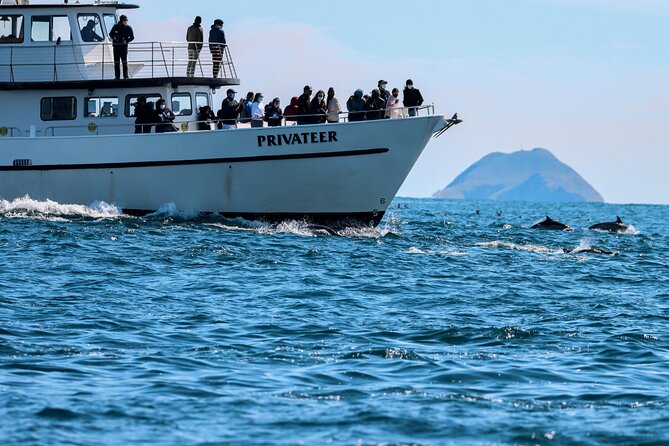
- Open Pacific in about 10 minutes after departure, so you start spotting fast
- Onboard naturalists and guides identify wildlife and landmarks over the mic
- Smart-casual comfort with real ocean chill (the water is 10–15° cooler than the bay)
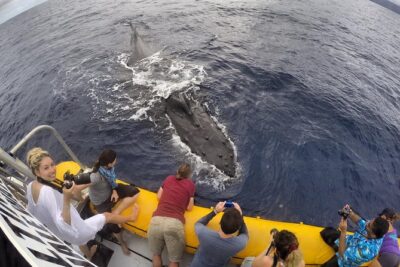
- Up to 100 people max, and the crew works to give both sides of the boat a chance
- Extras that are easy to add on like binocular rentals for $6 and priority boarding for $10
Mission Bay departure: why the first 10 minutes matter
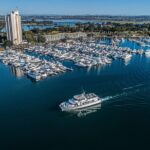
The fun starts at South Mission Bay Park, on the southern tip of the Mission Beach peninsula where bay channels meet the ocean. From there, you cruise along the coast, then head out past the jetties and into the wider Pacific.
What I like most is that you are not stuck “warming up” on calm bay water. You are moving into the open ocean in roughly 10 minutes, which means your whale watch begins early instead of feeling like a long wait for the good part.
Along the way, you also get immediate visual rewards. On one stretch you can make out Ocean Beach’s Dog Beach area and the Ocean Beach Pier as the boat transitions from “bay cruising” to “real blue-water scanning.” That matters because on slower sighting days, the ride still feels like a payoff.
And because the cruise is only 2–3 hours, you stay focused. This is not a half-day in which everyone gets restless. It is a tight window to find whales, dolphins, and other marine life.
You can also read our reviews of more tours and experiences in San Diego.
Is $71 worth it for San Diego whale watching?
For $71 per person, you are paying for three things: time on the water, expert guidance, and access to a route that puts you in the right search area.
The value improves when you look at the small included items that reduce trip friction. You get a restroom on board, plus a galley where you can purchase food and drinks during the cruise. You also get free parking on Quivira Road, which saves hassle if you are driving in.
There are also optional upgrades if you care about comfort and prep. Priority boarding is an extra $10 per person, and binocular rentals run $6 per pair. If you know you will be scanning for long stretches, binoculars can help you pick up distant blow or a fast fin cut through the surface.
One more value point: there is a whale sighting guarantee. If you do not see any whales or dolphins, the company offers a return pass to come back and try again. That is a big deal in this kind of wildlife trip, where nature sets the rules.
On the flip side, wildlife is never a guaranteed vending machine. If you are the type who needs a whale on the day of the cruise, plan to be flexible in your expectations.
Route highlights: from Mission Beach boardwalk energy to Sunset Cliffs
A whale cruise does not have to be only ocean and clouds. This route gives you scenery before you even lock in on wildlife.
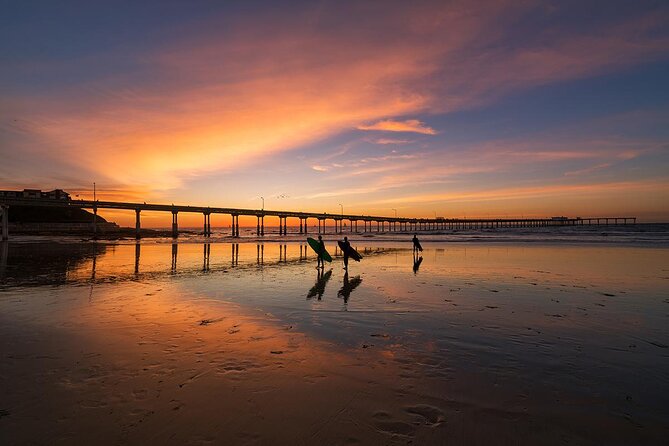
Early on, you slip past the Mission Beach Boardwalk, where you can spot beach life—surfers and skaters—and even see the Belmont Park coaster off to one side. It is a quick reminder that you are watching animals from a place that is still very much a working, living beach scene.
Then you get to the more dramatic coastline views. You pass Sunset Cliffs with its golden sandstone bluffs and sea caves, and you can see surfers below. It is a scenic contrast to the open-water portion of the trip: land glamour for a bit, then blue water again.
Even when sightings are slow, this mix keeps the cruise from feeling one-note. You get photo-worthy shore moments, then the boat shifts into “spotting mode” when you reach better conditions.
What animals you can realistically spot (and what to expect if you do not)
This is marketed as whale watching with dolphins, and the best trips tend to deliver more than one species. In practice, you can see:
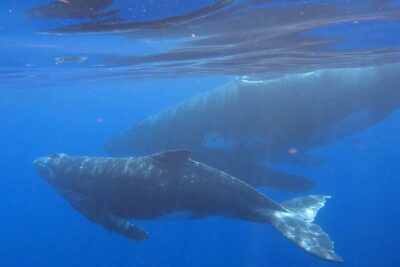
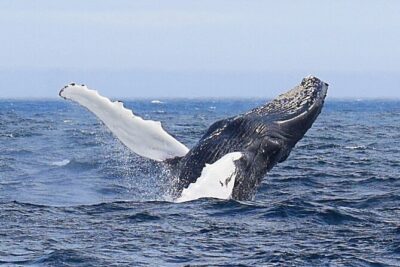
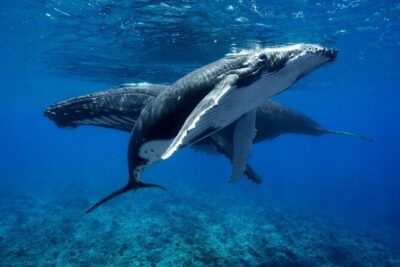
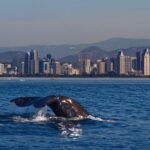
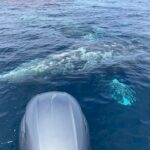
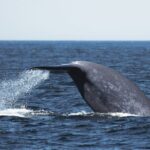
- Whales, with reports including gray whales, humpback whales, fin whales, and minke whales
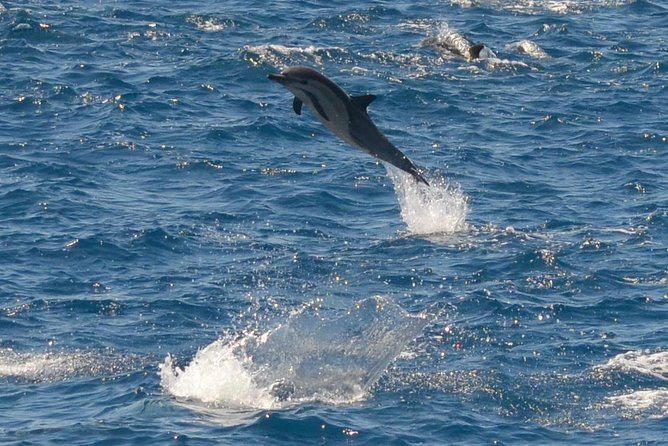
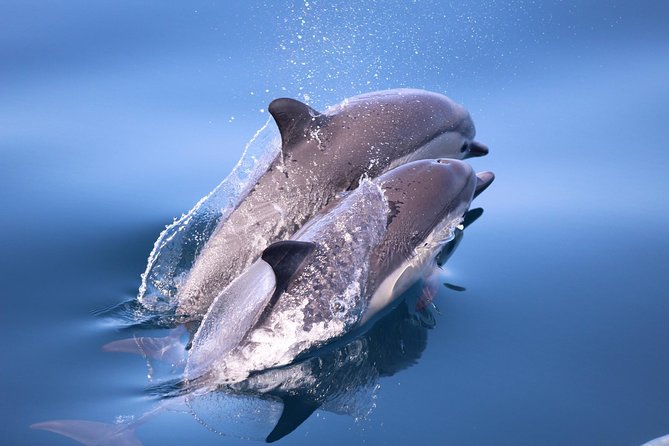
- Dolphins, including common dolphins, large pods of dolphins, and white-sided dolphins
- Other marine life such as sea lions and porpoise
You will also learn what “a sighting” looks like in real time. When you see a pod feeding or jumping, it becomes obvious why crews keep the boat at a safe distance and hold a steady course.
That said, not every cruise is built the same. Some outings focus on whales but fewer dolphins. Others show dolphins but no whales. One trip even went searching for dolphins for about an hour after finding whales and came up short.
My practical advice: treat this as a “best attempt at wildlife” experience, not a promise of a specific animal checklist. The good news is that when animals do show up, the payoff can be huge—like extended time with a single whale or a dolphin frenzy that keeps everyone pointed in one direction for a long stretch.
Captain and naturalist commentary through the microphone
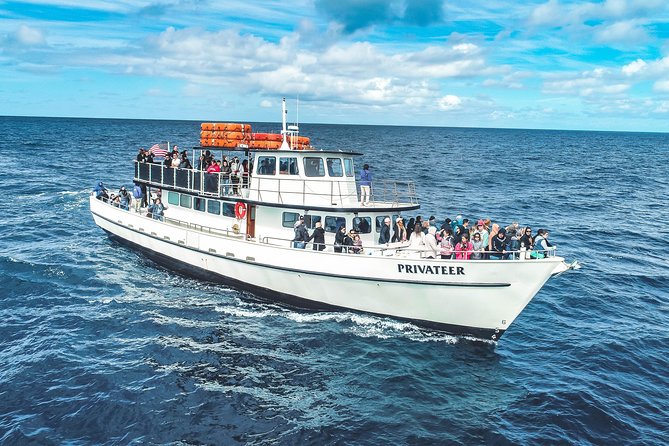
The real magic here is the human layer. The crew identifies wildlife and landmarks in real time using the microphone, so you are not left guessing if that distant spray is a whale or just wind.
The captain also plays a big role. Multiple reviews highlight that the captain has an eye for spotting whales and that the crew works to give both sides of the boat a fair chance to see what is happening.
I also noticed a pattern in how often the narration gets called out. Named naturalists come up, including Jennifer and Allison, with praise for their commentary and engaging instruction. That matters because it turns a random look at the ocean into a story about behavior—blows, spouts, feeding, and how dolphins move as a group.
One caution: sound quality can be an issue on some days. A few people noted the speaker system or microphone was hard to hear over background noise. If you are sensitive to audio clarity, sit where you can see the staff and keep your attention on the crew’s pointed directions, not only the announcements.
Comfort, cold wind, and the smart-casual dress code
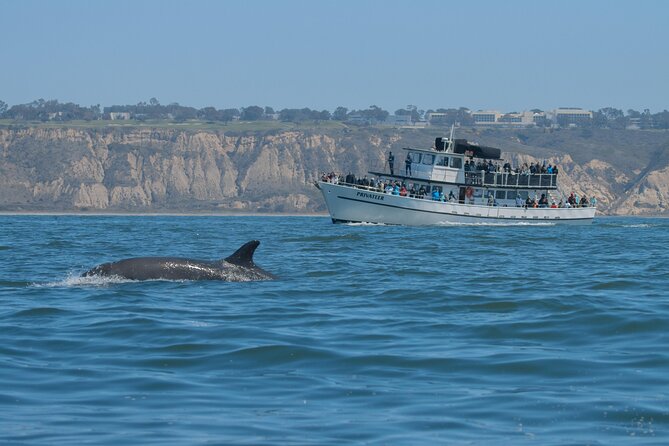
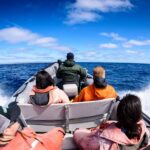
Dress for the ocean, not the bay. The cruise specifies smart casual, with a big practical note: the ocean is 10–15° cooler than the bay.
This is not a theoretical warning. People have said they were fine early and then got cold later without a windbreaker. If you tend to run chilly, pack a light jacket you can layer, plus something wind-resistant.
Also think about how you will sit while scanning. You will be looking up and out for long stretches. Being comfortable makes it easier to stay patient when the animals are farther out.
A few smart items to consider:
- layers (so you can adjust when the sun hits)
- a wind layer if you own one
- sunglasses, because glare on open water can be intense
Food, drinks, and add-ons you can choose
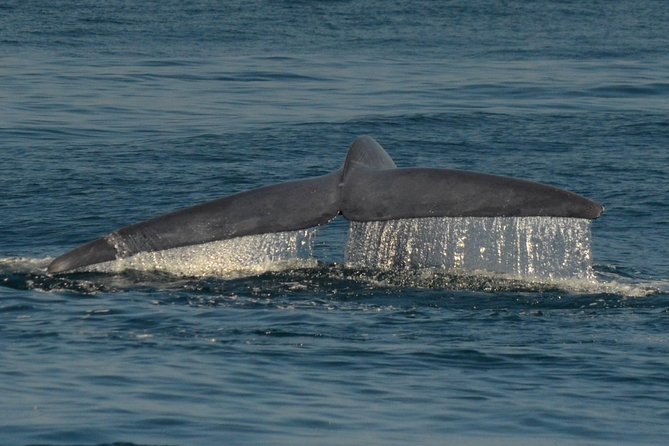
You have options on board, but they are mostly pay-as-you-go.
The galley offers food and drink for purchase, and soda/snacks are available too. Alcohol is listed as available for purchase after the boat travels 3 miles, so it is not an immediate beer-on-the-dock situation.
If you want to maximize spotting without buying your own equipment, binocular rentals are available for $6 a pair. Priority boarding for $10 can help if you want an easier entry and pick a seat quickly.
Don’t forget the included basic comfort: there is a restroom on board, which is a real quality-of-life factor for a 2–3 hour cruise.
Boarding experience with a cap of 100 people
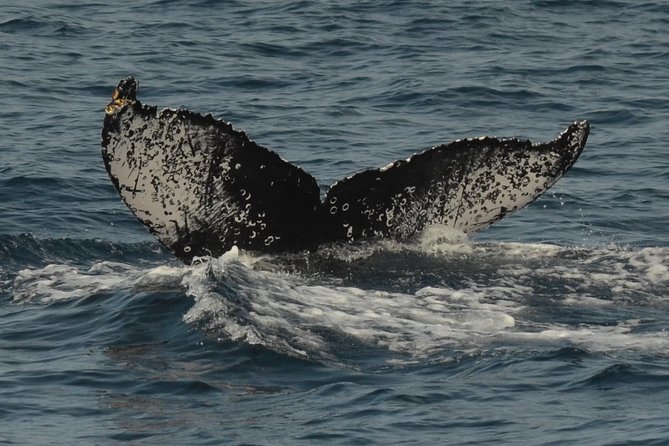
This cruise limits the group size to up to 100 travelers, which keeps it more manageable than large mega-tours. Still, it is a boat with shared space, so crowding can feel noticeable when sightings are happening and everyone stands at the same time.
Plan to arrive early. You should be there 30–45 minutes prior to departure. That gives you time to get settled before the crew starts moving into the open-water portion.
You can also upgrade your boarding. Priority boarding is available for $10, which is worth it if you know you will be stressed about finding a spot quickly.
The cruise also notes service animals are allowed and that it is near public transportation. For many people, that makes it an easier fit than tours that require a car-and-shuttle chain.
Wildlife-spotting tips that actually help
You get the best results when you cooperate with the crew’s search patterns and listening cues.
- Follow the crew’s lead when they point out directions. The captain and naturalists know where to look for better odds, and they shift attention quickly when conditions change.
- Give distant movement a chance. Whales and dolphins are often first detected by something small: a blow far off, a sudden change at the surface, or the shape of a fin.
- Bring the right posture. Many good sightings look best when you are standing or leaning for a better angle, even if you rotate positions to avoid getting stuck in one spot.
And remember the most honest reality of whale watching: some days are “slow day” days. On those trips, your best move is to treat the ride as a chance to learn. The narration plus the scenery makes it enjoyable even when the wildlife decides to stay out of view for a bit.
Who this San Diego whale watching cruise suits best
This cruise fits first-timers, families, couples, and solo travelers.
Families can do it as long as rules are followed: children 15 and under must be accompanied by an adult. The cruise also states that most travelers can participate, so you are not locked out if you do not have special gear.
If you love guided sightseeing, you will probably enjoy it. The onboard naturalist and guide layer helps you identify what you are seeing, and it turns a simple boat ride into a mini lesson about marine life.
If you are very sensitive to audio issues, keep an eye on where you sit and bring a bit of patience. A few reviews raised concerns about sound being hard to hear at times, so visual cue-following matters.
If you absolutely need a guaranteed whale sighting, you might feel uneasy. Nature controls the schedule. The good news is that the return pass policy for no whales or dolphins gives you a safety net.
Should you book this Mission Bay whale cruise?
I would book this if you want a classic San Diego wildlife afternoon with a real chance at whales and pods of dolphins, plus enough scenery to keep the experience satisfying even on quieter days. The combination of quick exit to open water, live guidance over the mic, and the return pass guarantee makes it feel like a thoughtful value.
I would pause if you are set on a very specific outcome, like seeing whales and dolphins together every time. On some trips, you may get mostly one or the other. Also, if you rely heavily on audio narration, be aware that the microphone system can be hard to hear when the boat is noisy.
If you decide to go, come dressed for the wind, arrive early, and trust the crew’s directions. That is when the cruise turns into one of those rare tours where you stop talking and start watching.
FAQ
How long is the San Diego whale watching and dolphin cruise?
It lasts about 2 to 3 hours.
Where do I meet for the cruise?
You meet at 1617 Quivira Rd, San Diego, CA 92109, USA, and the activity ends back at the meeting point.
What should I wear for whale watching from Mission Bay?
Dress in smart casual. The ocean is listed as 10–15° cooler than the bay, so layers help.
Are food, drinks, and restrooms available on board?
Yes. There is a galley with food and drink for purchase, including soda and snacks, and there is a restroom on board. Alcohol is available for purchase after the boat travels 3 miles.
What if we see no whales or dolphins?
The company offers a return pass for guests who do not see any whales or dolphins on their trip.
Can I cancel for a full refund?
Yes. You can cancel for a full refund if you cancel at least 24 hours before the experience starts. If the experience is canceled due to poor weather, you’ll be offered a different date or a full refund.