REVIEW · MADEIRA
Whale and Dolphin Watching Tour from Funchal
Book on Viator →Operated by Rota dos Cetaceos - Whale & Dolphin Watching · Bookable on Viator
The Atlantic off Madeira is alive and loud. This whale and dolphin watching trip is built around marine biologists and spotters that help you find the action faster. I like that you’re not just staring at open water. You get a quick, real briefing before you head out.
Two things I really like: first, the team uses lookouts on land to guide the boat toward sightings, and you’re watching from vessels set up for spotting at sea. Second, you’re not left totally empty-handed if you get unlucky—there’s a second wildlife-spotting trip guaranteed if you make no sightings the first time.
One possible drawback: sightings are never 100% guaranteed, and snorkeling (or swimming with dolphins) depends on what’s possible that day. If you’re prone to seasickness, the smaller, more “in-the-water” style of boat may feel bouncy for some people.
In This Review
- Quick highlights you’ll care about
- Madeira whale watching: what this tour is really like
- Meeting point and getting set up in Funchal
- The core plan: Rota dos Cetáceos and how the “search” works
- What you might see: dolphins, whales, and the bonus species
- Snorkeling and swimming with dolphins: how to interpret the promises
- The boat ride: excitement, comfort, and seasickness reality
- Guides and commentary: why “who’s on the boat” matters
- Price and value: $58.07 for a Madeira wildlife search
- Weather matters more than you think
- Who should book this tour
- A quick checklist before you go
- Should you book Whale and Dolphin Watching from Funchal?
- FAQ
- How long is the whale and dolphin watching tour from Funchal?
- What’s the price per person?
- What language is the tour offered in?
- What’s included in the tour price?
- Is snorkeling included?
- Can you swim with dolphins on this tour?
- What’s the meeting point in Funchal?
- Is the tour canceled in bad weather?
- Is there a group size limit?
Quick highlights you’ll care about
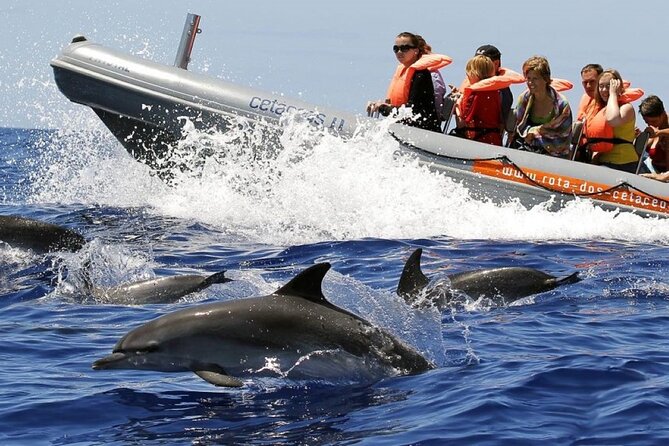
- Marine biologists on board: you’ll get education before you start spotting.
- Land lookouts: spotters help aim your time at the right patch of water.
- Designed for wildlife viewing: vessels are equipped for watching dolphins and whales.
- Seasonal water time: snorkeling may be offered, depending on the season.
- Second trip if you see nothing: a built-in safety net for blank outings.
Madeira whale watching: what this tour is really like
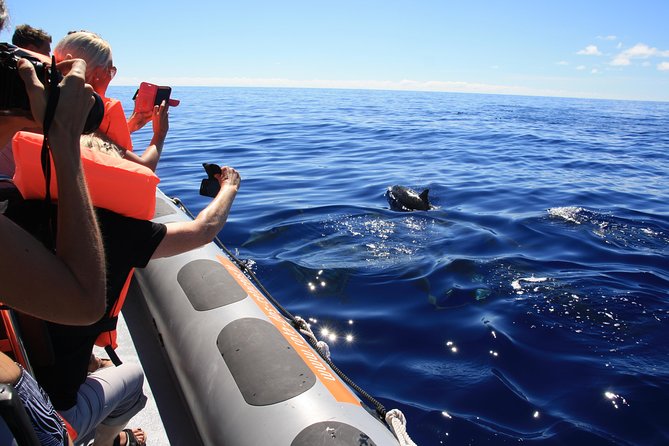
If you’re picturing a “sit back and hope” boat ride, this trip is trying to be smarter than that. The big difference here is that the outing is paired with a marine team and support from spotters on land. That matters because wildlife doesn’t hang out where a boat decides to go—it shows up where food and currents line up.
You’ll start with a short intro from the marine biologists team. It’s not just lecturing. The purpose is to help you understand what you’re looking for—how whales and dolphins often show up, what behavior to watch from a distance, and why sometimes you see a spurt of action then nothing for a while. Once you’re on the water, the hunt becomes more like pattern recognition than random scanning.
And the tone matters. One recurring theme from people who rate this highly is that the approach feels safe and respectful toward animals. In whale watching, that’s a big deal. Not because it’s “nice,” but because good operators tend to get you better, steadier viewing without pushing the animals into stress.
The duration is about 2 hours 30 minutes. That’s long enough for a real search, but short enough that the day doesn’t get swallowed whole—useful in Madeira, where you’ll likely want time for beaches, viewpoints, or levada walks later.
You can also read our reviews of more tours and experiences in Madeira.
Meeting point and getting set up in Funchal
You’ll meet at Rota dos Cetáceos, Galerias São Lourenço, Loja 35, São Martinho, 9000-045 Funchal, Portugal. The good news is the meeting area is near public transportation, so you’re not forced into complicated logistics just to start a tour.
You’ll use a mobile ticket, and you’ll get confirmation at booking time. Dress code is smart casual, which usually means: comfortable clothes you don’t mind getting a bit windswept, plus layers. If you tend to run cold on boats, bring a light jacket even if Funchal feels warm when you leave.
Group size caps at 52 travelers. That’s not tiny, but it also isn’t a cattle-car situation. Real viewing depends on where people stand and how the boat handles movement, so a moderate group size can help you avoid the worst bottlenecks.
The core plan: Rota dos Cetáceos and how the “search” works
This is a one-stop structure: you head out for your main spotting run around Rota dos Cetáceos. There isn’t a long sequence of different locations. Instead, the focus is time-on-water spent where the team thinks wildlife will be.
Here’s how the flow usually feels:
1) Briefing before departure
You get a short intro led by the marine biologists team. This is where you learn the basics so the rest of the trip makes sense.
2) Spotters guide the route
There are lookouts on land who help guide the boat toward animals. That means your captain isn’t working purely off guesswork.
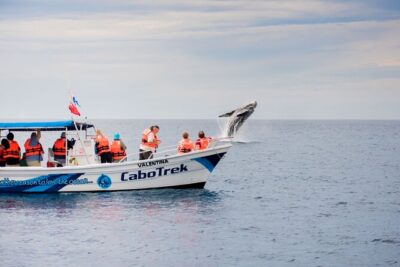
3) Wildlife watching from a viewing-equipped vessel
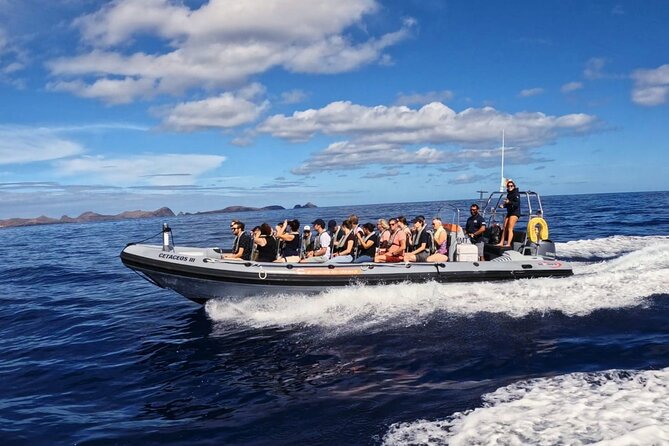
The boats are set up for observation. That makes a difference for keeping sightlines clear and helping you get the best angles without scrambling.
4) Possible extra water time
Depending on the season, you may get free time for snorkeling. The tour also notes that swimming with dolphins may be possible.
Why this matters: the Madeira sea can change quickly—wind, swell, and visibility vary. Having a team that’s actively scanning and adjusting the route turns your “time in transit” into actual search time.
What you might see: dolphins, whales, and the bonus species
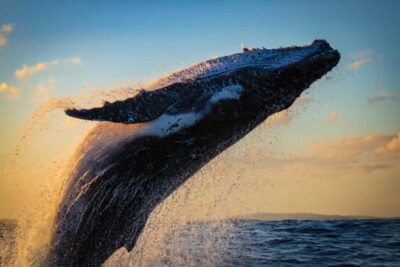
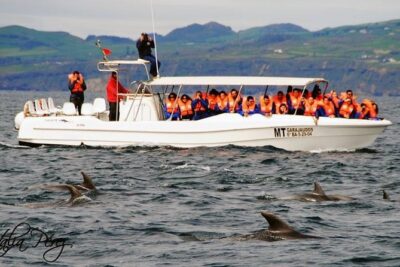
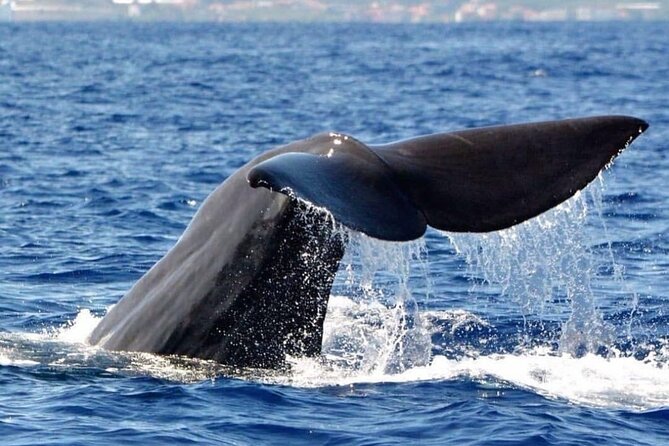
You’re going for wild dolphins and whales. The experience also mentions you might spot turtles along the way, which is a nice extra when it happens.
One useful way to think about this: don’t plan your expectations around a single species. Dolphins can be fast and surface briefly. Whales can take longer to show themselves, with longer pauses between appearances. The marine briefing is meant to prepare you for that rhythm.
Also, one part of the trip that helps your odds is the built-in response if nothing shows up. The tour offers a second wildlife-spotting trip guaranteed if you make no sightings during the first run. That doesn’t magically create animals, but it does reduce the chance of a completely blank trip stealing your day.
Snorkeling and swimming with dolphins: how to interpret the promises
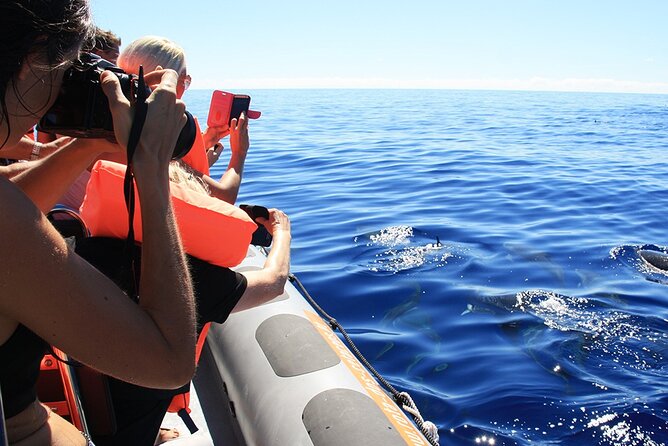
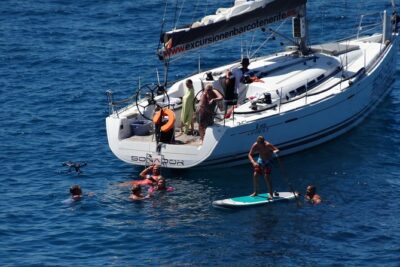
This tour includes snorkelling equipment. It also gives you free time for snorkelling depending on the season. So if water time is one of your main goals, this is worth your attention.
But there’s an important real-world note: the trip description says swimming with dolphins may be possible, yet availability can vary. Some people who were expecting swimming didn’t get it, which they felt was unfair. That doesn’t mean the activity is never offered. It means you should treat it like a conditional extra, not a locked-in highlight.
My advice: if snorkeling is your “make-or-break” activity, plan for the idea that it’s seasonal, not guaranteed. Bring swimwear that’s easy to wear under your clothes so you can switch quickly if snorkeling happens. And if you’re hoping to swim with dolphins, keep your expectations flexible and treat it as a bonus.
The boat ride: excitement, comfort, and seasickness reality
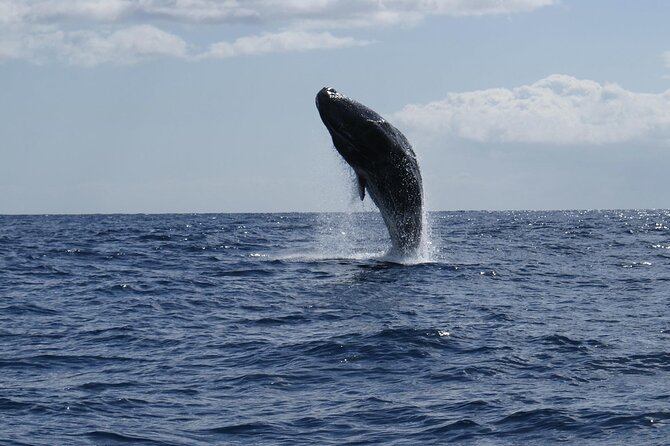
Most people who love this tour mention the adrenaline of heading into open Atlantic waters. Seeing wildlife at sea has a built-in thrill because there’s real motion and real distance.
That said, not everyone feels the same about comfort. One criticism calls out that the boat can feel small and can cause dizziness due to instability. I can’t tell you exactly how your body will react, but I can point you to the practical takeaway: if you’re sensitive to motion, plan for it.
Bring motion-sickness help if you use it. Wear shoes with decent grip. Stay aware of where you step when the boat shifts. And if you have the option onboard, don’t assume the best spot is the closest to the rail—sometimes the smoothest view is where the boat pitches the least for your angle.
Guides and commentary: why “who’s on the boat” matters
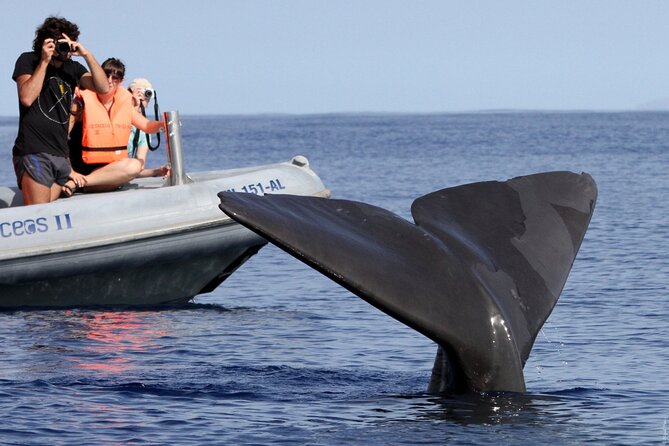
The trip isn’t run as a blind ride. You have a marine biologists team for the intro, plus guides and a tour escort/host. You’ll also get live commentary on board and a professional guide.
What you get from that kind of setup is simple: better interpretation. When you know how whales surface, where to watch, and what dolphin group behavior can look like, the whole experience shifts from luck to skills. Even if you only see a short burst of wildlife, you’ll understand what that burst likely meant.
This is also where the respectful approach tends to show. When operators care about safe viewing distances and correct handling, you spend your attention on the animals—not on confusion about what’s going on.
Price and value: $58.07 for a Madeira wildlife search
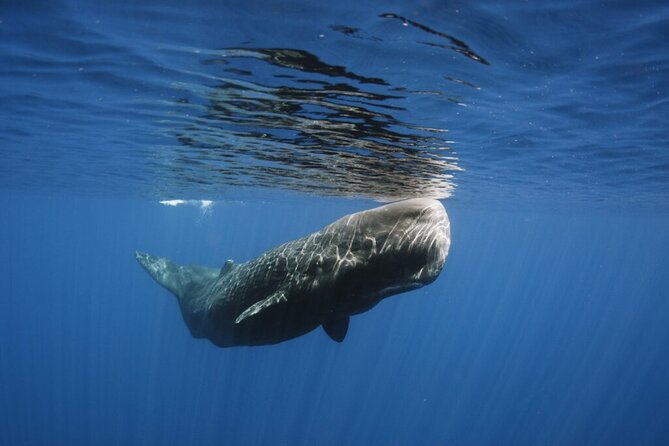
At about $58.07 per person for roughly 2.5 hours, you’re paying for a real spotting effort: a boat out into the Atlantic, marine education, and on-the-ground spotting support.
Is it worth it? Often yes, because you’re not just buying a ride—you’re buying the chance to connect with Madeira’s marine life in the wild, plus the possibility of extra water time (snorkeling depending on season). The “second trip if you see nothing” feature also adds value. A blank outing is the worst-case scenario for whale watching. This tour at least tries to reduce that risk.
Still, it’s not a safari where animals are guaranteed on a schedule. If you’re going in expecting whales every time, you might feel let down. If you go in understanding that wildlife is wild—and you like the idea of a guided, informed search—this pricing starts to look fair.
A practical value tip: pack and plan your day so you’re not rushing afterward. The most satisfying whale watching days are the ones where you don’t feel trapped by tight timelines.
Weather matters more than you think
This is a weather-dependent experience. The tour notes it requires good weather, and if it’s canceled due to poor weather, you’ll be offered a different date or a full refund.
That’s a big deal in Madeira. Wind and swell can change visibility and comfort fast. So if you’re flexible with your schedule, build your whale watching slot for a period when you can adjust. If you only have one day in Madeira and it’s rainy or windy, be ready for the tour to shift plans.
Who should book this tour
You’ll probably enjoy it most if:
- You want guided wildlife viewing instead of self-guided guesswork.
- You like marine facts and learning what you’re seeing, not just pictures.
- You’re okay with the idea that sightings are not guaranteed, but the tour gives you a second chance if you see nothing.
- You’re planning a Madeira day and want about 2.5 hours on the water without taking over your whole schedule.
You might think twice if:
- You know you get severe motion sickness and don’t take precautions.
- You need snorkeling or dolphin swimming to happen no matter what (since snorkeling is seasonal and dolphin swimming is described as possible).
A quick checklist before you go
Based on what’s included and what’s not, here’s what to plan:
- Bring a layer for wind and sea spray. Smart casual usually works, but comfort matters.
- Wear grip-friendly footwear.
- Use sunscreen and sunglasses if the sun is out. The sea glare can be strong.
- Food and drinks are not included, so plan snacks or keep that meal timing in mind.
And if you’re hoping for snorkeling: bring swimwear you can access quickly.
Should you book Whale and Dolphin Watching from Funchal?
I’d book it if you want a well-run marine spotting trip with real guidance, land spotters, and a built-in safeguard for blank sightings. The combination of marine biologists, live commentary, and a second outing if you see nothing makes it feel like more than a gamble.
I’d hesitate if your goal is ultra-specific—like guaranteed dolphin swimming—or if you’re very sensitive to boat motion. In that case, go armed with a motion plan and flexible expectations about what you’ll actually get in the water that day.
FAQ
How long is the whale and dolphin watching tour from Funchal?
It lasts about 2 hours 30 minutes (approx.).
What’s the price per person?
The price is $58.07 per person.
What language is the tour offered in?
The tour is offered in English.
What’s included in the tour price?
The tour includes all activities, live commentary on board, a local guide, a tour escort/host, a professional guide, and use of snorkeling equipment.
Is snorkeling included?
Free time for snorkeling is available depending on the season, and snorkeling equipment is provided.
Can you swim with dolphins on this tour?
The tour description says it’s possible to swim with dolphins, but it is not stated as a guaranteed part of every departure.
What’s the meeting point in Funchal?
You start at Rota dos Cetáceos, Galerias São Lourenço, Loja 35, São Martinho, 9000-045 Funchal, Portugal.
Is the tour canceled in bad weather?
The experience requires good weather. If canceled due to poor weather, you’ll be offered a different date or a full refund.
Is there a group size limit?
Yes. The maximum group size is 52 travelers.