REVIEW · REYKJAVIK
RIB Whale Watching Small-Group Boat Tour from Reykjavik
Book on Viator →Operated by Whale Safari · Bookable on Viator
Close to whales, with puffins in season.
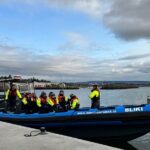
I like that this is a small-group RIB tour (max 12) with a professional marine biologist guide, so the experience feels personal instead of like you’re watching from the back row. I also love the chance to add puffins near Reykjavík Old Harbour during the early May–late August season. The main drawback to keep in mind: it can get choppy, and it’s not recommended for knee problems.
What makes this one worth a look is the mix of big search effort and close-to-the-water viewing. You’ll cover a large area in a fast, stable boat, then you’ll spend dedicated minutes at the nearby islands for birds before the main whale hunt in Faxafloi Bay. If you’re prone to seasickness or have physical limitations, plan smart—dress warm, use the provided gear, and consider skipping if your knees don’t handle bumpy rides well.
In This Review
- Key things to know before you go
- From Old Harbour to the bird islands: what this RIB day feels like
- The puffin windows: quick island stops that can pay off big
- Whale safari in Faxafloi Bay: why the search area matters
- The return along Reykjavík’s sea front: Harpa and the Sun Voyager view
- Warm coveralls, safety gear, and comfort on a bumpy day
- Price and value: why $208 feels fair for this format
- How to set expectations for whale sightings (and when you’ll get a redo)
- What to wear and bring so your day stays fun
- Should you book this Reykjavík RIB whale watch?
- FAQ
- How long is the RIB whale watching tour?
- Where does the tour start in Reykjavík?
- Is the tour in English?
- What wildlife can I expect to see?
- What’s included in the price?
- What should I wear?
- Is food and drinks included?
- What is the minimum age for children?
- What if no whales are spotted?
- What if the tour gets canceled due to weather?
Key things to know before you go

- Max 12 people on board, which really changes how you see whales at sea level.
- Marine biologist guide plus all safety gear, and you’ll get warm coveralls to stay comfortable.
- Puffins on the islands near Reykjavík during early May–end of August (usually quick, focused island stops).
- A big search area in Faxafloi Bay, increasing your odds versus slower boats.
- Shock-absorbing seats designed for comfort on the water when conditions get rough.
From Old Harbour to the bird islands: what this RIB day feels like
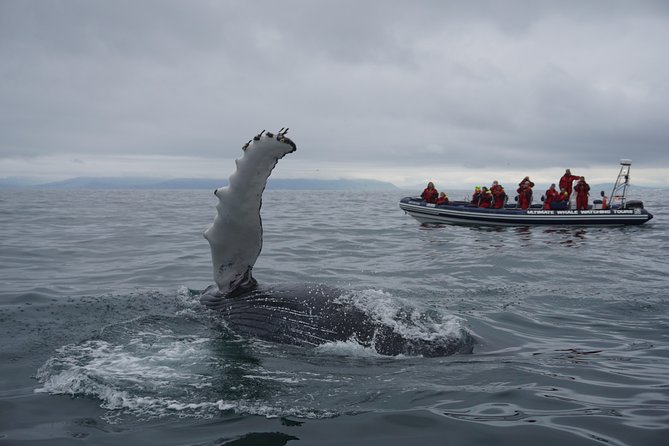
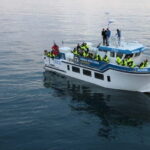
Reykjavík’s whale season has a rhythm, and this tour is built to follow it. You start at Ægisgarður 5d in Reykjavík, then you’re quickly out the door and onto the North Atlantic, where your “wow” moments tend to happen fast—because you’re not stuck waiting for one narrow patch of ocean.
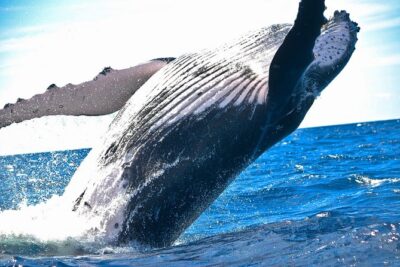
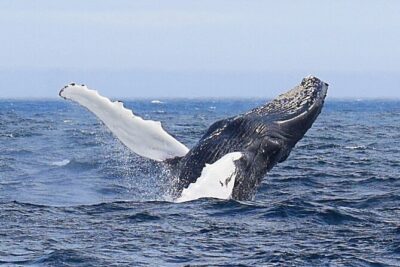
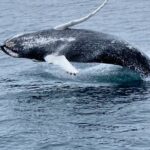
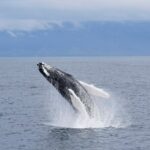
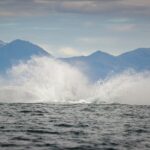
The RIB format matters more than people expect. Small boats move quicker, can search wider, and—most importantly—put you at sea level with your line of sight aimed where whales actually surface. That’s the difference between seeing spray from a distance and seeing real behavior close up: sudden head turns, a breach that happens right in front of the bow, and dolphins that pop up and circle like they’re curious.
The tour is about 2 hours total, and that time is used in a smart sequence: a short harbour/early island stop for birds, then the longer whale search in Faxafloi Bay. There’s also a short return-to-town stretch along the shoreline, so the boat ride itself stays part of the fun, not just the means to an end.
One more practical note: you get a mobile ticket and the tour is offered in English. The meeting point is listed as near public transportation, so you can plan a simple start without a complicated logistics hunt.
You can also read our reviews of more tours and experiences in Reykjavik.
The puffin windows: quick island stops that can pay off big
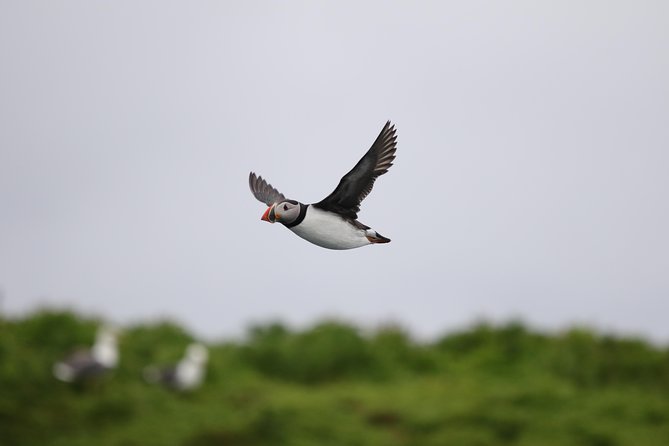
If you’re visiting Reykjavík between early May and the end of August, this tour adds a bird bonus that’s hard to beat: puffins on nearby islands outside the harbour. During the season, the itinerary includes stops at places such as Akurey, Engey, or Lundey (just outside Reykjavík), plus another harbour-near puffin chance.
Here’s what to expect in real time:
- You’ll make a short stop near islands (about 10 minutes) with time set aside specifically for puffins and sea birds.
- The pace is efficient: you’re not expected to hike or spend hours waiting on a cliff. You’re there for the sea-bird moment, then you’re back in the boat to keep the day moving.
That quick timing can be a plus. On cold, windy Iceland days, patience is easy to lose. A tight window gets you close without freezing your soul off for an entire hour. And if the birds are active, you can rack up great sightings quickly—puffins, auks, gannets, and other seabirds show up along the cliffs and waterline.
Practical tip from what’s worked for people: dress for wind the moment you reach the harbour. Even with coveralls, you’ll want a hat and gloves ready, because the islands are all about sea breeze.
Whale safari in Faxafloi Bay: why the search area matters
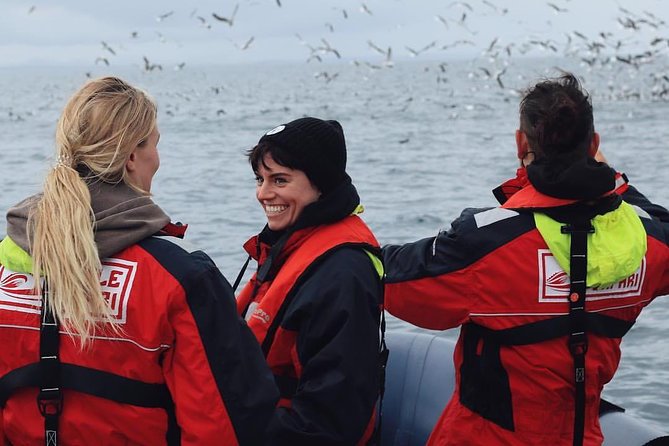
After the bird stops, the day shifts into whale-hunting mode. The main stretch is about 1 hour 30 minutes in Faxafloi Bay, and that’s where your odds improve.
There are two reasons this matters:
- Whales move. The ocean isn’t a theme park with fixed photo spots. A tour that can cover more water quickly has a better chance of meeting the animals where they are.
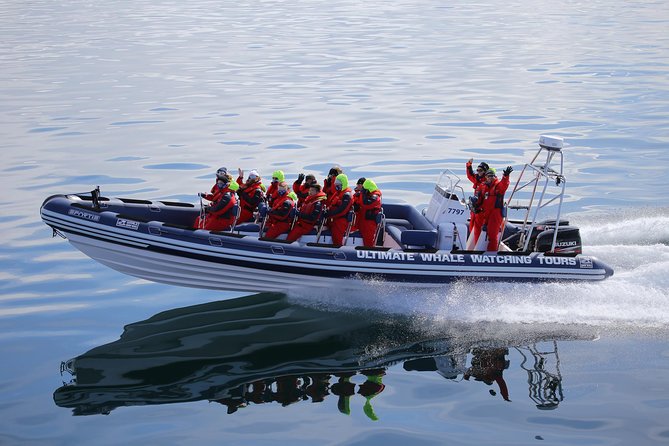
- You see at sea level. The RIB boats are fast and small, and they’re designed to get you closer to the action than bigger sightseeing vessels that stay farther out.
The boat setup also helps. You’ll sit on high-performance suspension seats, which are meant to absorb shocks and reduce jarring impacts. In plain terms: it doesn’t make rough water pleasant, but it can reduce the punishment you feel when waves hit the hull.
What I’d expect you to experience here is a mix of scanning time and sudden bursts of excitement. It’s rarely one long, single sighting. It’s more like: spot something, circle, watch behavior change, repeat. That’s why the guide matters. A good guide isn’t just calling out spouts; they manage the boat’s position, time your approach, and keep the group focused so you don’t miss the shorter surface moments.
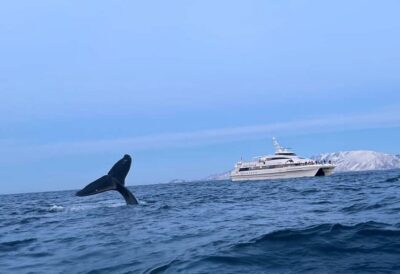
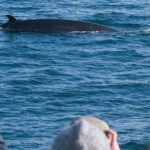
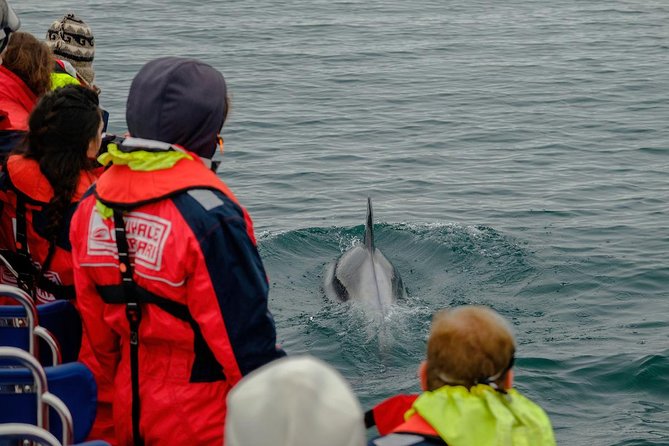
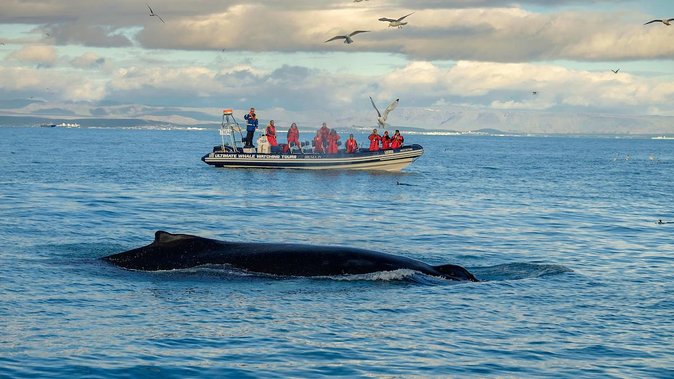
In past outings, people have reported multiple humpbacks and minke whales, with dolphins also showing up alongside the whale activity. One reason this tour earns so much high praise is that it pairs close viewing with serious effort to find animals rather than treating whale spotting like a lucky lottery.
The return along Reykjavík’s sea front: Harpa and the Sun Voyager view
After the whale safari, you head back to Reykjavík and you get a short “bonus sightseeing” run. Along the way, you pass by major landmarks from the water, including:
- A ride along the shoreline for panoramic photo views
- A stop near Sun Voyager on the seafront
- A quick pass by Harpa Concert Hall and Conference Centre, Iceland’s well-known glittering building
This isn’t a long city tour. It’s a practical add-on that helps the boat ride feel like more than just getting to the wildlife. If you’re starting your Iceland trip and you want a strong first-day memory, this return stretch gives you something to look at while the excitement from the ocean is still fresh.
For photos: aim to keep your phone/camera protected. Spray and salt air aren’t a myth.
Warm coveralls, safety gear, and comfort on a bumpy day
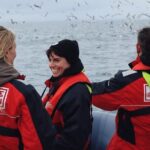
This tour includes coveralls and all necessary safety equipment, which is a big value piece in Iceland. Instead of spending time trying to layer properly at the last minute, you get the boat-ready insulation for the specific conditions you’ll face: cold wind, wet spray, and a boat that can jump when the sea gets active.
The tour also has a clear comfort reality check:
- It’s not recommended for travellers with knee problems
- It requires moderate physical fitness
- Children must be over age 10 and over 145 cm tall
That knee note is important. Even with suspension seats, you’ll feel movement. If you’re dealing with knees that don’t handle vibrations well, this is the moment to be honest with yourself.
One other comfort point: while the boat is fast, it’s built for stability. People have specifically mentioned the seats as comfortable when conditions worsened. And the included gear has a real impact—if you’ve ever done an Iceland sea tour without proper layers, you know how quickly enjoyment drains when your core temperature drops.
If you’re sensitive to motion, bring your own plan (and consider sitting where you feel most stable). The tour does include thoughtful safety and comfort features, but it’s still a small speedboat on an open ocean.

Price and value: why $208 feels fair for this format
At about $208 per person for roughly 2 hours, it’s not a bargain. But whale watching in Reykjavík isn’t cheap because you’re paying for three things that add up fast:
- a small boat with fuel and gear appropriate for a close-to-the-water experience
- a marine biologist guide
- the time, risk, and logistics of searching across a broad area
Where this tour tends to feel like good value is the combination: small group + close viewing + expert guidance + included warm gear. Many larger tours pack more people in, and you often end up viewing wildlife through other bodies and higher vantage points. Here, the maximum group size of 12 changes how you move your eyes and how the guide can manage the boat for sightings.
Also, this tour includes puffin season viewing as an add-on, which means your money covers more than one type of wildlife day. Even if whales are the headline, the bird stops can add meaning to your trip—especially if you’re photographing as you go.
If you’re comparing options, don’t just compare “whale watching.” Compare the viewing format and how quickly you search. In this part of Iceland, those details often matter more than people think.
How to set expectations for whale sightings (and when you’ll get a redo)
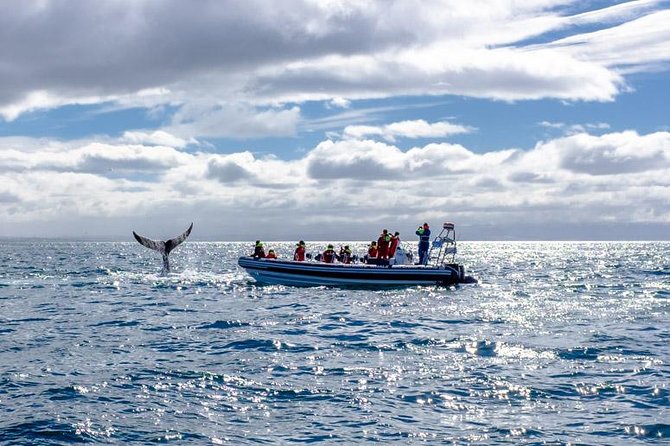
Whale spotting depends on nature, not scheduling. That’s why this tour includes a safety net: in case of no sightings, you’ll be given a ticket for an alternative tour.
That approach reduces some of the stress that comes with booking wildlife tours. You’re still responsible for showing up prepared (weather can affect the trip), but you’re not left empty-handed if the ocean refuses to cooperate on your specific outing.
One thing to keep in mind based on real-world conditions: weather can shift quickly. High winds or rough seas can lead to changes, and sometimes operators may switch boat types or adjust plans. The tour is explicitly weather-dependent, so I’d treat your booking date as a best guess, not a promise carved in stone.
What to wear and bring so your day stays fun
This is one of those tours where dressing well directly improves your experience. The guidance you’ll want to follow is simple:
- Dress warmly with wool or fleece layers
- Bring a hat and gloves
- Wear sturdy footwear
You’ll get coveralls, which helps a lot, but you’re still in an outdoor environment on moving water. I’d also bring (or have ready) something to keep your hands functional for camera use. Gloves that are too thick can be annoying; gloves that are too thin won’t help. If you have a favorite winter pair that stays warm but flexible, bring them.
If you have knee issues, take that seriously. This tour is not presented as a gentle ride.
Should you book this Reykjavík RIB whale watch?
Book it if you want:
- Close-to-the-water viewing that feels more personal than a big boat
- a small-group experience with a marine biologist guide
- the chance to see puffins in season, plus whales and dolphins if conditions line up
- included warm gear so you don’t have to overspend on cold-weather clothing
Skip it or consider another style if:
- your knees don’t handle bumpy, vibrating rides well
- you’re traveling with very young kids (the tour requires age 10+ and height 145 cm+)
- you know you won’t handle open-water motion at all
If you’re trying to pick one wildlife activity that hits maximum excitement per hour, this is a strong choice—especially when Iceland weather gives you a usable window. The combination of small-group RIB speed, expert guidance, and real wildlife time in Faxafloi Bay is exactly the kind of Iceland outing that makes the day feel like a story you’ll remember later.
FAQ
How long is the RIB whale watching tour?
The tour runs for about 2 hours.
Where does the tour start in Reykjavík?
It starts at Ægisgarður 5d, 101 Reykjavík, Iceland.
Is the tour in English?
Yes, the tour is offered in English.
What wildlife can I expect to see?
You’re looking for whales and dolphins, and during puffin season (early May to end of August) you may also see puffins and other seabirds at nearby islands.
What’s included in the price?
The tour includes a professional marine biologist guide, coveralls, and all necessary safety equipment.
What should I wear?
Dress warmly and plan for wind and cold: wool or fleece layers, a hat, gloves, and sturdy footwear are recommended.
Is food and drinks included?
No. Food and drinks are not included.
What is the minimum age for children?
Children must be over age 10 and over 145 centimeters tall.
What if no whales are spotted?
If there are no sightings, you’ll receive a ticket for an alternative tour.
What if the tour gets canceled due to weather?
The experience requires good weather. If it’s canceled due to poor weather, you’ll be offered a different date or a full refund.