REVIEW · SAO MIGUEL ISLAND
Azores: Whale Watching & Islet Boat Tour w/ Marine Biologist
Book on GetYourGuide →Operated by Azores Whale Watching TERRA AZUL · Bookable on GetYourGuide
Whales feel close in the Azores. This 3-hour whale watching outing pairs a fast zodiac ride with a marine biologist-led search, plus a loop around Vila Franca do Campo so you get more than a quick scan of open water.
I especially love the live, non-cheesy teaching approach—on board you’re learning from a real guide, not a speakerphone recap. I also really like the boat’s practical setup, where the crew tries to keep everyone seeing when pods show up, and the onboard team keeps answering questions as you go.
One thing to plan for: the tour is weather- and safety-dependent, and the sea can get choppy on a zodiac, so bring your sea-sickness plan if you’re prone.
In This Review
- Key things to know before you go
- Getting to Vila Franca do Campo from São Miguel without wasting time
- The zodiac RIB ride: suits, life vests, and a view-first layout
- The briefing that actually helps: cetaceans, safety, and what to watch for
- How the search works: inland lookout, VHF radio, and a careful approach
- What whales and dolphins you might spot on São Miguel
- Vila Franca do Campo islet: volcanic scenery and a quick but worthwhile loop
- What to pack (and what to do before you leave shore)
- Price and value: why $73 feels fair for this setup
- Who this tour suits best (and who should skip it)
- Should you book Terra Azul’s whale watching tour?
- FAQ
- Where does the tour meet?
- How long is the tour?
- Is pickup available from Ponta Delgada or my hotel?
- What should I wear or bring?
- What gear is included?
- Who can’t join this tour?
- What happens if we don’t see whales or dolphins?
Key things to know before you go
- Live marine biologist / wildlife guide briefing before you ever hit the open water
- Search teamwork: a high inland lookout finds cetaceans and guides the zodiac via VHF radio
- Sightings guaranteed: if no whale or dolphin is spotted, your second tour is free
- Comfort gear included: waterproof full suit and life vest, so you’re not guessing what to pack
- Extra stop on the return: a short cruise plus photo time around the volcanic Vila Franca islet
- The focus is research-style respect: careful approach, field imagery/data collection, and lots of Q&A
Getting to Vila Franca do Campo from São Miguel without wasting time
This tour runs out of the Terra Azul base at the Marina of Vila Franca do Campo (street-level directions and parking are easy to find once you’re in town). If you’re staying in Ponta Delgada, you’ll typically ride by car for about 30 minutes to reach the marina area—think coastal scenery, not a long grind.
Pickup is optional. If your hotel offers it in your booking option, aim to be at the hotel carport about 30 minutes before the scheduled start, then confirm the exact pickup point. If you’re driving yourself, descend toward sea level to the marina; Terra Azul uses yellow boats at the dock, and you should be able to park nearby.
The smart move here is simple: don’t show up at the last second. You want enough time to meet the crew, get kitted up, and settle in before you push off.
You can also read our reviews of more tours and experiences in Sao Miguel Island.
The zodiac RIB ride: suits, life vests, and a view-first layout
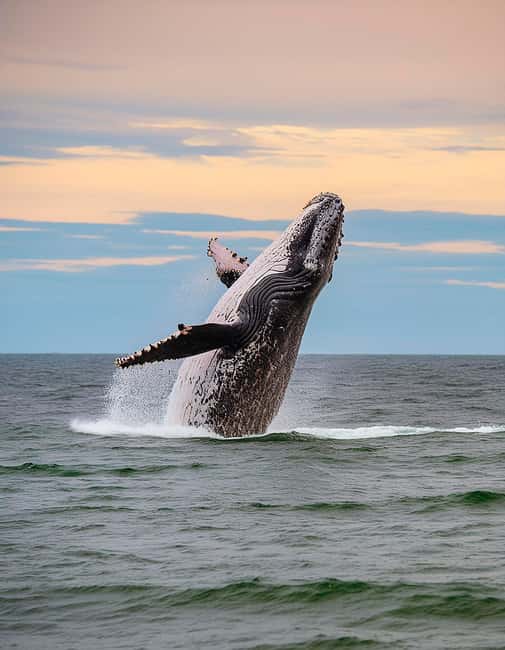
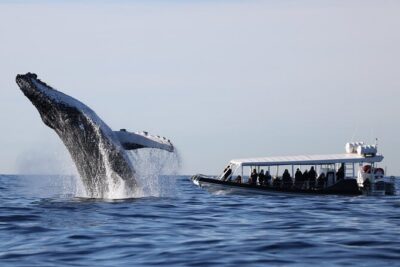
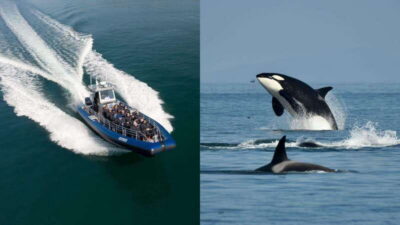
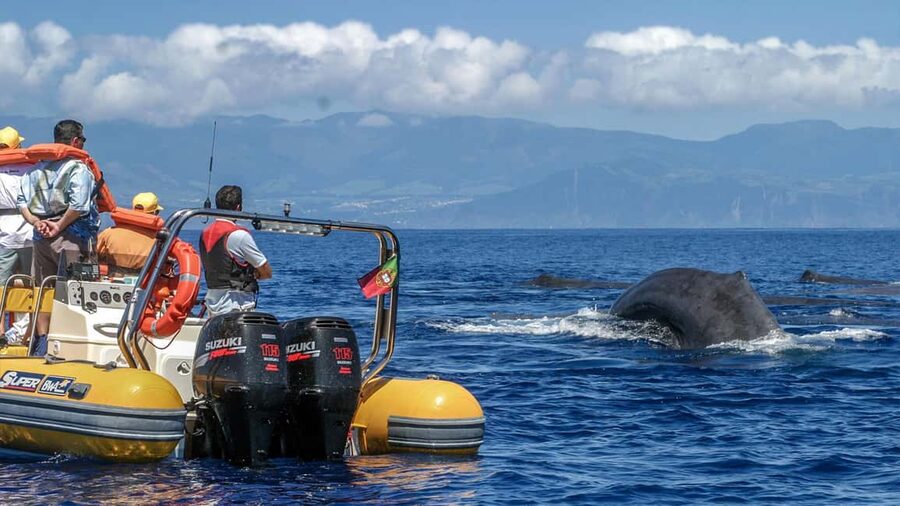
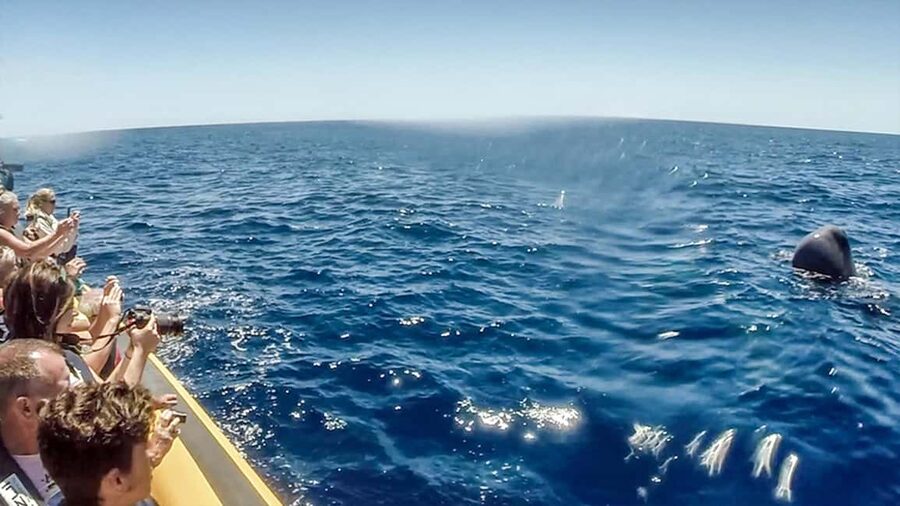
You’ll be on a zodiac-style RIB that holds 12 to 28 people. That smaller capacity matters. It means the crew can manage positioning fast when wildlife shows up, and it also usually keeps the boat feeling lively rather than crowded.
What I like about the included kit is that it’s practical for the Atlantic. You get an impermeable full suit plus a life vest. That combo is great if the ocean sprays or the wind picks up. It’s also why I’d bring camera protection seriously—your gear might get salt air, spray, or both.
From the way the guides run the boat, they’re also paying attention to sightlines. You’ll likely see a plan for seating/standing so taller guests don’t block the view, and shorter guests still get a decent look when dolphins surface near the boat. During a “right now, look right there” moment, that kind of crew coordination is everything.
Language support is broad—Dutch, English, French, German, Italian, Portuguese, and Spanish are listed. Still, if you’re relying on a specific language, I’d go in with English as your fallback since accommodation isn’t guaranteed.
The briefing that actually helps: cetaceans, safety, and what to watch for
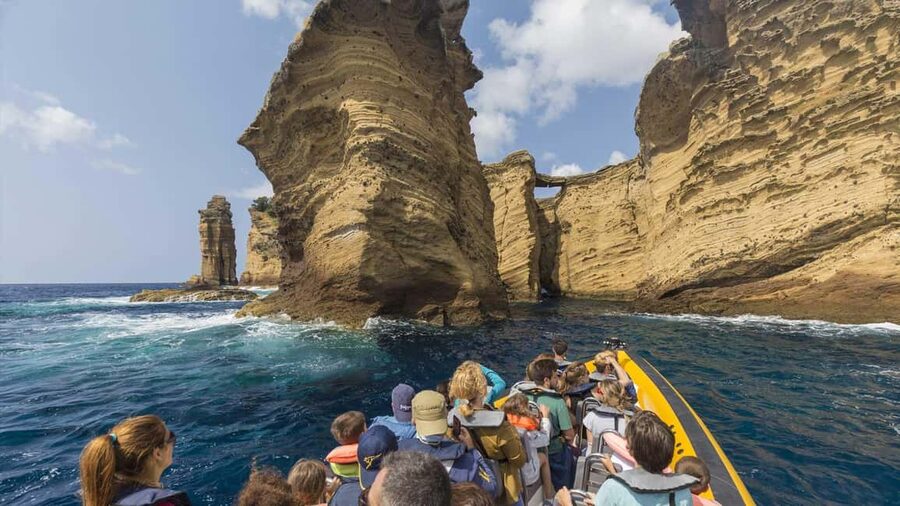
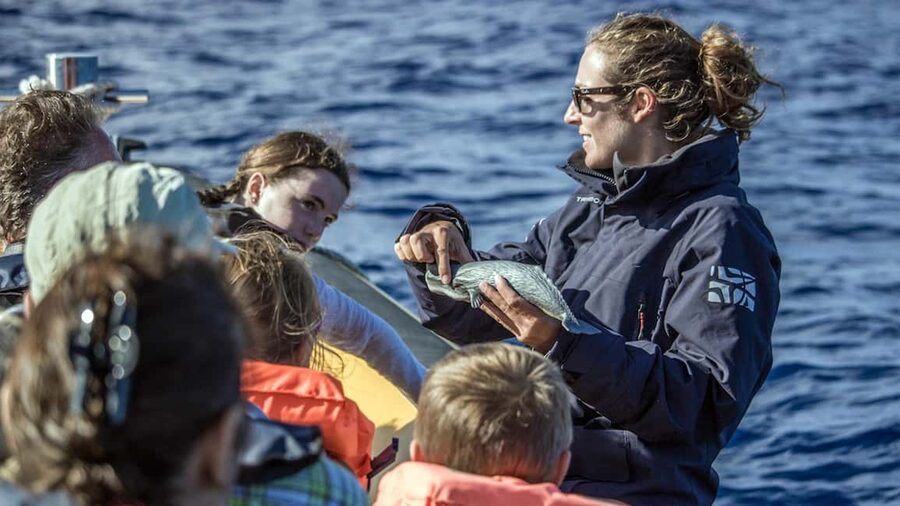
Before you head out, there’s a short briefing focused on cetacean behavior and local species patterns. The goal is to help you interpret what you’re seeing: why animals surface, how they move, and what “normal” looks like for whales and dolphins in this area.
It’s also a safety briefing in plain terms. You’ll learn how to wear your vest/suit, how the crew expects you to move onboard, and what to do if conditions change. This isn’t one of those tours where the safety talk feels like admin paperwork.
Then you get the real advantage: a guide (sometimes a marine biologist, sometimes a wildlife guide) who is actively available during the hunt. A few named guides you might meet include Claudia, Charlotte, Matteo, Miguel (skipper), Stephie, Daniel, Monisha, Savi, and Inês—names vary by date. The best part is the interaction. You can ask questions and get answers during the tour, not after the fact.
If you’re sensitive to sound in choppy weather, keep expectations realistic. On rougher stretches, the open water can make it hard to hear every word. Bring curiosity anyway. The visuals plus the guide’s cues do a lot of the heavy lifting.
How the search works: inland lookout, VHF radio, and a careful approach
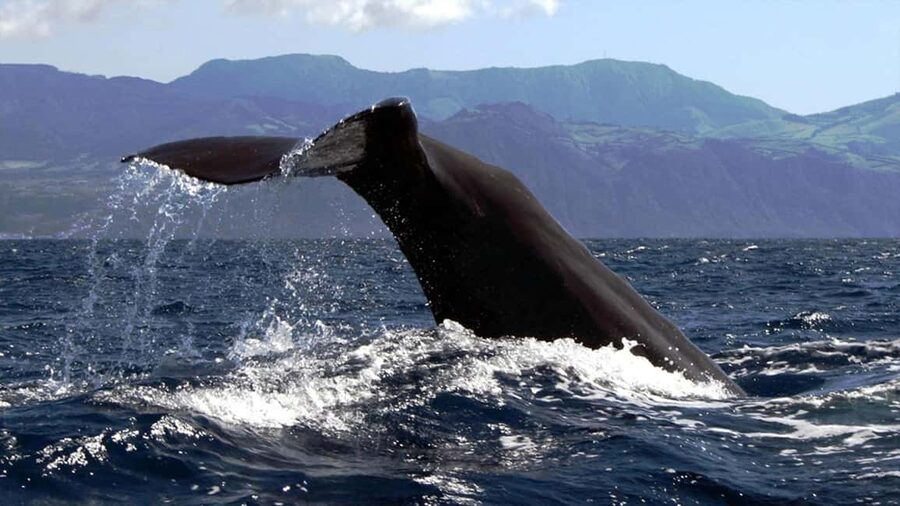
The operation is built around spotting first, then positioning. The guide uses a lookout from inland to locate whales and dolphins. Once a pod is spotted, directions get relayed to the zodiac via VHF radio, and the zodiac travels at speed toward the action.
This matters for you because the faster you reach the wildlife, the higher your odds of meaningful sightings—not just a distant, half-second “was that a fin?” moment.
Once the crew approaches, they keep things controlled. The guide provides live updates while the skipper navigates. You’ll also hear about how the team collects field imagery and data for local research while maintaining safe, respectful viewing distance. That’s not just good manners. It affects the behavior you get to see. Animals that feel safe tend to keep feeding, traveling, or socializing longer—giving you more chances to watch.
Also note the tour’s stated range: you’re looking out for up to 28 whale and dolphin species. And marine wildlife is described as observable year-round, with sperm whales listed as resident alongside additional cetacean species.
What whales and dolphins you might spot on São Miguel
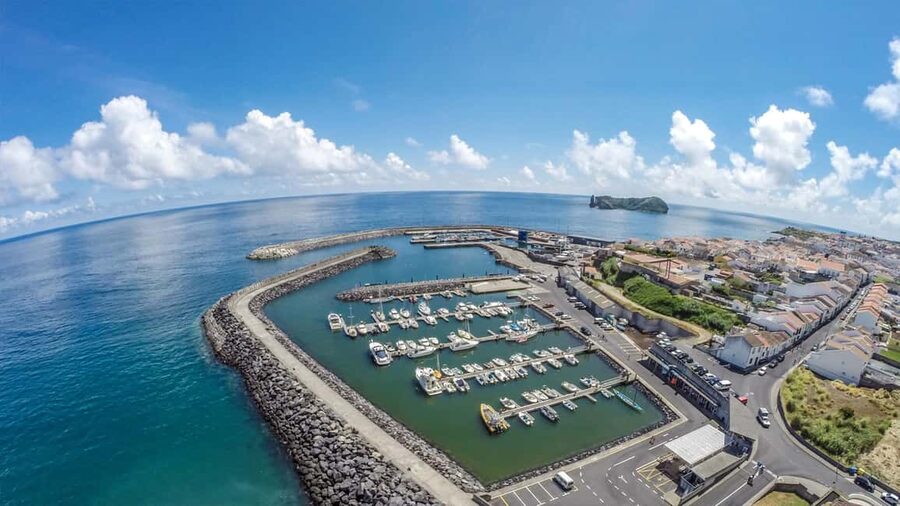
Here’s the honest part: sightings depend on the ocean. But the tour’s structure stacks the odds in your favor.
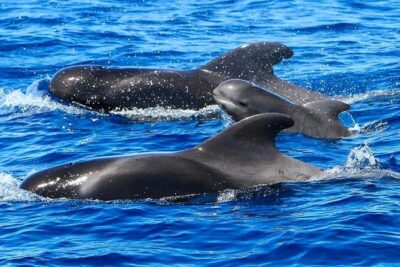
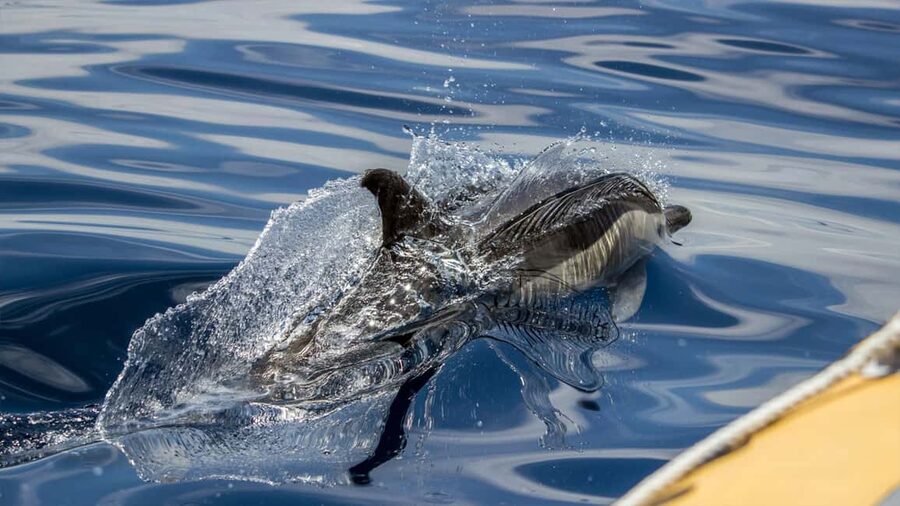
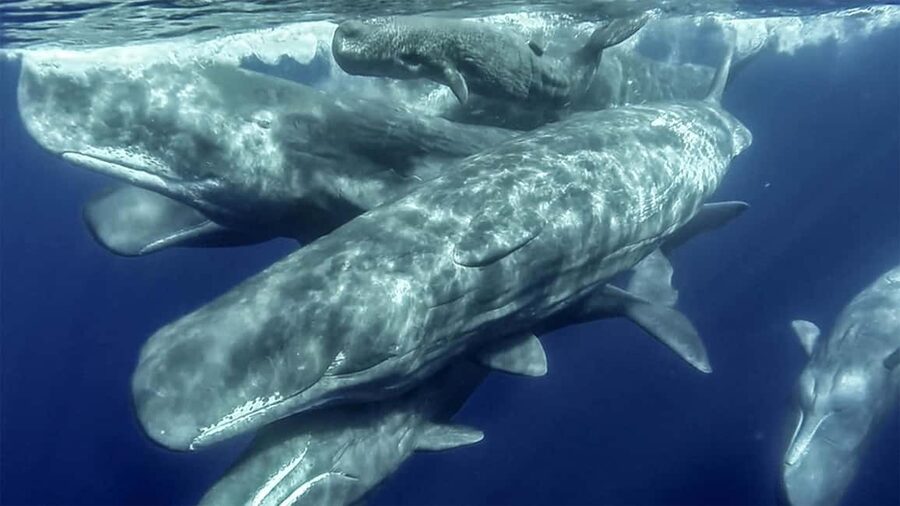
Sperm whales are specifically highlighted as resident in the region. Past guide-led encounters in this program have also included species like pilot whales and sei whales, and dolphin types such as bottlenose, common dolphins, and white-spotted dolphins. You may also see smaller marine life when conditions bring everything to the surface—turtles show up sometimes in these tours, too.
What to expect visually:
- Dolphins often feel “closer.” They may swim right alongside the boat or surface near it, so you get more repeat views.
- Whales can be farther out. You might see blow mist, fins, or tail activity rather than a full, close-up show.
One practical tip if you’re hoping for the best views: keep your eyes moving. When the guide calls something out, it’s often tied to a pattern—breathing cycles, group direction, or recent surfacing spots. The guide will help you interpret what you’re seeing in real time.
If you’re thinking this is a numbers game, here’s where this tour feels different: the sightings are guaranteed. If no whale or dolphin is seen on your outing, the company states your second tour is free. That guarantee doesn’t remove weather risk, but it does remove a lot of the “what if we get skunked?” anxiety.
Vila Franca do Campo islet: volcanic scenery and a quick but worthwhile loop
After the main whale watching segment (about 2.75 hours out on the water), the tour shifts gears. You return to the marina and then head out for a cruise around Vila Franca do Campo islet.
This part is shorter—around 15 minutes—with a photo stop. But it’s still valuable. You get close views of the volcanic rock formation and the island’s wildlife presence, and it gives you a “land meets sea” payoff that complements the wildlife chase.
The islet loop also works as a backup experience if the morning feels fast. Even when whales are active, this short segment helps break up the day. And if the dolphins were the star, it gives you something different to focus on: geology, caves/rock edges, and birds that gather where the sea is productive.
What to pack (and what to do before you leave shore)
The tour info is clear on prep, and I agree with it. Plan for getting wet, even if it’s not raining.
Bring:
- Personal water supply
- Sunscreen and chapstick
- Warm clothing for the return (wind + spray can chill you)
- Camera (seriously—this is a photo-heavy outing)
Eat light. Heavy food can feel rough on a moving boat.
If you’re prone to motion sickness, consider prevention. Even though you get waterproof suits, you do not get a guaranteed smooth ride. Some days feel like a fast, slightly bumpy rollercoaster. If you’ve ever had trouble on boats, pack seasickness remedies in advance.
Price and value: why $73 feels fair for this setup
At $73 per person for about a 3-hour experience, the value depends on what you compare it to. Here, you’re paying for more than “a boat goes out.”
Included items you don’t want to pay for separately elsewhere:
- A marine biologist or wildlife guide (not a prerecorded program)
- An experienced skipper
- Zodiac RIB boat
- Impermeable full suit + life vest
- Insurance
- Admissions and fees
Then you add two experience-level value boosters:
1) You’re searching specifically for local cetaceans with a coordinated lookout system.
2) There’s a stated second-tour-free guarantee if you don’t see whales or dolphins.
In plain terms: you’re buying time on the water, a trained team, and safety gear. That’s the bundle that usually separates “we saw something” from “we felt lucky and learned a lot while watching it.”
Who this tour suits best (and who should skip it)
This outing is built for people who can handle an active boat day and the ocean’s mood.
It’s not allowed for:
- Unaccompanied minors
- Children under 4
- Pregnant women
- People with weak back, delicate health conditions, or who need higher stability
- Wheelchair users
If you fall into those groups, don’t try to tough it out. The tour involves safety gear, movement onboard, and open-water conditions that can change quickly.
If you’re healthy, this tour fits well for:
- Wildlife lovers who want more than a quick snap-and-go
- People who like hands-on interpretation from a guide
- Anyone visiting São Miguel who wants a high-impact nature outing with a clear “start to finish” plan
Should you book Terra Azul’s whale watching tour?
Yes, if you want the best mix of serious wildlife searching and real guidance in the moment. The included suits, life vest, guide-led briefing, and the coordinated lookout/VHF system are exactly what you’d hope for when you’re paying for Atlantic whale time.
Book it especially if:
- You’re short on time in São Miguel
- You’re excited by the idea of sperm whales and other local cetaceans
- You want a “we tried our hardest” approach with a second-tour-free safety net
Think twice if:
- You’re sensitive to choppy water
- You need a fully stable, flat-surface experience
- Your health situation makes boat motion risky
If you’re in the healthy, curious camp, this is the kind of outing that makes Azores feel real fast—salt air, volcanic views, and a guide who keeps your eyes on the right pattern instead of just pointing and hoping.
FAQ
Where does the tour meet?
The meeting point is Terra Azul base at the Marina of Vila Franca do Campo, 4, 9680 São Miguel, Azores Islands.
How long is the tour?
The tour is listed as 3 hours total, with about 2.75 hours of whale watching on the water and a short islet portion after.
Is pickup available from Ponta Delgada or my hotel?
Pickup is optional. If you choose it, you should meet at the carport of your hotel about 30 minutes before the tour time, and confirm the exact pickup details.
What should I wear or bring?
Eat light before you go and bring water, sunscreen, and chapstick. Wear warm clothing, and plan for water spray. Camera is important for photography.
What gear is included?
You get an impermeable full suit and a life vest, plus the zodiac RIB boat, guide, skipper, insurance, and admissions/fees.
Who can’t join this tour?
Unaccompanied minors aren’t allowed. The tour isn’t suitable for children under 4, pregnant women, people with weak back or delicate health conditions, and wheelchair users.
What happens if we don’t see whales or dolphins?
Sightings are guaranteed. If no whale or dolphin is spotted, your second tour is free.