REVIEW · NEWCASTLE
Port Stephens: Whale Watching Cruise
Book on Viator →Operated by Moonshadow - TQC Cruises · Bookable on Viator
Humpback sightings come with real drama. This Port Stephens whale watching cruise takes you out between May and November to spot migrating humpbacks off the coast, with live onboard commentary to help you understand what you’re seeing (breaching, slapping, rolling) and when to look closer. You also have a good chance of spotting dolphins in the same waters.
My favorite part is the viewing comfort. On the larger Hinchinbrook Explorer, there are walk-around decks plus big air-conditioned indoor areas, so you’re not stuck in one spot if the sun (or wind) changes. The main drawback is timing: it’s an ocean-going cruise, so if whales are farther out, you’ll spend more of the 2.5 hours searching—and you should plan for possible motion.
In This Review
- Key things I’d circle before you go
- Port Stephens whale season: why May to November matters
- Getting on board at Nelson Bay: Moonshadow–TQC Cruises at D’Albora Marina
- The boats you may sail on: Hinchinbrook Explorer vs MV Spirit
- Hinchinbrook Explorer (the larger option)
- MV Spirit (the smaller, more intimate option)
- What stays consistent either way
- The cruise rhythm: how the 2.5 hours usually feels
- How to actually spot humpbacks (and not miss the action)
- Dolphins, seals, and birds: bonus wildlife when conditions cooperate
- Comfort and stability: what you’re really buying for your money
- What to wear and bring for a whale cruise day
- Strollers, prams, and families: know the limits before you pack
- How well you’ll like this cruise: best-fit advice
- Should you book the Port Stephens Whale Watching Cruise?
- FAQ
- FAQ
- What months does this Port Stephens whale watching cruise run?
- How long is the cruise?
- What departure times are available?
- Where is the meeting point?
- Is the ticket mobile?
- What’s included in the ticket price?
- Are alcoholic drinks included?
- Are prams or strollers allowed?
- Can I cancel for a full refund?
- What happens if weather/sea conditions are poor?
Key things I’d circle before you go
- Live commentary helps you spot whale behavior, not just the whale body once it pops up
- Comfort-first boats: walk-around decks on the larger option and sheltered seating throughout
- A real shot at humpbacks during the May–November migration window
- Dolphins often show up nearby, so the trip isn’t only about one species
- Small enough for a better experience with a maximum of 150 travelers
Port Stephens whale season: why May to November matters
Port Stephens is all about timing. During the May to November season, migrating humpback whales pass through the area, and that’s when this cruise is scheduled to run. If you’re visiting outside those months, there won’t really be a whale-focused experience to target here.
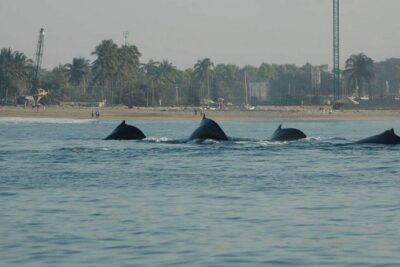
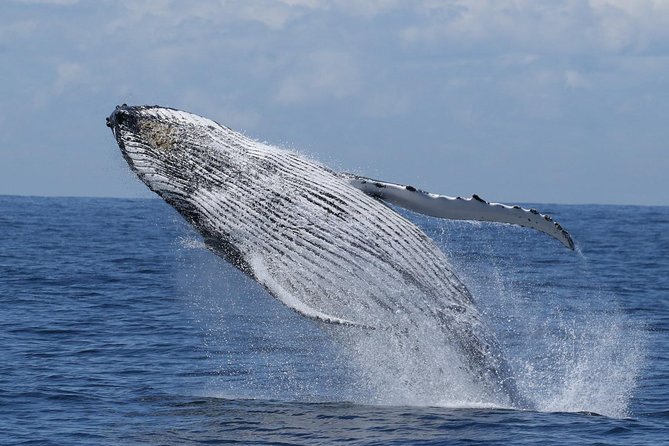
This is also the type of wildlife watching where patience pays. Humpbacks don’t just line up for photos; you’re watching for patterns—surface blows, then the behavior that shows up after the whale decides to show off. When it hits, it can be spectacular: breaching, slapping the water, or that slow, heavy roll that makes you say, okay, that’s definitely real.
The trip’s focus on what you’re likely to see is one reason I like it. The on-board guide commentary is there for a reason: it helps you read whale behavior faster, so you’re not guessing what you’re looking at.
You can also read our reviews of more tours and experiences in Newcastle.
Getting on board at Nelson Bay: Moonshadow–TQC Cruises at D’Albora Marina
You’ll start at Moonshadow–TQC Cruises at Boarding Dock C / D in D’Albora Marina, Nelson Bay (NSW 2315). The good news is that this meeting point is listed as near public transportation, which makes the start of your day simpler if you’re not driving.
Also, you’ll use a mobile ticket, which cuts down the hassle of finding your booking email on a phone screen at the dock. Before you head down, I’d make sure your ticket is easy to access offline just in case mobile signal gets weird near the water.
One more practical note: this is an ocean-going cruise, so treat it like a sea day even if the coastline looks calm from the marina.
The boats you may sail on: Hinchinbrook Explorer vs MV Spirit
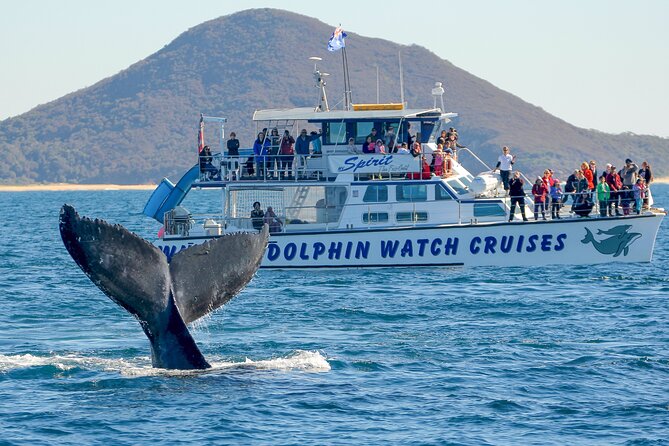
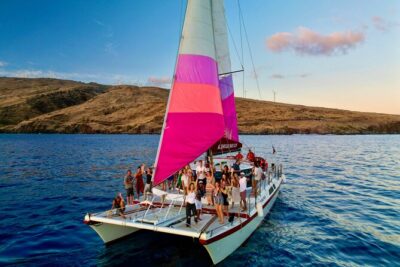
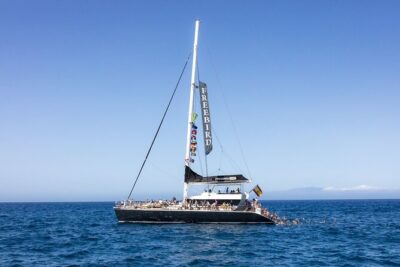
This cruise uses catamarans, and the boat you get can influence how the experience feels.
Hinchinbrook Explorer (the larger option)
The Hinchinbrook Explorer is the bigger catamaran option at about 30 meters (100 feet). It was originally designed for Southern Ocean waters, and that background matters: it’s built for real ocean conditions, not just smooth harbor cruising. You get full walk-around decks for viewing, plus large air-conditioned indoor space if you want a break from sun or wind.
If you like moving around to find the best sightline, this size helps. You can change locations without feeling trapped, and you’re not stuck relying only on one viewing area.
MV Spirit (the smaller, more intimate option)
MV Spirit is listed at about 18 meters, so it’s smaller. The upside is the vibe can feel more intimate, but you’ll still want to get to the deck when the guide calls out activity. Smaller also means you’re more likely to share space when something big happens.
What stays consistent either way
Regardless of which catamaran you’re on, you’re in the business of whale spotting from an ocean platform. That means your experience will depend partly on the day’s conditions, but you’re set up with multiple ways to view: inside and out, with sheltered areas.
The cruise rhythm: how the 2.5 hours usually feels
This trip runs for about 2 hours 30 minutes (approx.), and it’s timed around whale watching during the season. You’ll find different departure options depending on the day and the vessel being used.
During the whale watching season, departures are listed as:
- 10:00am and 1:30pm daily (for the Hinchinbrook Explorer)
- 11:00am daily (for MV Spirit)
There are also additional cruises during NSW School Holidays.
What I’d expect on the water is a mix of searching and rewarding. You’re going out to a specific wildlife area, scanning for signs, then once whales are located, the boat will give you enough time for real viewing. Some of the best moments come from behavior after the initial blow—breaches and tail flicks aren’t guaranteed, but when they happen, you’ll understand why people book this trip year after year.
If you’re the type who hates waiting, here’s the honest framing: whale watching is never a timed “show.” It’s nature. Some days whales are close and active; other days they’re farther out and you’ll spend more time reading the water.
How to actually spot humpbacks (and not miss the action)
Even with the best guide, your eyes still do the work. The cruise is structured so you can look from multiple angles, but you’ll spot more by knowing what to look for.
Here’s what the experience sets you up to watch:
- Breaching: the dramatic jump that’s easy to spot from a distance
- Slapping: fast, loud movements that look like sudden commotion on the surface
- Rolling: the slower movement that can look almost like the whale is turning in place
- Tail activity, when you’re lucky enough to catch it
Because the on-board commentary is live, it helps you connect the dots quickly—like noticing when the guide says a whale has come up in a certain area and the next activity might follow.
For photos and video, your best strategy is simple: be ready when you’re told whales are in view. The cruise atmosphere makes it easy to stay in position rather than sprinting around the deck the moment you spot motion.
Also keep an eye out for dolphins, which can show up in the same general area. Dolphins are often quicker and more social-looking than humpbacks, so when they’re around, your wildlife checklist can expand fast.
Dolphins, seals, and birds: bonus wildlife when conditions cooperate
This isn’t only a humpback-focused outing. The trip information specifically notes dolphins as a common sight in the same area, and the broader experience can include other marine life depending on the day’s route and sightings.
You might see seals and birds as well, especially when the crew finds active wildlife zones. Think of it like this: humpbacks are the main event, but once you’re out there, the sea life in the ecosystem can show up in different ways.
That’s a big reason I find whale cruises appealing even when the whales are a bit delayed. You’re still doing wildlife watching, not just staring at empty water.
Comfort and stability: what you’re really buying for your money
Let’s talk value, because the price is often the first question. Tickets are listed at $54.24 per person, which is a solid deal in a part of Australia where wildlife cruises can get pricey fast. You’re paying for the boat ride, the time on the water, and the live commentary that helps you interpret whale behavior.
Two practical value points:
- You get a guided element (live narration), not just a “ride and pray” approach.
- The larger Hinchinbrook Explorer option gives you real flexibility with walk-around decks and air-conditioned indoor space.
What’s not included is also clear: alcoholic drinks are extra, available to purchase. If you want a drink with the sea air, budget for it. But you don’t need alcohol to enjoy the cruise—most people are there for the viewing and the narration.
What to wear and bring for a whale cruise day
The weather around Port Stephens can shift, and you’re on open water. The cruise asks you to bring:
- Comfortable casual clothing and footwear
- Sunglasses, a hat, sun cream
- A camera
And they also recommend dressing warmer for winter months. That’s not just marketing; it’s because your time on the water can feel cooler once wind hits the boat and you’re outside longer than you planned.
If you’re prone to motion sickness, take it seriously. The guidance is to consult your pharmacist about seasickness medication. I like that they explicitly call it out—this is an ocean-going cruise, so it’s not a guaranteed smooth ride.
Strollers, prams, and families: know the limits before you pack
If you’re traveling with kids, check the small print now, not later.
- Children must be accompanied by an adult.
- Baby prams are not permitted on board.
- Collapsible strollers are permitted, but they can’t be taken to areas other than the main cabin. The crew will advise where to store them when you board.
This matters because it changes how you plan your day. If you rely on a stroller for movement around the dock and during boarding, you’ll want a strategy that matches the on-board rule.
How well you’ll like this cruise: best-fit advice
This cruise is a strong match if you:
- Want a guided whale watching experience focused on humpbacks during the right months
- Like having live commentary so you can understand whale behavior as it happens
- Prefer a comfortable catamaran setup where you can switch between indoor and outdoor viewing
It may feel less ideal if:
- You hate waiting while searching the water
- You’re very sensitive to motion and haven’t planned for seasickness
- You’re bringing a pram (since prams aren’t allowed)
It also helps if you’re okay with the reality of wildlife watching. You’re not booking a guaranteed number of whale sightings; you’re booking your chances—during a season when the whales are actually there.
Should you book the Port Stephens Whale Watching Cruise?
I’d book it if your travel window is May through November and you want a whale cruise with live narration and comfortable catamaran viewing. The rating is strong (4.7 out of 5 with 108 reviews) and the recommendation rate is high (94%), which lines up with what you’re paying for: time on the water plus interpretation, not just a boat ride.
I’d think twice if you’re traveling with a pram, or if you know ocean motion makes you miserable. In those cases, the experience can still be fun, but you’ll need a smarter plan—stroller alternatives and seasickness prep.
If you’re flexible, this is the kind of day you can talk about for months: watching a humpback breach or roll is the sort of thing that sticks.
FAQ
FAQ
What months does this Port Stephens whale watching cruise run?
The cruise is scheduled to see migrating humpback whales between May and November.
How long is the cruise?
The duration is about 2 hours 30 minutes.
What departure times are available?
During whale watching season, departures are listed as 10:00am and 1:30pm daily for Hinchinbrook Explorer, plus 11:00am daily for MV Spirit. Additional cruises may run during NSW School Holidays.
Where is the meeting point?
You board at Moonshadow–TQC Cruises Boarding Dock C, D at D’Albora Marina, Nelson Bay NSW 2315.
Is the ticket mobile?
Yes. The tour uses a mobile ticket.
What’s included in the ticket price?
The ticket includes GST and live commentary on board.
Are alcoholic drinks included?
No. Alcoholic drinks are available to purchase but are not included.
Are prams or strollers allowed?
Baby prams are not permitted, but collapsible strollers are permitted. Strollers can’t be taken to areas other than the main cabin, and the crew will advise where to store them.
Can I cancel for a full refund?
Yes. You can cancel up to 24 hours in advance for a full refund.
What happens if weather/sea conditions are poor?
If the cruise is canceled due to poor sea conditions, you’ll be offered an alternative date or a full refund.