REVIEW · LOS ANGELES
Guided Whale Watching Tour from Long Beach
Book on Viator →Operated by Harbor Breeze Cruises · Bookable on Viator
One word: water time. This Long Beach guided whale watching cruise pairs seasoned captains with Aquarium of the Pacific educators and a comfortable catamaran ride, plus you get cool harbor sights like the Queen Mary before you head out into the open Pacific. I like how the captain’s commentary keeps you oriented (and not just staring into fog), and I also like the sealife guarantee voucher if your trip truly comes up empty. The main thing to consider is that ocean conditions can be cold and choppy, so dress for wind and keep motion in mind.
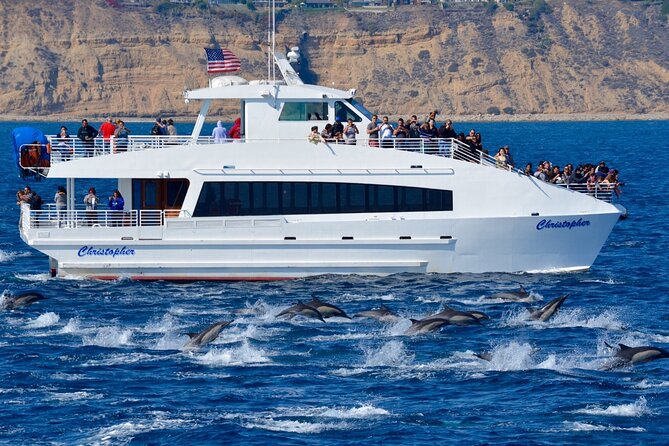
I love that the meeting point is straightforward at Harbor Breeze Whale Watching Cruises, right by the waterfront. You’ll have both inside, climate-controlled seating and outside viewing, so you can trade warmth for photo angles whenever you want. The group stays to a maximum of 120 people, which is big enough for fun energy but not so huge that you lose the sense of a guided experience.
What makes this trip feel like value is the mix of expertise and comfort baked into the ticket: multiple restrooms onboard, a custom-built catamaran designed for stability, low-emission engines, and a crew with 30+ years of whale watching experience. And when wildlife shows up, it’s not just random luck—your crew works the search as a team, slowing down and positioning so you can actually see what you came for.
In This Review
- Key things I’d pay attention to
- Why Long Beach for Whale Watching Starts Before You Leave the Dock
- Boarding at Harbor Breeze: Seating, Restrooms, and How to Get a View
- Captain Commentary + Aquarium Educators: The Spotting Plan You Feel
- The Tour Route Through Long Beach: Queen Mary, Spruce Goose, and Port Power
- Queen Mary pass (departing and returning)
- Ocean search into the open Pacific
- The Aquarium area and its wildlife scale
- Cruise Ship Terminal and port surroundings
- Spruce Goose history near the dock area
- Out on the Pacific: What You Can Expect to Spot
- Comfort and Small Friction Points (So You’re Not Surprised)
- It can be cold and windy
- You might strain to hear the mic
- Snack and drink prices can feel steep
- Occasionally, disembark can feel chaotic
- Wildlife isn’t guaranteed
- Price and Value: Why $35 Can Make Sense for the Whole Group
- Who This Whale Watch Fits Best
- Should You Book This Harbor Breeze Whale Watching Tour?
- FAQ
- How long is the Guided Whale Watching Cruise from Long Beach?
- What wildlife might we see?
- Is the cruise inside or outside?
- Are food and drinks included?
- What if no sealife is spotted?
- Where do we meet the tour?
Key things I’d pay attention to
- Quick harbor context: you pass major Long Beach sights, including the Queen Mary, so you understand where you are fast
- Warmth options: inside seating with large windows plus outside decks for viewing
- Expert narration: Aquarium of the Pacific educators highlight what you’re likely to spot
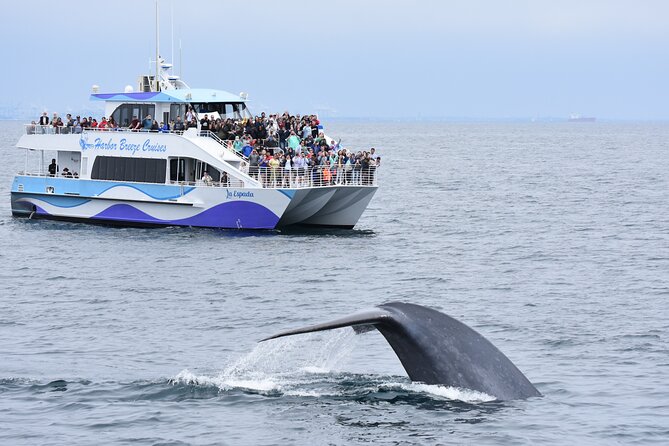
- Comfort + stability: custom state-of-the-art whale watching catamarans for a smoother ride
- Sealife Guarantee: if no sealife is seen, you get a free future voucher
- Chance at multiple species: whales, dolphins, sea lions, and even rare marine birds show up on good days
Why Long Beach for Whale Watching Starts Before You Leave the Dock
Whale watching is never a sure thing. That said, Long Beach is a great place to start your search because the cruise isn’t just about the open ocean moment. You get a guided look at the port area and nearby icons while you’re departing and returning.
You’ll pass the Queen Mary while leaving and coming back. Even if you’re not a history buff, it helps you track the route and feel like the captain is showing you a real place, not just driving in circles. Nearby, the cruise ship terminal area and the world of commercial shipping add a cool contrast: big industry on one side, living ocean on the other.
Then there’s the Spruce Goose connection. Your route includes a stop near the area once home to Howard Hughes’ massive wooden flying boat from World War II. It’s one of those details that makes a whale watch feel extra “Long Beach,” instead of just another dock trip.
One more local anchor: you’ll travel through the world of one of the largest commercial ports and one of the biggest breakwaters in the USA. That matters because the ocean outside doesn’t feel abstract. You understand you’re leaving a protected harbor system and moving toward open Pacific waters where marine life ranges more widely.
You can also read our reviews of more tours and experiences in Los Angeles.
Boarding at Harbor Breeze: Seating, Restrooms, and How to Get a View
The cruise boards at Harbor Breeze Whale Watching Cruises, 100 Aquarium Way Dock #2, Long Beach, CA 90802. This is one of those locations where you won’t waste time hunting around once you’re on the right dock line.
Inside and outside seating is a big deal on this kind of tour. The inside cabin is climate controlled with large windows, which helps when it’s windy or chilly. When the wildlife is close, outside viewing is where you’ll want to be for sight lines and the classic photo angles.
Also: multiple restrooms onboard. That sounds basic, but it’s one of those “you’ll thank yourself later” details on a 2–2.5 hour time window.
About comfort: the catamaran is custom built for whale watching, and the design is all about stability and reducing fuss on the water. Even with that, wind and waves can still happen. Reviews mention cold and choppy moments, so plan for layers and bring a jacket you’d actually wear outdoors.
A practical note from real-world experience: if you want the best viewing spots, line up early. When the boat fills up, the view can still be great from many angles, but getting settled quickly makes the whole cruise calmer.
Captain Commentary + Aquarium Educators: The Spotting Plan You Feel
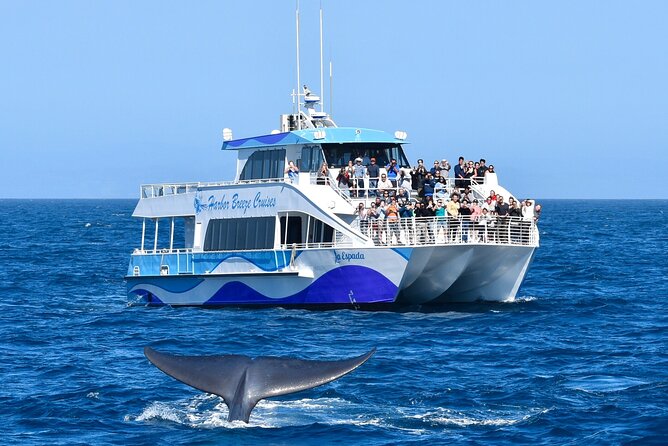
This tour stands out because it doesn’t treat narration as background noise. You’re guided by expert educators from the Aquarium of the Pacific, and you’ll hear the captain’s commentary on what you’re passing and what you’re searching for.
Why that matters: spotting whales and dolphins isn’t just about being lucky. A good guide helps you know what you’re looking for, what behavior suggests feeding or movement, and how to scan without wasting the entire cruise. It also makes the ride feel like a group activity, not a long quiet watch.
This crew has 30+ years specializing in whale watching. That experience shows in how quickly they act when they get a lead—slowing down, positioning for sightings, and staying patient long enough for the animal to surface or pass close.
They also use low emission engines, and the tour emphasizes not harming or disturbing whales and marine life. You might not be thinking about engines while you’re watching blow holes, but it’s part of the overall “this is a respectful wildlife experience” approach.
And if your trip has no sealife sightings, there’s a Sealife Guarantee: you get a free voucher to join again in the future. It’s not a promise of whales every time, but it does reduce the sting if you truly don’t connect with wildlife.
The Tour Route Through Long Beach: Queen Mary, Spruce Goose, and Port Power
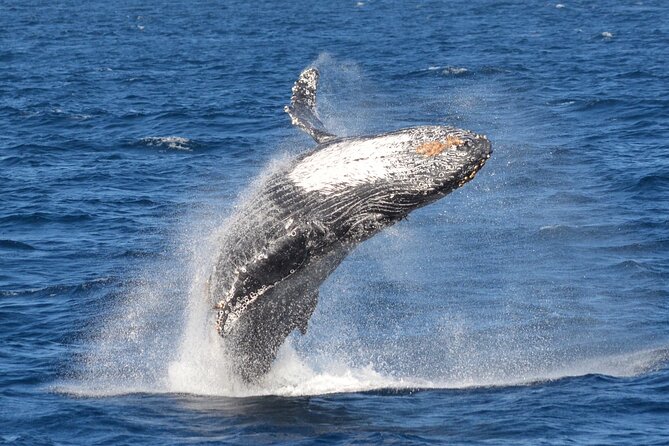
Here’s what you’ll recognize as you go, in a way that makes the cruise feel like you’re traveling, even while you’re anchored to the dock schedule.
Queen Mary pass (departing and returning)
You’ll pass by the Queen Mary as the vessel departs and then again on the way back. It’s a visual marker you can point at while the captain explains the surroundings. It also helps you understand that your cruise has a harbor-to-open-ocean rhythm.
Ocean search into the open Pacific
After the initial harbor run, the boat travels out into the open Pacific Ocean to search for marine life: whales, dolphins, sea lions, rare marine birds, and more. This is the “real whale watching” part, and it’s where the two hours to two and a half hours start to feel like a concentrated adventure.
The Aquarium area and its wildlife scale
The route includes the Aquarium of the Pacific area, known for a collection of over 11,000 animals and over 500 species, with animal encounters. Even if you don’t add separate time inside the aquarium itself, your educator will use that context to help you make sense of what’s alive offshore.
Cruise Ship Terminal and port surroundings
You’ll also pass the cruise ship terminal and other port infrastructure. It’s one of those details that makes the experience feel rooted locally. The port is a real working system, and the breakwater setting shapes how you experience the water on the way out and back.
Spruce Goose history near the dock area
The Spruce Goose stop ties in that Howard Hughes story from World War II, anchored to a physical site you can spot from the water. It’s a nice break from pure wildlife focus and gives kids and adults something extra to talk about.
Out on the Pacific: What You Can Expect to Spot
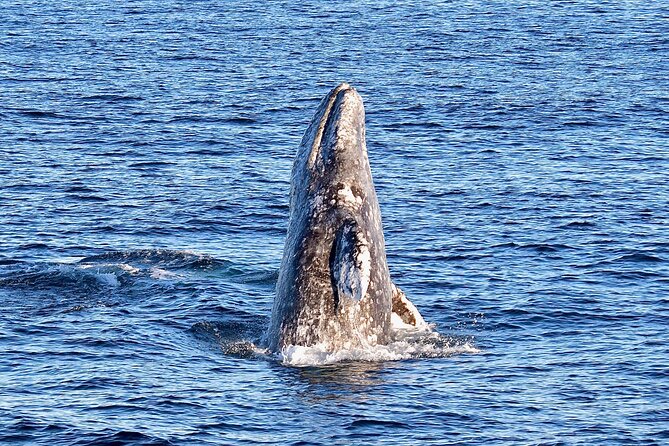
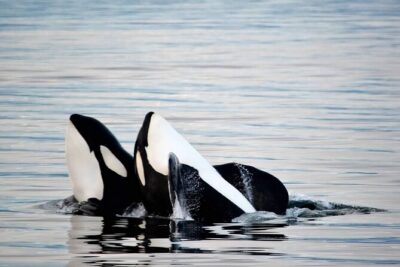
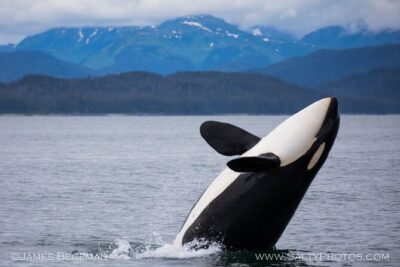
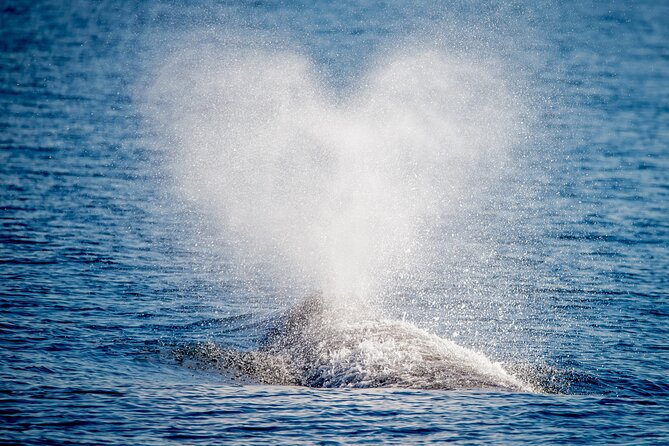
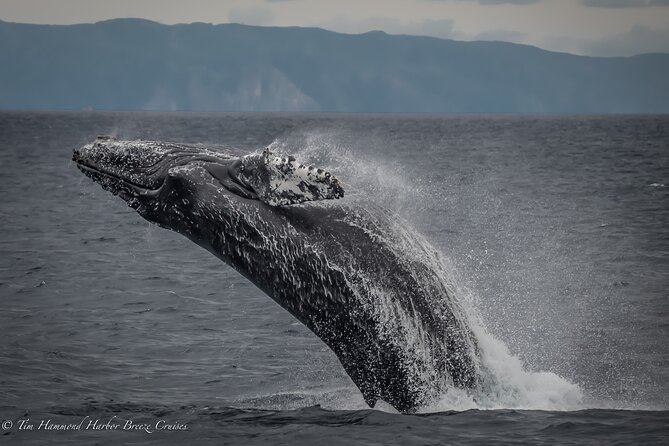
On a good whale watch, you’re basically waiting for the ocean to turn into a stage. The sightings on this cruise can vary, but the common list is clear: whales, dolphins, sea lions, and sometimes rare marine birds.
From recent experiences, people have reported:
- Gray whales showing up in multiple sightings on the same cruise
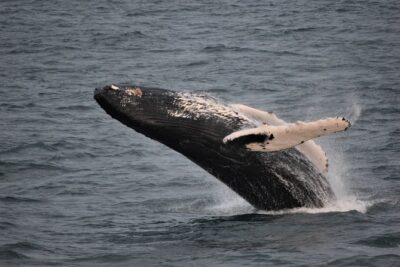
- Fin whales and humpback whales, including moments where the whale appeared very close to the boat
- Dolphins in huge numbers, sometimes hundreds in a pod-like frenzy
- Sea lions popping up during the harbor-to-ocean transitions and on return
The timing can also shift. People describe a slow start where you’re scanning, then suddenly the captain finds activity and everything speeds up. This is normal for whale watching. In practical terms, that means you should settle in early, dress for the ride, and don’t assume the first 20–30 minutes tells the whole story.
One more tip: if you’re prone to motion sensitivity, keep that in mind once you’re out past the harbor. Reviews mention sea sickness risk for some people. The catamaran stability helps, but wind and waves can still do their thing. If you need a strategy, ask yourself what usually works for you on boats and plan ahead.
Comfort and Small Friction Points (So You’re Not Surprised)
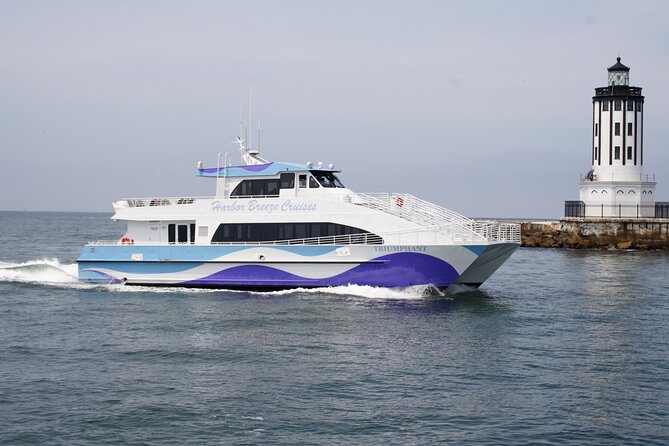
Overall, this cruise is comfortable and well-run. Still, it’s smart to know the few downsides that show up.
It can be cold and windy
Multiple reviews mention cold, wind, and rougher water. Bring a jacket and gloves if you get cold easily, even if the day starts sunny.
You might strain to hear the mic
One review flags that the microphone could be hard to hear. If you care about every word of narration, consider positioning yourself where sound carries best (often that means nearer to the center of attention on the deck, not tucked far back).
Snack and drink prices can feel steep
Food and drinks aren’t included, but they’re available onboard. Reviews call out that snacks and drinks can be pricey, so if you want to eat, decide early whether you’ll buy onboard or bring a plan before you arrive.
Occasionally, disembark can feel chaotic
There’s at least one complaint about pushing at the end as passengers got off. It wasn’t a safety issue in the feedback, just a vibe check. If you have kids, mobility needs, or you’d rather avoid bottlenecks, you can stay patient and watch how the flow moves at the end of the cruise.
Wildlife isn’t guaranteed
That’s the real tradeoff with any whale watch. Most trips deliver something, but a small number end with fewer or no sightings. That’s where the Sealife Guarantee voucher helps, but emotionally you still want to choose the right expectations: this is a search, not a vending machine.
Price and Value: Why $35 Can Make Sense for the Whole Group
At $35 per person, this falls into the “good deal if you’re open to the gamble” category. Here’s why it can feel worth it:
- You get a 2 to 2.5 hour guided cruise, not a short hop
- You have educators from the Aquarium of the Pacific and captain commentary
- You’re riding a custom catamaran designed for whale watching stability
- You get onboard restrooms and both indoor and outdoor seating
- You get the Sealife Guarantee voucher if you don’t see sealife
Then there’s parking. Parking isn’t included, but you can get validation for discounted parking in a structure across the street. That can soften the total cost if you’re driving in.
So the value question comes down to this: you’re paying for expertise, comfort, and a respectable shot at multiple wildlife sightings. When dolphins show up in numbers and whales surface close, it can feel like you got more than you paid for.
Who This Whale Watch Fits Best
This is a great pick for:
- Families: many sightings tend to keep kids engaged, and the boat layout gives you places to watch
- First-time whale watchers: the guidance helps you know what you’re seeing
- Solo travelers: the booking is straightforward, and the group size (up to 120) still feels social rather than lonely
- Friends and couples: it’s scenic, educational, and fun even when the ocean takes its time
If you hate cold wind or you get motion sick easily, you’ll still probably enjoy it from the warm indoor cabin, but you should go in prepared. If you want the maximum chance of wildlife, your best move is picking a day with decent conditions and staying flexible about what “success” looks like.
Should You Book This Harbor Breeze Whale Watching Tour?
If you want a guided whale watch that feels organized from the dock to the open water, I think you should book it. The meeting point is easy, the boat is built for comfort and viewing, and the Aquarium of the Pacific educators plus captain commentary make the time on the water smarter, not just longer.
Book it if you’re okay with weather and the nature of wildlife watching. It’s not a guarantee of whales on every trip. But between the search effort, the stability of the catamaran, and the Sealife Guarantee voucher, you’re buying a well-run experience with a safety net.
Skip it only if you’re unwilling to dress for wind and cold or you know you can’t handle boat motion at all.
FAQ
How long is the Guided Whale Watching Cruise from Long Beach?
It runs about 2 hours to 2 hours 30 minutes.
What wildlife might we see?
You’ll be searching the open Pacific for whales, dolphins, sea lions, rare marine birds, and other marine life. Sightings aren’t guaranteed.
Is the cruise inside or outside?
There is inside seating with climate control and large windows, plus outside seating for viewing.
Are food and drinks included?
No food or drink is included, but snacks and drinks are available for purchase onboard.
What if no sealife is spotted?
If no sealife is seen, you’ll receive a free voucher to join the tour again in the future.
Where do we meet the tour?
Meet at Harbor Breeze Whale Watching Cruises, 100 Aquarium Way Dock #2, Long Beach, CA 90802. The tour ends back at the meeting point. Parking isn’t included, but there is validation for discounted parking in a structure across the street.
If you tell me your travel month and whether you’re bringing kids or anyone prone to motion sickness, I’ll help you pick the best cruise timing and what to pack.