REVIEW · ANDENES
Andenes: Responsible Whale Watching with Classic Catamaran
Book on GetYourGuide →Operated by Arctic Whale Tours AS · Bookable on GetYourGuide
Whales can surface inches from your rail. In Andenes, this catamaran tour blends marine experts with a boat made for steady wildlife viewing, so you’re out in Arctic waters hunting sperm whales, orcas, dolphins, and seabirds. You also get a heated indoor cabin, which matters a lot when wind and cold show up fast.
The one drawback to plan for is the English live narration. It can move quickly, and if your English is limited, you might miss some of the finer points about whale behavior and what the crew is spotting in real time.
Marine biologists onboard: you’re not just scanning water, you get commentary on whale behavior and the wider ecosystem.
Heated cabin + outdoor deck: you can step inside to warm up, then go back out when whales are near.
On-the-water snacks: hot soup, fresh bread, warm drinks, and biscuits keep you comfortable during long searches.
Species you can actually hope for: sperm whales, orca pods, dolphins, plus seabirds like puffins and sea eagles.
Whale Pass policy: if no whales or dolphins are seen, you can rebook free if there’s availability.
Responsible wildlife rules: life vests provided, and you’re not allowed to touch marine life or use drones.
In This Review
- Andenes and the Arctic-Sea Advantage for Responsible Whale Watching
- Where You Meet: Østre Havn, the Red Harbor Buildings, and the Black Reception Container
- Boarding the Boat: Safety First, Then Comfort in Real Weather
- The 3–5 Hour Safari Rhythm: Searching, Finding, and Getting the Best Angles
- What You’re Likely to See: Sperm Whales, Orcas, Dolphins, and Arctic Seabirds
- Heated Cabin Meal Break: Hot Soup on Cold Water
- The Guides’ Role: Marine Experts, Local Experience, and Clear Explanations
- Responsible Wildlife Watching Rules That Matter
- Whale Pass: What Happens on a No-Sighting Day
- Price and Value: Is $183 Worth It in Andenes?
- What to Bring (and What Not to Bring) for a Cold Arctic Boat
- Who This Tour Fits Best, and Who Should Skip It
- Should You Book This Andenes Whale Watching Tour?
Andenes and the Arctic-Sea Advantage for Responsible Whale Watching
If you want real whale watching (not just a quick boat ride with hope), start with Andenes. This is a North Norway coastal base where the sea can feel wild and open, while the crew can still work from local experience to steer you toward likely sightings.
What I like about this setup is that the tour is designed around the reality of the Arctic: animals show up when they show up, and conditions change. You’re given a guided search in waters that are genuinely known for marine life, instead of a generic tour that crosses fingers and points at the horizon.
The responsible part is more than a slogan. The tour’s rules and the crew’s approach are built around keeping the focus on viewing and education, not “interaction.” That means you spend time looking, learning, and reacting to sightings without crossing lines that can stress wildlife.
Where You Meet: Østre Havn, the Red Harbor Buildings, and the Black Reception Container
Check-in is straightforward, and knowing exactly where to be helps when you’re traveling in cold weather.
You meet at a black reception container at Andenes Harbor, beside the large red harbor buildings. The area is near the Andenes–Gryllefjord (Senja) ferry, which is useful for orientation if you’re also connecting by boat or planning to move around the region. Parking is available a few meters away, but it’s first come, first served.
Check-in is required 1 hour before departure. That early window matters because the tour starts with a warm welcome and a safety briefing, then you board. If you roll in late, you risk missing the safety talk and losing time that could be spent scanning for spouts.
Boarding the Boat: Safety First, Then Comfort in Real Weather
Before you head out, you’ll go through a safety briefing and get the necessary safety equipment and life vests. This is a good sign for a whale safari. When you’re going out for hours, you want the team to treat safety like a baseline, not an afterthought.
Once you’re onboard, the boat includes both an outdoor wildlife viewing deck and an indoor heated cabin. That matters more than people expect. On the deck you’ll want to spot whales and seabirds close to the boat, but in the Arctic, “close” also means cold air, spray, and wind. The heated cabin gives you a place to reset your body temperature between sightings.
The vibe is family-friendly and focused on nature watching, but the sea itself doesn’t care about vibes. The crew keeps things practical so you can stay alert and comfortable.
The 3–5 Hour Safari Rhythm: Searching, Finding, and Getting the Best Angles
The tour typically runs 3–5 hours, depending on weather and where whales are located. Even if you book the 4-hour slot, it’s worth mentally preparing for variation. That’s not a trick; it’s how wildlife watching works in these waters.
After boarding, the boat heads into open ocean and searches for whales, orcas, dolphins, and seabirds. The navigation toward the most promising areas depends on recent sightings and sea conditions, so you’re not stuck following the same route no matter what’s happening out there.
When a whale is spotted, the experience shifts quickly from searching to watching closely. That’s the kind of moment you remember: the quiet build-up, then the sudden surfacing beside the boat, followed by time spent tracking behavior as the animal moves through the water.
And yes, sea conditions can affect how long you’re out and how close you can safely approach. The tour is weather-dependent, and for safety reasons it can be canceled or rescheduled on short notice. If you have flexible plans, this is easier to handle. If not, build a bit of buffer time into your itinerary.
What You’re Likely to See: Sperm Whales, Orcas, Dolphins, and Arctic Seabirds
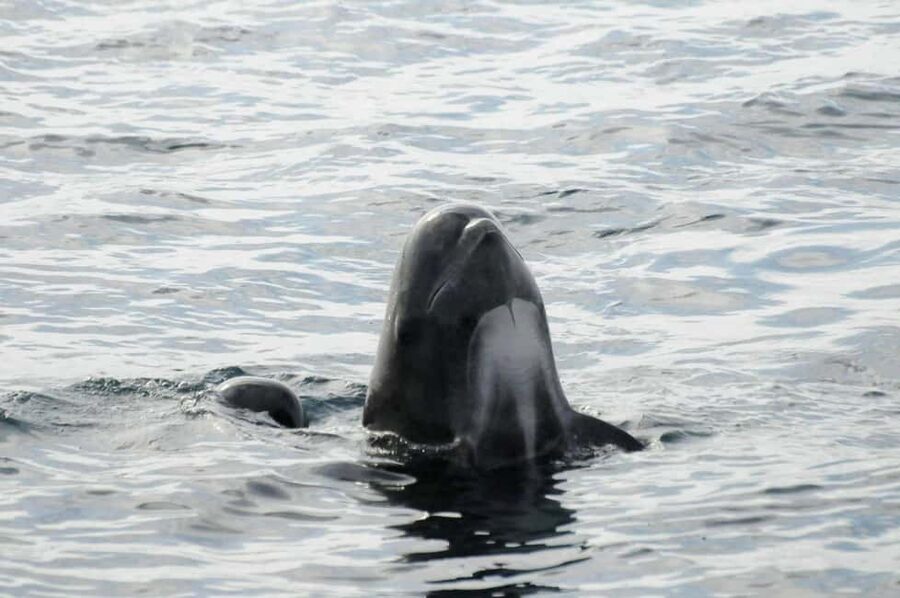
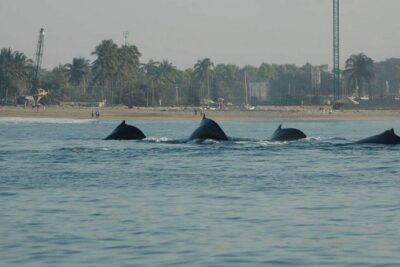
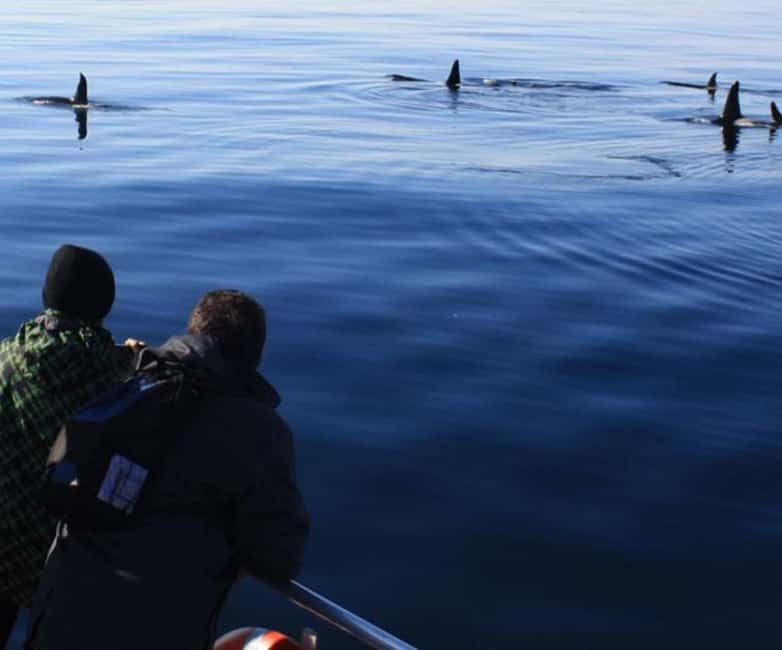
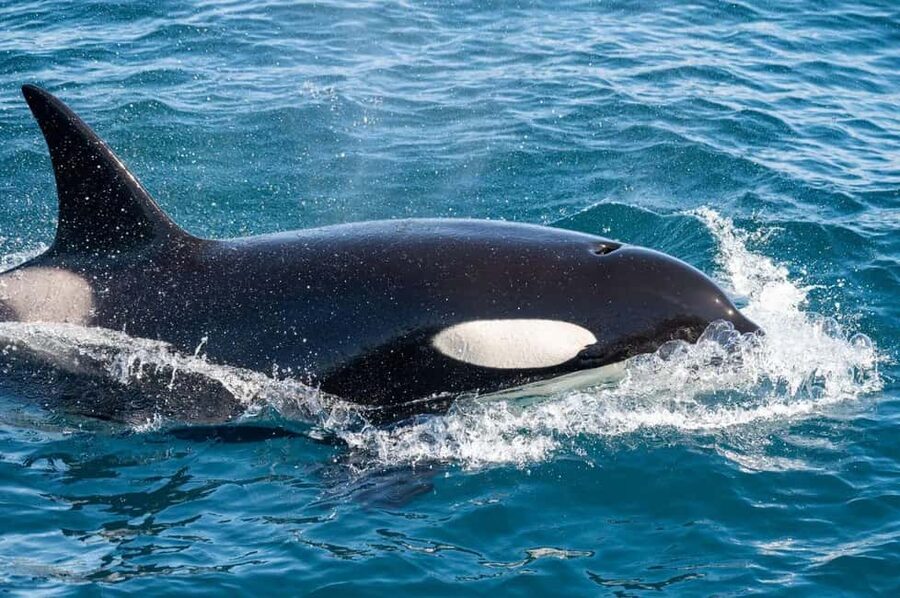
The main targets are the big names of the region. You’re looking for mighty sperm whales, playful orca pods, and dolphins. You’ll also scan for seabirds that often help tell you where marine life is active.
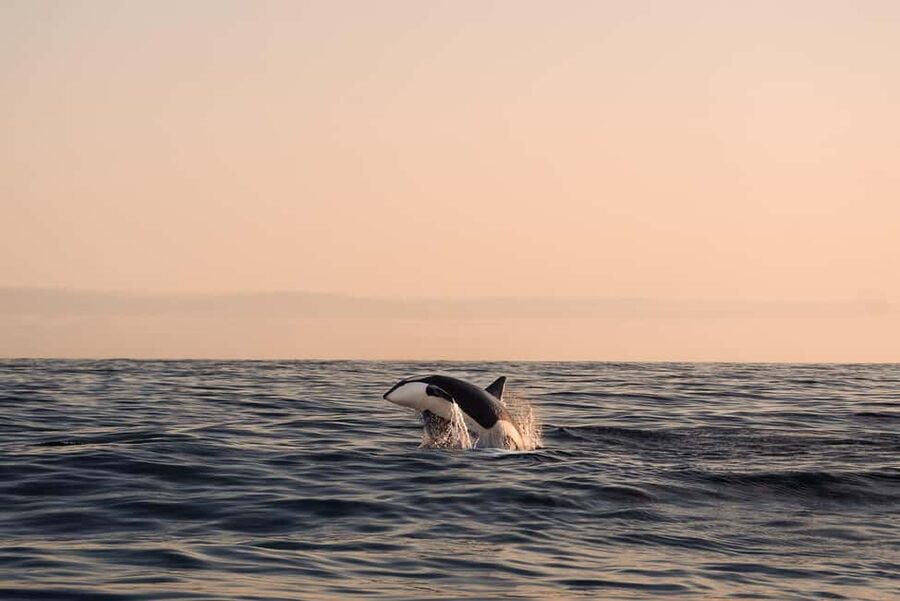
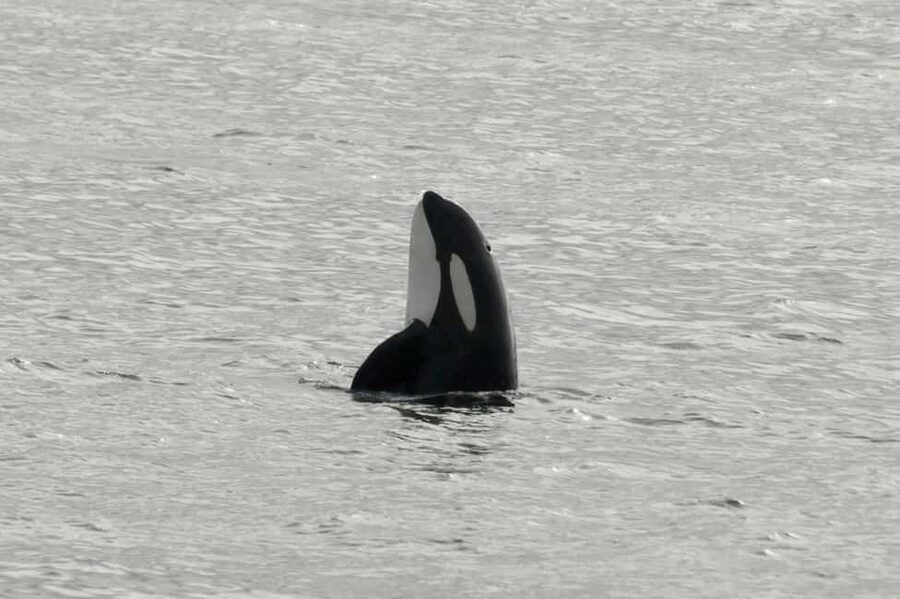
In terms of “wow factor,” sperm whales are a standout hope. They’re iconic for northern waters, and when they surface, it’s usually a dramatic sight from the boat’s deck. Orcas are also a huge draw, and the tour is set up to keep you watching for pods rather than treating each sighting as a one-off.
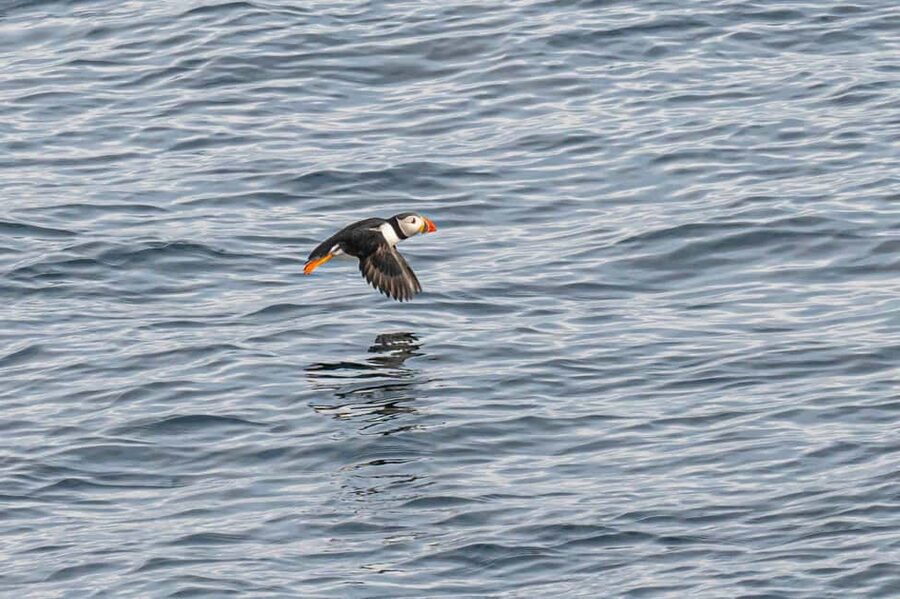
The bird watching angle is a real bonus. Depending on the day, you may see puffins and sea eagles among other seabirds. If the sea is a little quieter for whales, birds still keep your attention moving.
One practical tip: bring binoculars. The tour mentions them, and it’s the kind of simple tool that helps you read the water at longer distances, especially when the sea is busy and wind changes your ability to spot small details.
Heated Cabin Meal Break: Hot Soup on Cold Water
Between scanning for wildlife, you’ll enjoy a light meal onboard: hot soup, fresh bread, tea, coffee, and biscuits. It’s served in the heated indoor cabin.
This is the part I really appreciate because it makes the day feel like a proper outing instead of a nonstop endurance test. When your hands and cheeks go cold, you lose fine attention. Having a warm indoor break lets you stay sharp for the next sighting window.
There’s a small note to keep your expectations aligned: the meal is practical and warm, but not everyone loves every menu element. If food preferences are picky for you, think of the soup and biscuits as fuel, not gourmet dining.
The Guides’ Role: Marine Experts, Local Experience, and Clear Explanations
This is one of the strongest reasons this tour feels worth the money. The guides and marine team provide engaging commentary during the journey and interpret what you’re seeing in context.
A key theme is how well the team understands whale types and behavior. Even when conditions are choppy, the experience can still feel organized and rewarding because the crew knows how to help you watch effectively. For many people, that’s the difference between seeing a whale and actually understanding why it’s surfacing, moving, and interacting with its environment.
Language can be a factor. The tour is conducted in English, and one common issue is guides speaking quickly. If you’re not fully confident in English, come prepared with a basic set of whale words (orca, sperm whale, dolphin, spout) and use the binoculars and the crew’s pointing cues to follow along.
Responsible Wildlife Watching Rules That Matter
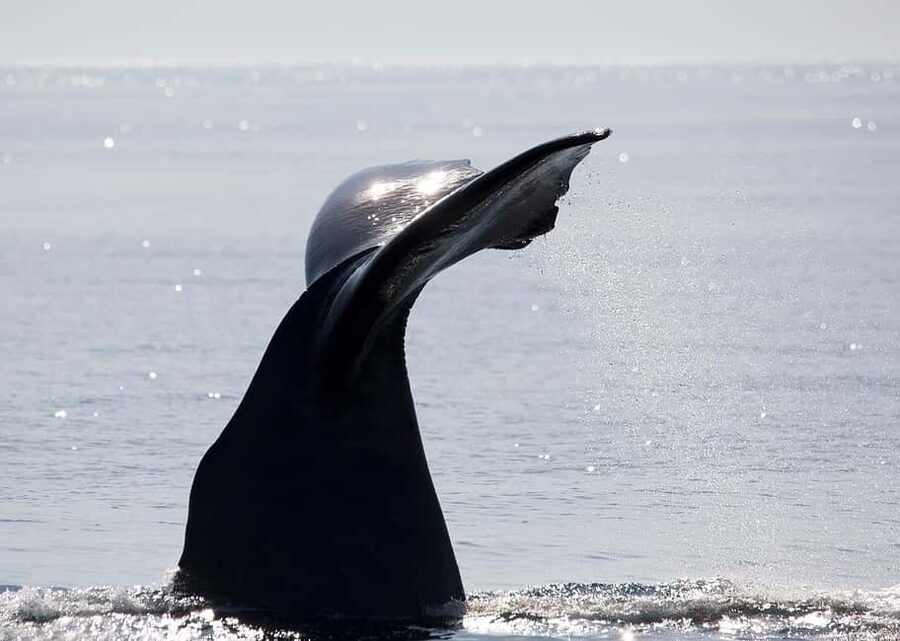
Responsible whale watching isn’t just about good intentions. It’s about behavior on the boat and clear boundaries once wildlife is near.
You’re required to wear provided safety equipment when needed, and you’re not allowed to touch marine life. Drones are also not allowed, and smoking is prohibited. Alcohol and drugs are disallowed too, along with intoxication.
Why this matters for you: whales and other wildlife aren’t props. Keeping distance, reducing risky behavior, and avoiding “hands-on” interaction helps ensure you see animals without turning the encounter into a disturbance.
It also makes the experience feel more respectful and calm, which helps you focus on the actual sightings rather than worrying about chaos.
Whale Pass: What Happens on a No-Sighting Day
This is where the tour adds a fairness layer.
The tour includes Whale Pass: if no whales or dolphins are seen during your tour, you can rebook for free under the policy (subject to availability). In other words, the operator doesn’t end the story at boat return if wildlife doesn’t cooperate.
Keep in mind it’s not a guarantee of a free rerun every time. It’s subject to availability, and rebooking depends on schedules and conditions. Still, having this policy changes the risk math.
For me, that turns whale watching from “did I get lucky” into “I joined the right kind of operator that plans for wildlife uncertainty.”
Price and Value: Is $183 Worth It in Andenes?
At $183 per person for about four hours, this isn’t a cheap add-on. But when I judge value, I look at what you’re buying, not just the sticker price.
You’re paying for:
- a guided search in Arctic waters with marine professionals and local crew
- access to both heated indoor space and an outdoor viewing deck
- onboard warm meal items (hot soup, bread, warm drinks, biscuits)
- safety equipment and a structured, rules-based approach
- Whale Pass rebooking if whales or dolphins are not seen
For a whale safari, those inclusions are more than comfort. Heated cabin access increases your chances of staying engaged during long searches. Marine interpretation increases the quality of what you see. Whale Pass reduces the downside of a no-sighting day.
If you’re comparing against bare-bones boat rides, this one typically holds up better because it’s built around viewing plus explanation, not just “transport to open water.”
What to Bring (and What Not to Bring) for a Cold Arctic Boat
The tour’s weather and sea conditions are part of the deal, so your packing list should match the environment.
Bring:
- warm clothing and thermal layers
- rain gear and waterproof outerwear
- hat and gloves
- waterproof shoes
- binoculars
- motion sickness prevention if you’re prone to it
- anything else warm enough to handle wind off open water
The tour strongly advises motion sickness medication for guests prone to seasickness. If you know you struggle, take that seriously. Also note the tour is not suitable for people prone to seasickness, which means you should be honest with yourself about how your body handles boat motion.
What not to bring or do:
- oversize luggage
- drones
- smoking
- alcohol or drugs (and intoxication)
- touching marine life
This is also a good moment to travel light. If storage is limited on a small vessel, smaller bags make boarding smoother.
Who This Tour Fits Best, and Who Should Skip It
This experience is a good match if you:
- love wildlife and want informed watching, not just random scanning
- want both outdoor excitement and indoor warmth
- enjoy photography and want binocular help for wider scanning
- like the idea of a responsible, rules-based wildlife encounter
It may not fit if you:
- are pregnant (not suitable)
- have mobility impairments (not suitable)
- are very prone to seasickness
- are traveling with a baby under 1 year
If you’re unsure, think in terms of comfort and safety. The tour is weather-dependent and runs several hours, so your ability to stay warm and steady in cold wind matters.
Should You Book This Andenes Whale Watching Tour?
If you’re choosing between multiple whale watching options in the region, I’d lean toward booking this one if you value expert guidance, heated comfort, and a structured approach to responsible viewing. The Whale Pass policy also makes it easier to say yes, because the operator builds a fallback if wildlife doesn’t show.
On the other hand, if your English is limited and you know you’d struggle with fast-paced narration, adjust your expectations. You can still enjoy the sightings, but you might miss some of the explanation that helps the whole experience click.
My practical takeaway: if you can dress for cold and you want a guided Arctic safari with a real chance at big species, this is a solid, value-aware choice in Andenes.