REVIEW · BOA VISTA ISLAND
Whale watching tour SEASONAL
Book on GetYourGuide →Operated by Diving Center Riamar · Bookable on GetYourGuide
Whales arrive in Boa Vista for a short window. This seasonal trip times itself for humpback whales to show up for breeding, usually from mid-February to late May, with a chance at other whales and dolphins too.
I like two things a lot: the small group (max 6) feel and the fact that a marine biologist is on board to keep the day safe and responsible. And because it follows European whale-and-dolphin-watching laws, you’re not just chasing action.
One thing to plan for is how whale sightings can vary by day. Even in the best season, you might only get a single sighting instead of multiple whales close together.
In This Review
- Key Things to Know Before You Go
- Humpback Whale Season on Boa Vista (Mid-February to Late May)
- Meet Riamar and the On-Board Wildlife Team
- What You’ll Do at Sea: How the Day Usually Plays Out
- Pickup and getting to the departure area
- On-board brief and wildlife approach
- Whale spotting time (the main event)
- Drinks and returning to shore
- Price and Value: 65€ (or $76) for a Rule-Based Whale Trip
- Small Boat, Small Group: Why Max 6 Changes the Experience
- Eco-Friendly Whale Watching That Still Feels Fun
- What to Bring (And What to Leave Behind)
- Who This Whale Watching Tour Suits Best
- A Quick Reality Check: The Day’s Wildlife Isn’t Guaranteed
- Should You Book This Tour?
- FAQ
- When is the best time to see humpback whales on Boa Vista?
- How many people are in the group?
- Is the tour guided in English, and is there a marine biologist?
- What’s included, and can I bring alcohol?
- What should I bring for the tour?
- How does pickup/transport work from resorts?
Key Things to Know Before You Go
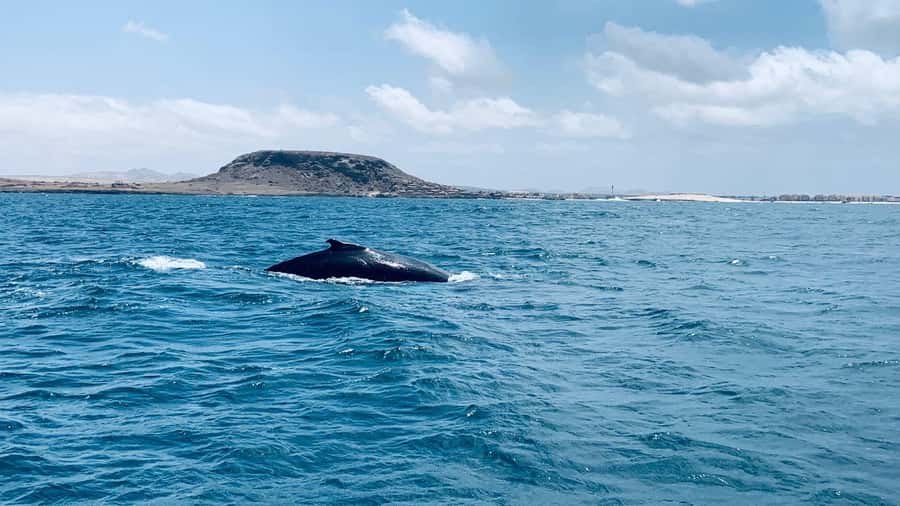
- Seasonal humpback breeding: Mid-February to late May is when Boa Vista is at its best for breeding humpbacks.
- Marine biologist on board: A qualified expert helps keep people and animals safe.
- Max 6 participants: Smaller boat, more focused attention, and an easier time spotting animals.
- Eco-friendly rules: The tour follows European whale-and-dolphin-watching laws to limit disturbance.
- English live guide: You’ll have clear commentary instead of a silent cruise.
- Bring the right gear: Head covering or kippah, towel, beachwear, and a camera make the day easier.
Humpback Whale Season on Boa Vista (Mid-February to Late May)
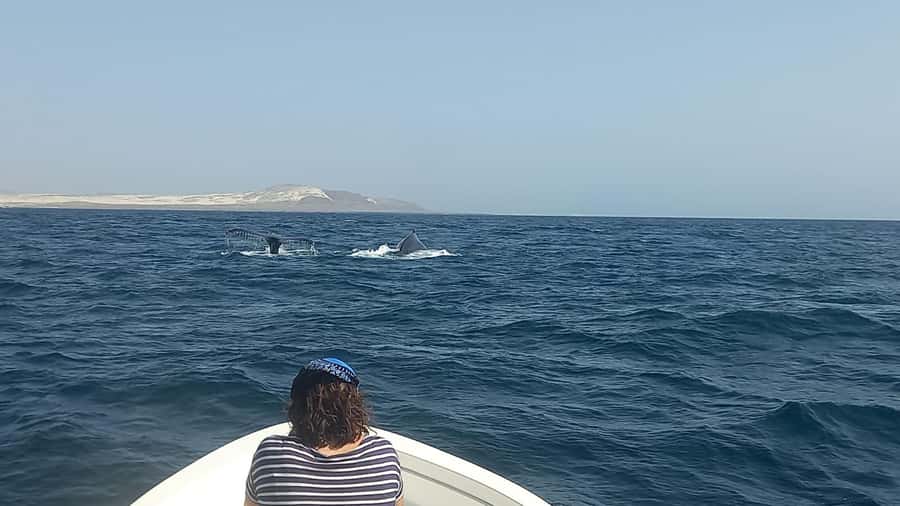
Boa Vista, Cape Verde isn’t a year-round whale spot in the same way some places are. What makes it special is timing. From mid-February to late May, humpback whales come into the area for breeding activity, and that’s the main draw of this tour.
This season window also explains why the day can feel different from trip to trip. Some days, whales are active near the surface. Other days, they’re present but you’ll catch only part of the action. That’s not a problem with the tour. It’s just what ocean wildlife does.
You also shouldn’t assume humpbacks are the only show in town. Cape Verde is described as a feeding and breeding ground and also a migratory route for 24 species of whales and dolphins. In other words, you’re not betting the entire experience on one species. Even when humpbacks are the headline act, there’s still variety in what you might see.
Meet Riamar and the On-Board Wildlife Team
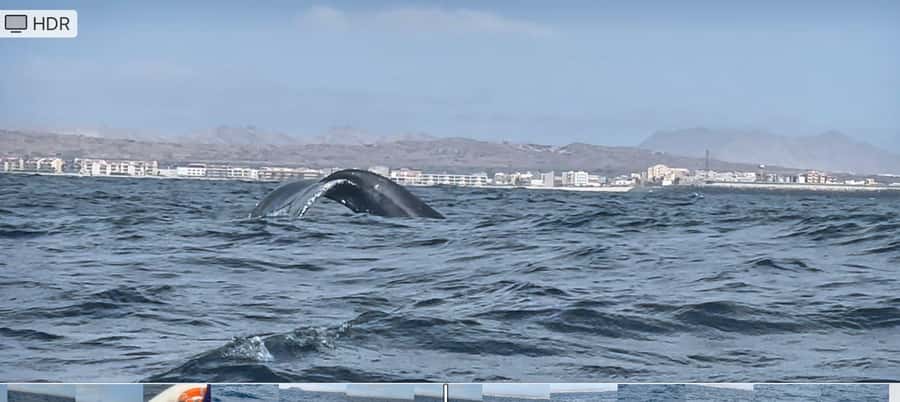
The experience is run by Riamar, and you’ll go with their boat trip during the seasonal humpback period. One detail I really trust here is the marine-biologist requirement. The tour states that a marine biologist is always on board to ensure safety for both people and animals.
That matters for two reasons:
- You get more than whale-spotting. You get context.
- You’re more likely to have rules followed in real time, not just on paper.
On top of that, there’s a live tour guide in English. When you’re trying to identify wildlife quickly, language clarity helps. It also helps you understand what you’re seeing—so the day feels more “I get it” and less “I just hoped.”
Also, the tour emphasizes that you’re a guest in the sea. That phrasing may sound poetic, but the practical meaning is simple: you’re expected to respect the animals and follow the crew’s instructions immediately.
What You’ll Do at Sea: How the Day Usually Plays Out
The exact schedule isn’t listed in the info you provided, but the structure is clear enough to help you set expectations. Here’s the most realistic flow for this kind of whale-watching trip in this setup.
Pickup and getting to the departure area
You can be picked up, but pickup is tied to where you’re staying. The tour notes transport costs by zone, with different rates depending on your hotel area:
- Center Sal Rei: 4€ one way
- Certain large-resort areas (including Riu Karamboa, Riu Palace, Decameron, Bravo): 10€ one way
- Riu Touareg guests: 50€ for both ways
That pricing detail matters. If you’re staying in one of the big resort clusters, pickup may cost a bit more, but it often saves you the hassle of finding transport on your own for a timed departure.
On-board brief and wildlife approach
Once you’re on the boat, the key thing is the tour’s method. It says they follow European whale and dolphin-watching laws to disturb animals as little as possible while still giving visitors a fun day.
So what does that mean for you in the real world? It usually means:
- you don’t race around chaotically,
- you maintain a wildlife-first pace,
- and you’ll likely be guided on how to behave while animals are nearby.
Because there’s a marine biologist on board, you can also expect answers to questions like what species you’re seeing and what behaviors matter during the breeding season—without guessing.
Whale spotting time (the main event)
The big moment is the time on the water when you’re actively searching for whales and watching for breathing, surfacing, and movement.
In the seasonal breeding window, humpback whales are the star. The info frames it as “the impressive spectacle” of humpbacks in Boa Vista during breeding season, which is why the tour runs only then.
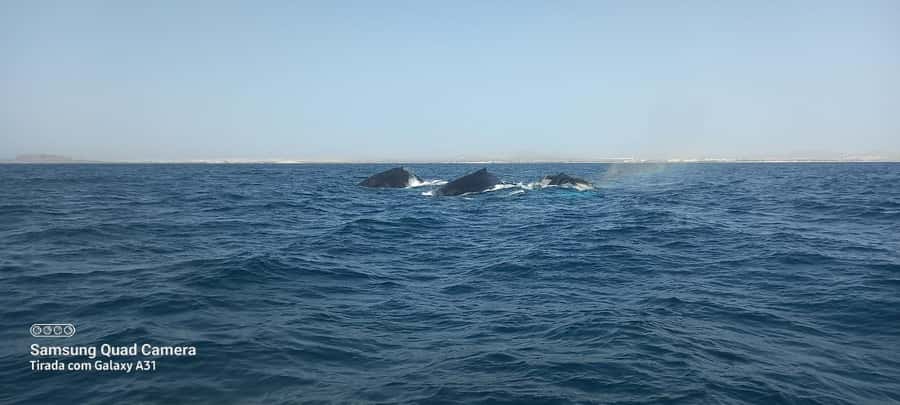
Also, the boat setup supports sightings. The reviews attached to this experience give you a clue about the feel: one person highlighted the advantage of a small boat for getting a strong sense of the animals’ size. Another person had luck with multiple humpback sightings. That small-group format typically helps with what matters most in whale watching: being positioned well and keeping focus.
One reality check from the reviews is also important for your planning. There’s at least one report of seeing only one whale, and that person left disappointed. That doesn’t mean the trip is “bad.” It means wildlife viewing isn’t a vending machine. Your best strategy is to go in with flexible expectations and treat the day as a wildlife encounter, not a guaranteed checklist.
Drinks and returning to shore
The tour includes non-alcoholic drinks on board and fresh water. That’s a practical inclusion you’ll appreciate on a sunny day. It also means you don’t have to solve hydration while you’re trying to watch.
At the end, you return to shore and the transport is handled according to your pickup arrangement. In other words, your logistics are planned—you just need to match your hotel to the right fee category.
Price and Value: 65€ (or $76) for a Rule-Based Whale Trip
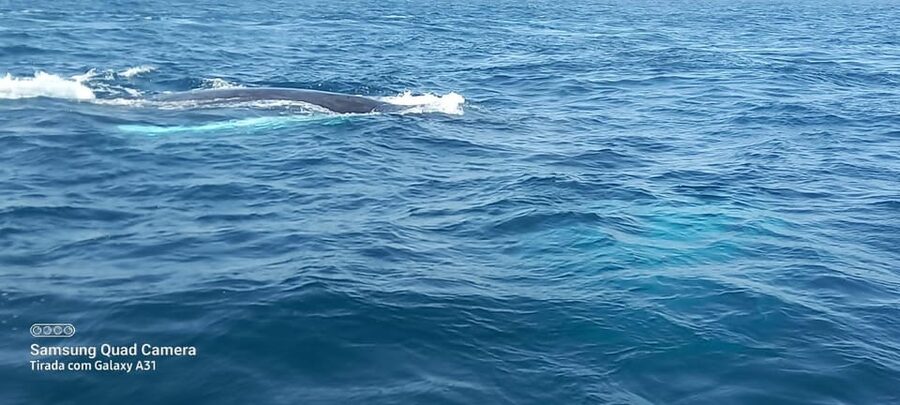
The price is listed as 65 euros per person (and in another place as $76 per person). Either way, you’re paying for an organized, guided tour with a wildlife professional on board, plus included drinks.
Here’s how I’d judge the value:
- You’re not just paying for a boat ride. You’re paying for a marine biologist and an English guide, which changes the quality of the experience.
- You’re paying for the eco-friendly approach tied to European whale-watching laws. Responsible viewing costs more operationally than “go as close as possible,” and that matters.
- You get practical comfort: fresh water and non-alcoholic drinks are included.
The one potential extra cost is pickup/transport, which varies by location. So when you budget, don’t only look at the base tour price. Add the correct one-way or two-way transport fee for your resort zone, and you’ll get the real total.
Small Boat, Small Group: Why Max 6 Changes the Experience
This tour limits the group to 6 participants. In whale watching, “smaller” usually helps in a few ways:
- You’re easier to manage safely near wildlife.
- Crew attention is more focused, especially when someone spots movement.
- The feel of the encounter can be more personal, not like you’re part of a crowd.
A review specifically praised the small boat for helping them experience just how big the whales are. You shouldn’t expect close-contact behavior (the laws aim to limit disturbance), but you can still get a more immediate view when the boat is smaller and the crew isn’t juggling many passengers.
If you like calmer tours with less waiting and fewer strangers, this size is a strong point.
Eco-Friendly Whale Watching That Still Feels Fun
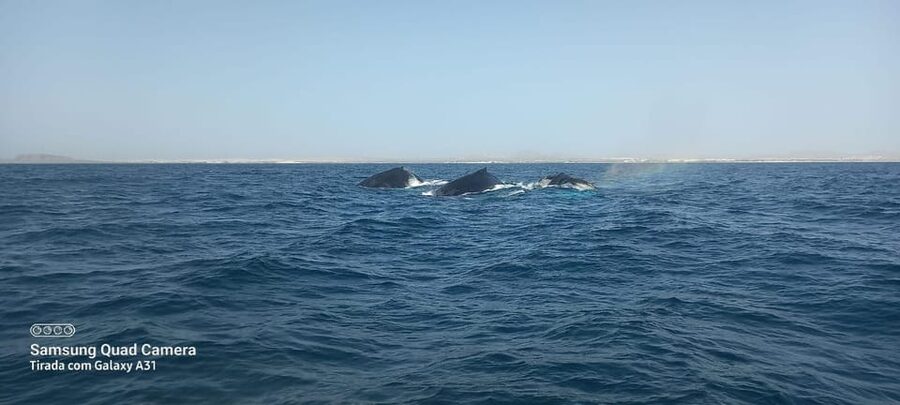
The tour repeatedly frames itself around two ideas: keep disturbance low, and maximize visitor enjoyment.
That balance is exactly what you want. You want rules that protect whales, but you also want a day that doesn’t feel like a quiet lecture. With a guide in English and a marine biologist onboard, you’re likely to be engaged instead of just watching from a distance.
The tour also includes a clear reminder: you should respect your hosts in their environment. In practical terms, that means you listen when instructions are given. If you treat the crew’s rules as optional, you make everyone’s day worse. If you follow them, the experience feels better—and it’s safer for everyone.
What to Bring (And What to Leave Behind)
To make this day easier, pack based on what the tour asks for:
What to bring:
- Head covering or kippah
- Towel
- Camera
- Beachwear
What’s not allowed:
- Alcohol and drugs
- Explosive substances
Two quick practical notes. First, head covering isn’t just “nice to have.” You’ll be outdoors on the coast, and the sun can be intense even when the wind feels cool. Second, towel matters because you’re on and around water, and drying off helps you stay comfortable when you’re ready to take photos.
Who This Whale Watching Tour Suits Best
This tour is a great fit if:
- You’re traveling during mid-Feb to late May and want to time your trip for breeding humpbacks.
- You prefer a small group (max 6) rather than a bigger crowd.
- You like guided wildlife viewing with a marine biologist on board.
- You care about responsible viewing practices based on European whale-and-dolphin laws.
It’s not suitable for children under 10. If you’re traveling with kids, double-check age eligibility before you book.
Language is English, so it’s best for travelers who feel comfortable with guided English commentary.
A Quick Reality Check: The Day’s Wildlife Isn’t Guaranteed
I’m glad you asked for a real review, not a promotional blurb. Whale watching is never 100% predictable. Even during the best season, you might see multiple humpbacks, or you might only get one good sighting.
The best way to handle that is simple:
- Go in expecting an encounter, not a guaranteed count.
- Keep your attention on cues the crew gives you.
- Stay present. Sometimes the best moment is brief.
When everything lines up, this tour can be memorable in a big way. When it doesn’t, you’ll still be out on Boa Vista water with a guided, wildlife-respectful approach—rather than just crossing your fingers.
Should You Book This Tour?
Book it if you want a seasonal Boa Vista humpback experience with responsible rules, a marine biologist onboard, and a small-group feel. The inclusion of fresh water and non-alcoholic drinks is also a sensible touch.
Skip it (or at least reconsider) if you’re the type who needs a guaranteed number of whales. Wildlife days can be uneven. If you’d rather avoid any chance of only seeing one whale, you should look for alternatives where you can shift dates easily within the season and accept that sightings are still weather-and-movement dependent.
If your timing is right and you’re open to the ocean’s unpredictability, this is the kind of tour that makes whale watching feel both fun and respectful.
FAQ
When is the best time to see humpback whales on Boa Vista?
The tour is seasonal and focused on breeding humpbacks from mid-February to late May.
How many people are in the group?
The group is limited to 6 participants.
Is the tour guided in English, and is there a marine biologist?
Yes. There is a live tour guide in English, and a marine biologist is always on board.
What’s included, and can I bring alcohol?
The price includes the whale watching tour for 65 euros per person, plus non-alcoholic drinks on board and fresh water. Alcohol is not allowed.
What should I bring for the tour?
Bring a head covering or kippah, a towel, a camera, and beachwear.
How does pickup/transport work from resorts?
Pickup/transport is available with costs based on where you stay: Center Sal Rei (4€ one way), Riu Karamboa / Riu Palace / Decameron / Bravo (10€ one way), and Riu Touareg (50€ for both ways).
If you tell me where you’re staying on Boa Vista (or which hotel name), I can help you estimate the realistic total cost including transport.