REVIEW · WESTERN AUSTRALIA
Western Australia: Swim with Humpback Whales
Book on GetYourGuide →Operated by Coral Bay Ecotours · Bookable on GetYourGuide
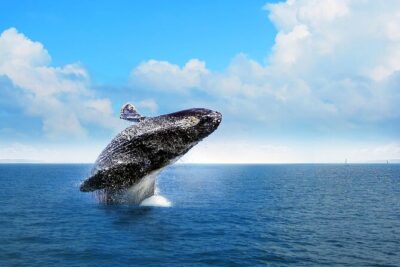
Whale season turns Coral Bay into pure sea theater. This full-day outing combines Ningaloo Reef snorkeling with a guided humpback whale swim window during Western Australia’s migration season (July to October). It’s one of the few chances in Australia to get in the water near migrating whales, and the day is built around doing it safely and on your animal’s timetable.
I especially love the two-site reef snorkeling flow, because you get a proper taste of Ningaloo’s marine life without rushing. I also like how the whale part is run with small groups and trained crew, so you’re not just hoping for the best. You’ll still be told exactly where to be and when, which matters when a whale is the boss.
One consideration: a whale swim isn’t guaranteed. The guide can keep you on the boat if conditions or whale behavior make it unsafe, and even then you may still have world-class whale viewing.
In This Review
- Key things to know before you go
- Coral Bay start: meeting point, boat energy, and time on the water
- First snorkeling on Ningaloo: turtles, reef sharks, and that calm-water thrill
- Two reef sites: why it works
- Heading out for humpback whales: open-ocean spotting and your expectations
- How the humpback whale swim actually works (groups, crew support, safety)
- Practical expectations for your body and comfort
- The marine-life “bonus layer” beyond whales
- Lunch, tea, and the champagne fruit platter finish
- The smart packing checklist
- Price and value: what $467 includes and why it might be worth it
- Weather and minimum numbers matter
- The crew: professionalism you can feel, not just read about
- Who this tour suits best (and who should reconsider)
- Should you book this Coral Bay humpback-and-Ningaloo day?
- FAQ
- How long is the Western Australia humpback whale swim and Ningaloo Reef tour?
- Where is the meeting point?
- What snorkeling gear and clothing are included?
- What food and drinks are included during the day?
- What should I bring with me?
- Is cancellation free if my plans change?
- Can I reserve now and pay later?
- Do I get tour photos included?
Key things to know before you go
- Ningaloo Reef snorkeling, twice: one set-up to warm up, then another chance later in the day.
- Small-group whale format: groups of 7, with 2 crew in the water at a time.
- Safety first, every time: you enter only if the guide says it’s safe and whales approach on their terms.
- Marine-life bonus beyond whales: turtles, reef sharks, stingrays, and other animals are part of the reef mix you can encounter.
- Food and celebratory finish included: lunch, morning and afternoon tea, plus a champagne fruit platter at the end.
Coral Bay start: meeting point, boat energy, and time on the water
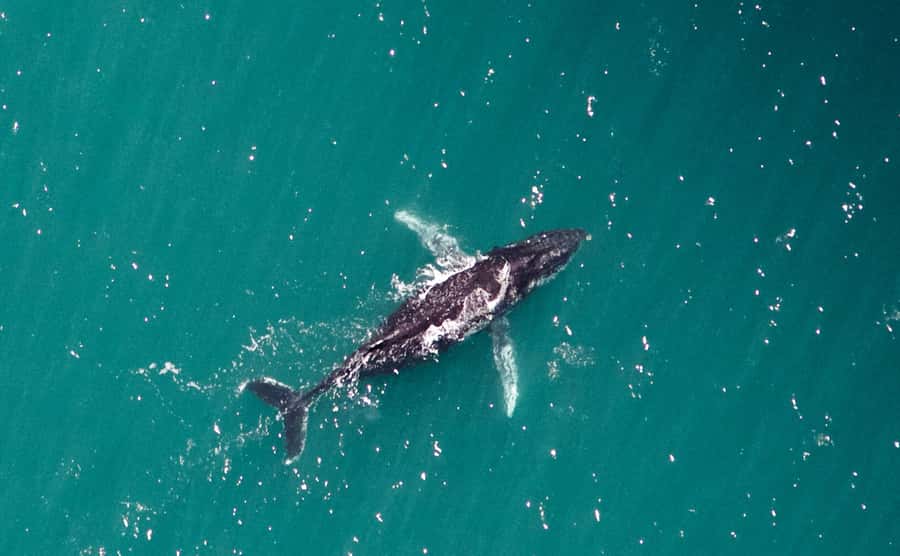
Your day begins at 30 Robinson Street, Coral Bay WA 6701. This matters because Coral Bay is spread out, and you want to show up early enough to get kitted, check gear, and settle in before the boat leaves. If you’re coming from elsewhere in the region, I’d plan buffer time. Coral Bay has a laid-back rhythm, but a full-day ocean trip runs on a schedule.
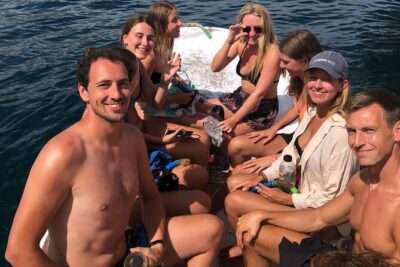
Once you’re aboard, the vibe is focused but friendly. The crew keeps things moving and organized, and you feel that shift quickly: equipment gets sorted, everyone knows what’s next, and you’re not standing around wondering what you’re supposed to do. In one sense, this is a “classic” day out on the water. In another sense, it’s a high-stakes wildlife operation, because the whale portion requires tight safety procedures.
This is also an all-in-one day. You’re not buying lunch separately, and you’re not scrambling for tea or snacks. That’s a big deal when you’re spending hours in the sun and salt air.
You can also read our reviews of more tours and experiences in Western Australia.
First snorkeling on Ningaloo: turtles, reef sharks, and that calm-water thrill
Before whales, you start with snorkeling on the Ningaloo Reef. Expect a reef experience that’s designed to be enjoyable, not technical. You’ll have snorkeling equipment and a wetsuit provided, which helps you feel comfortable in the water and extends your time enjoying it.
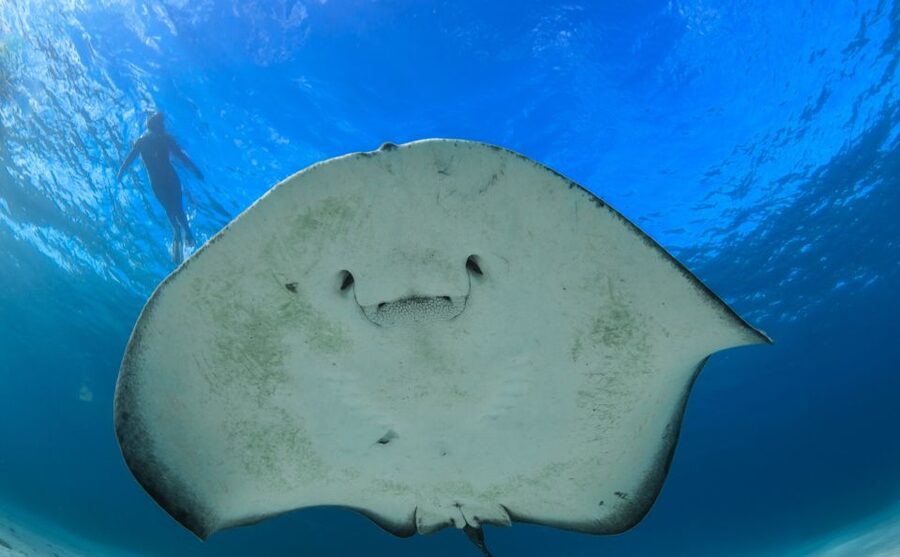
What you might see on the reef is the reason Ningaloo is famous. In your first snorkel window, you could spot turtles, reef sharks, stingrays, and lots of reef fish. Even if you don’t get every single animal every single time, you’ll usually get enough marine life to feel like the reef is doing its thing around you.
A smart tip: bring a positive mindset for this portion. Reef snorkeling is where you warm up, get used to buoyancy and breathing, and get your eyes adjusted for marine movement. It’s also a good time to remind yourself you’re in an ecosystem, not an aquarium. If you swim calmly and avoid kicking hard, you’ll often have better encounters.
Two reef sites: why it works
The itinerary includes snorkeling at two different sites on the reef. That’s valuable because one site can be great for certain fish and conditions, while another site might make turtles and other larger animals more likely. It also keeps the day from feeling repetitive. You get to experience the reef, then later return with a different angle and different water flow.
Heading out for humpback whales: open-ocean spotting and your expectations
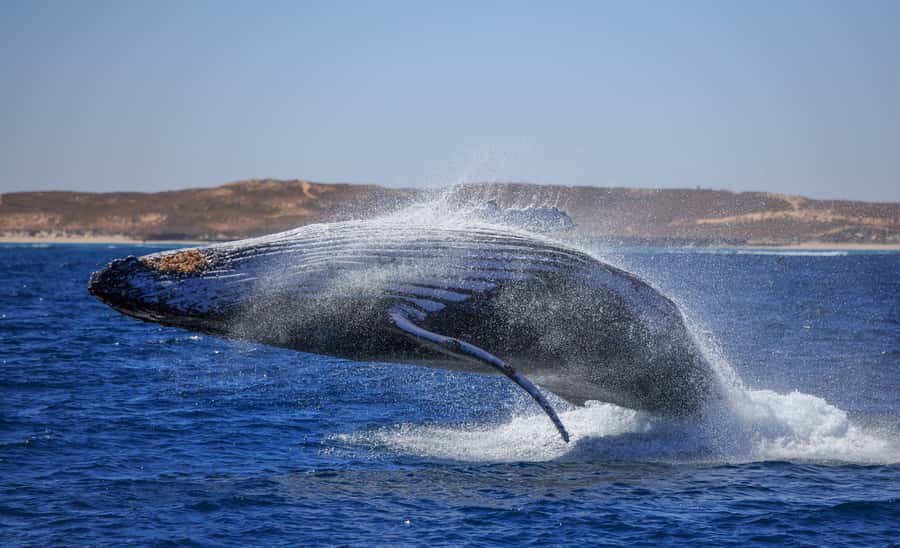
After the reef time, the boat heads out into the open ocean to look for humpbacks during their migration route. This is where your day shifts from colorful reef life to massive moving wildlife. The mood changes. People get quieter. Cameras come out. Everyone watches for movement on the surface and the telltale signals that a whale is near.
Here’s the honest part: you can’t control where whales will be at any given moment. The experience is timed for the season, but nature still runs the show. The good news is the operation is built around observation and safety, not just a promise.
When humpbacks are spotted, your crew manages the approach. You’re positioned for viewing and then, if conditions allow, you may get the option to enter the water. Even if the whale swim doesn’t happen, the viewing portion can still be unforgettable, especially when whales surface close enough to watch their rhythm.
How the humpback whale swim actually works (groups, crew support, safety)
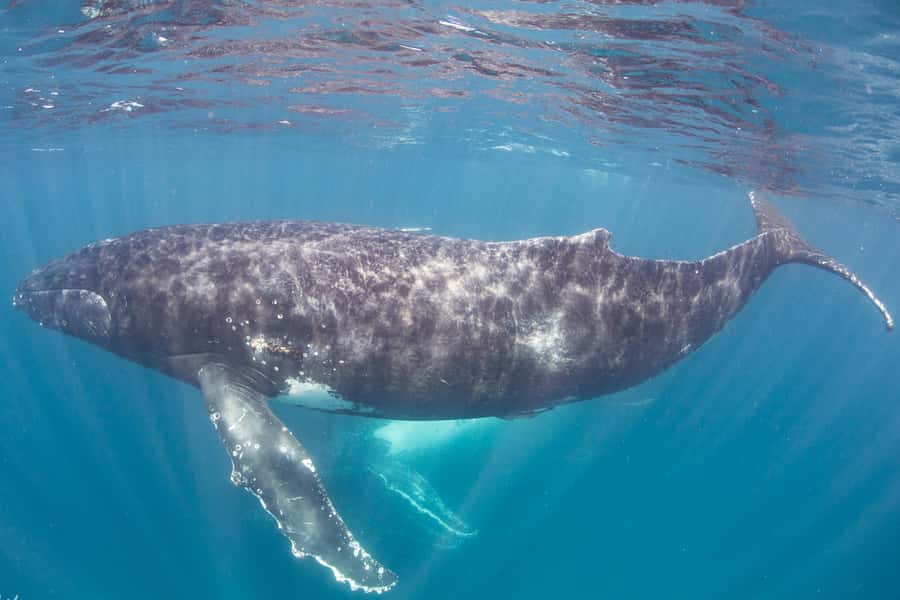
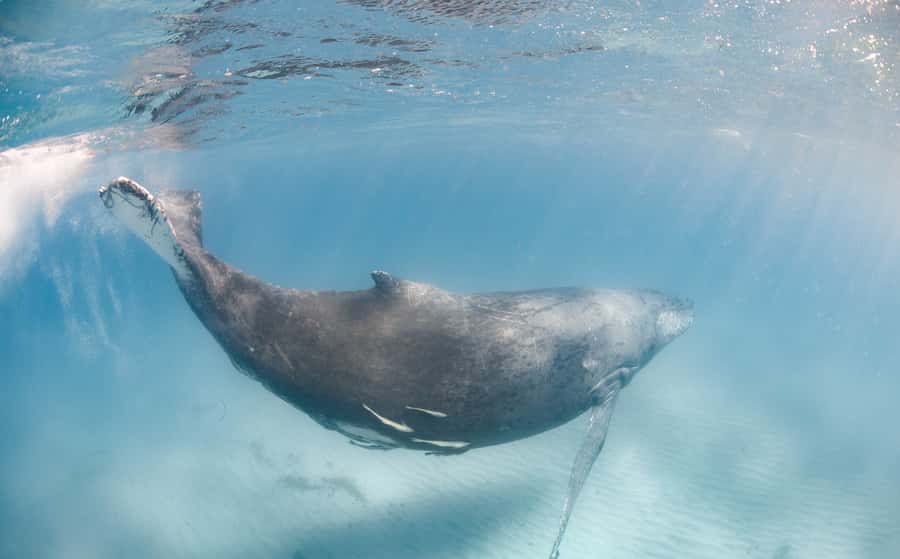
This is the part that can make or break the experience, and it’s handled with real structure. If the guide decides it’s safe, guests are separated into groups of 7. Then you enter the water with 2 crew members at a time, positioned near the whale’s path at a safe distance.
That safe-distance setup isn’t just paperwork. It shapes the experience. It means you’re close enough to feel the scale and energy, but not so close that you’re crowding or stressing the animal. Humpbacks can be curious and may approach swimmers, but sometimes they simply pass by. Either way, the interaction is on the whales’ terms.
Practical expectations for your body and comfort
Even with a wetsuit, whale swim conditions can feel different than reef snorkeling. You’ll likely be in the water for short, focused windows rather than a long free swim. It’s smart to be ready to follow instructions quickly: where to hold position, how to minimize sudden movements, and when to exit.
Also, keep in mind that swim access can change based on animal behavior and conditions. One common scenario is that the crew may decide swimming isn’t appropriate at a certain moment, even if the whales are present. When that happens, you can still get the whale moment from the boat, and it’s usually worth it because you’re still watching a real migration event unfold right in front of you.
The marine-life “bonus layer” beyond whales
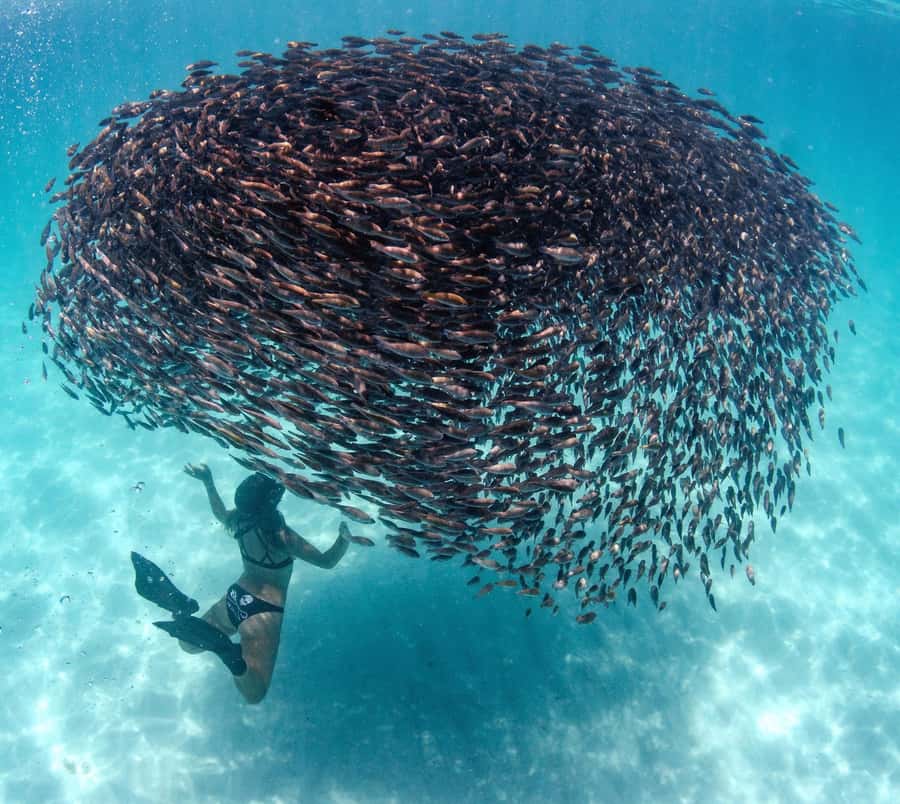
Humpbacks get the headline, but your day can include other sightings that make it feel like you’ve been given more than one nature highlight. On reef and in the surrounding waters, you might see:
- Octopus in the reef environment
- Mant a rays (sometimes seen in the later sea-life mix)
- Whale sharks (rare, but possible enough to be mentioned as part of the broader wildlife success)
- Additional reef life like mantas and other rays depending on conditions
I like having this “bonus” layer because it reduces disappointment risk. If a particular whale swim window is restricted, the day still has strong wildlife value even beyond whales.
That said, don’t treat any animal sighting as a guaranteed checklist. The local partner makes every effort, but encounters can’t be promised. Weather and animal behavior still call the shots.
Lunch, tea, and the champagne fruit platter finish
One reason people keep coming back to this type of tour is that it doesn’t starve you between wildlife moments. You get a buffet lunch on board, plus morning and afternoon tea. That’s not just comfort. On ocean days, energy matters. You’ll likely be in and out of the boat, in sun, and wearing a wetsuit. Food keeps you steady and makes the whole day less exhausting.
Then comes the celebratory finish: on the way back to the jetty, you’ll be provided with a glass of champagne and a fruit platter. This is a small thing in the grand scheme of the ocean, but it lands emotionally. You’ve just spent the day on a migration route and on a major reef system. Toasting the moment feels appropriate.
The smart packing checklist
Even though you’re on the water with provided equipment, you should bring what the day requires. Pack swimwear and water. Also bring a jacket or warm clothing, especially if the breeze picks up after time at sea. Sun protection matters too. You’re out for about 8 hours, and the reef and ocean time add up.
Also bring a towel. It’s not always a given with ocean tours, and you’ll appreciate it when you’re changing after snorkeling.
Price and value: what $467 includes and why it might be worth it
At $467 per person for an 8-hour tour, you’re not shopping for a cheap thrill. You’re paying for three things: specialized wildlife timing, trained crew running a safety-controlled swim format, and real inclusions that reduce extra costs.
Here’s what’s included:
- Snorkeling equipment
- Wetsuit
- Morning and afternoon tea
- Buffet lunch
- Fruit platter
- Champagne
- Live tour guide in English
Not included:
- Tour photos
When you look at those inclusions, the value starts to make sense. On many coastal tours, the food and basic gear are an add-on. Here, the essentials are already covered, and the day’s highlight is the whale swim option. That’s the expensive part of the equation. The reef snorkeling is a strong bonus, but the humpback component is what makes this experience rare.
Weather and minimum numbers matter
This tour is subject to minimum numbers and weather. That’s not a deal-breaker, but it does affect how you should plan. If you’re traveling with tight timing, treat it as a “main event” you schedule with flexibility.
The crew: professionalism you can feel, not just read about
The experience runs on teamwork, and you’ll feel it in how instructions are handled. Guides and divers are attentive. Crew members check on how you’re doing at different points, and that reassurance matters when you’re swapping from reef snorkeling to open-water whale viewing.
In particular, names that come up in the crew include Paula and Marina as guide divers, plus Lau as a photographer, and Paul as a boat driver. Even if you don’t care about photos, the presence of a dedicated photographer often signals that the day is run with good coordination.
One more note: since tour photos aren’t included, don’t assume you’ll automatically get a photo set. But if you’re curious, it’s worth keeping an eye out for what’s available for purchase after the day.
Who this tour suits best (and who should reconsider)
This is a great fit if you want:
- A full-day mix of Ningaloo Reef snorkeling and humpback whale encounters
- Guided structure and safety, not just free roaming
- A day that includes real meals and a memorable finish
- The chance to enter the water with whales when conditions allow
It’s less ideal if you:
- Hate the idea that a whale swim may be restricted for safety
- Want a guarantee of specific animals
- Travel with a focus on very long snorkeling time in one spot (this is a guided, multi-part day)
If you’re a confident swimmer who can follow instructions calmly, you’ll do well. If you’re anxious in open water, talk to the crew when you arrive. A good guide will help you understand what you’ll be asked to do.
Should you book this Coral Bay humpback-and-Ningaloo day?
I’d book it if you’re traveling during the migration season and you want one day that combines a major reef with a once-in-a-lifetime whale setting. The structure is the big reason: reef snorkeling is set up for fun, and the whale portion is controlled by a trained team with a safety-first approach.
But I’d think twice if your trip can’t handle the possibility that the whale swim part may be skipped even though whales are present. The viewing can still be powerful, yet this tour’s headline includes swimming, so your expectations should match the reality: the guide decides what’s safe in the moment.
If you want the best odds, bring warm layers for changing conditions, protect yourself from sun, and go in ready to follow instructions quickly. In whale country, calm beats panic. And when everything clicks, you’ll remember the day as a rare mix of reef magic and true migration-scale wonder.
FAQ
How long is the Western Australia humpback whale swim and Ningaloo Reef tour?
The tour duration is 8 hours.
Where is the meeting point?
The meeting point is 30 Robinson Street, Coral Bay WA 6701, Australia.
What snorkeling gear and clothing are included?
You’ll get snorkeling equipment and a wetsuit.
What food and drinks are included during the day?
You’ll have morning and afternoon tea, a buffet lunch, a fruit platter, and a glass of champagne.
What should I bring with me?
Bring swimwear and water. It’s also advised to bring a towel, a jacket or warm clothing, sun protection, and a water bottle.
Is cancellation free if my plans change?
Yes. You can cancel up to 24 hours in advance for a full refund.
Can I reserve now and pay later?
Yes. The tour offers a reserve now & pay later option, so you can book without paying immediately.
Do I get tour photos included?
No. Tour photos are not included.